
Making a Difference
-based learning centers nurture hope in Afghan communities
In a quiet courtyard in a Kabul neighbourhood, a group of four-year-olds crouches around a shallow tray of coloured sand, pouring, smoothing, and inventing worlds with their hands. Across the country, similar scenes unfold every morning inside modest, brightly painted rooms where the only curriculum is curiosity. These are UN-supported play-based learning centers, places where early childhood education is delivered not through textbooks and drills but through stories, songs, blocks, and water play. The model is rooted in the understanding that the first six years of life lay the foundation for every skill a child will ever build.
Afghanistan has long faced some of the world's most acute challenges in early childhood development. Decades of conflict, displacement, and economic stress have left many children without access to structured learning environments before they reach primary school. The United Nations, working alongside national authorities and local non-governmental partners, has helped establish hundreds of community-based early learning spaces that combine psychosocial support with caregiver engagement. Within these centers, trained facilitators guide small groups of children through activities designed to strengthen language, motor coordination, social behaviour, and emotional regulation, all under the banner of play.
For readers following international development from Australian shores, the approach may feel familiar. In cities such as Melbourne, Sydney, Brisbane, and Perth, the dominant pedagogical tradition in long day care, kindergarten, and pre-prep programs has long been guided by frameworks that privilege play, relationships, and cultural responsiveness. Australia's national Early Years Learning Framework, with its emphasis on Belonging, Being and Becoming, mirrors much of what UN partners have been promoting in Afghan districts. This shared philosophical ground, though separated by thousands of kilometres, offers an unexpected bridge between classrooms in Kandahar and kindergartens in Carlton.
The philosophy behind play-based early childhood education
The first principle is that young children learn through doing, not through being told. When a child stacks wooden blocks, negotiates with a peer over a shared toy, or pretends to run a market stall, they are rehearsing cognitive, social, and emotional skills at a pace no lesson plan can match. Play-based learning centers in Afghanistan apply this principle with deliberate care, sequencing activities so that each day offers a balance of guided and free exploration, indoor and outdoor experiences, and quiet and energetic moments.
The approach also recognises that early learning is inseparable from wellbeing. Children who arrive at a center hungry, frightened, or exhausted cannot engage with even the most thoughtful program. Facilitators are trained to observe for signs of distress, to welcome each child warmly, and to communicate with families about routines at home. This holistic lens, treating the child as a whole person rather than a future student, is one of the reasons the model has gained traction with ministries of education looking to expand access without sacrificing quality.
In Australian settings, this philosophy is reinforced through frameworks such as the Early Years Learning Framework and the National Quality Standard, which together shape what happens in services from Hobart to Darwin. Educators in places like Brunswick or Fremantle often share professional resources with international counterparts through online networks, exchanging ideas about loose parts play, heuristic learning, and the role of the educator as a co-researcher with children.
How UN-supported centers operate in Afghan provinces
A typical center might be housed in a repurposed community building, a rented room, or a purpose-built structure erected with the support of donor funding. Inside, the space is divided into corners that encourage different kinds of play: a reading nook with picture books in local languages, a construction area with safe wooden blocks, a pretend-kitchen corner, and an outdoor yard where children can dig, draw with chalk, and splash in shallow basins. Sessions usually run for two to three hours each morning, allowing time for older siblings to attend school while caregivers manage younger children at home.
The daily rhythm is intentionally predictable. Children gather for a welcome song, choose an activity, work in small groups, share a simple snack, and gather again for a closing circle. Repetition builds security, and security, in turn, frees children to take the cognitive risks that learning requires. Facilitators document observations in simple notebooks, noting language milestones, play preferences, and emerging friendships, and share these notes with families during short meetings at the end of each session.
Where centres cannot be built, mobile play-based learning kits travel between villages, setting up temporary spaces under trees or in community halls. This flexible delivery model has been particularly important in districts affected by seasonal migration, where families move with livestock between summer and winter pastures. In Afghanistan, as in remote parts of Australia's Northern Territory, mobility and cultural responsiveness are not optional extras but essential ingredients of any early childhood program.
Teacher training and community involvement
The success of a play-based learning center rests on the quality of the adults inside it. Facilitators are usually young women from the local community, often with secondary schooling but limited formal training in early childhood pedagogy. UN partners deliver a multi-week training program that covers child development, positive behaviour guidance, inclusive practice, and the basics of play-based curriculum design. Refresher sessions, mentoring visits, and peer learning circles keep skills fresh and allow new ideas to spread from one center to the next.
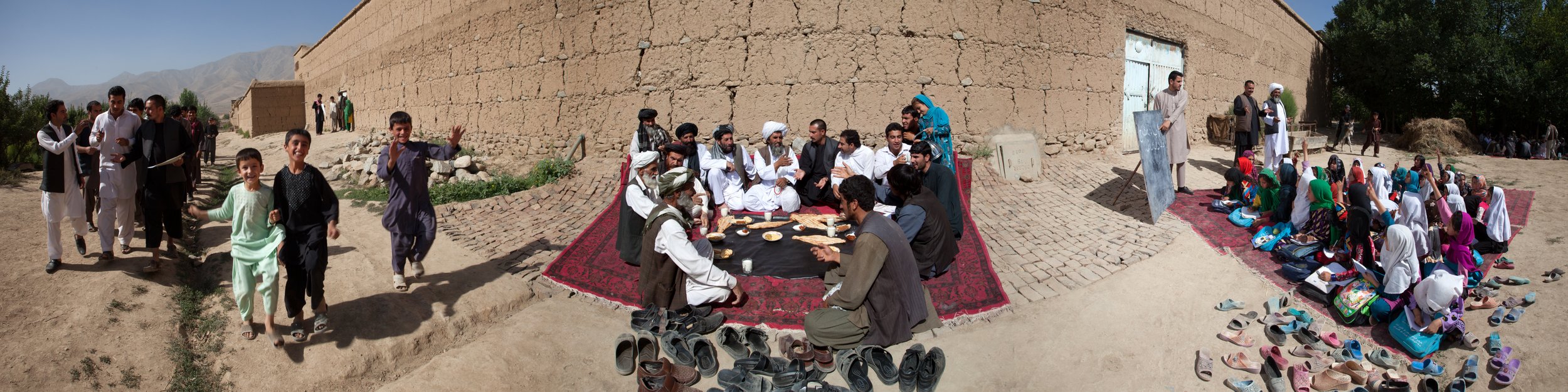
Community involvement is equally central. Parents are invited to observe sessions, contribute ideas for activities drawn from local traditions, and help maintain the physical space. In some districts, elders and religious leaders lend their voices to encourage enrollment, particularly for girls, who have historically faced the greatest barriers to education. A play-based learning center thus becomes a hub not only for children but for conversations about the value of early years across an entire village.
Australia has grappled with similar questions of access and inclusion, particularly for Aboriginal and Torres Strait Islander children in remote communities, where culturally grounded play-based programs are reshaping what early childhood education looks like. Lessons from bilingual early years services in the Torres Strait, for instance, echo the language-revitalisation efforts seen in some Afghan centers where Dari, Pashto, and minority languages are deliberately nurtured alongside standard learning materials.
Nutrition and wellbeing alongside learning
Play alone cannot carry the weight of development if a child's basic needs are unmet. That is why many UN-supported early childhood programs are paired with health and nutrition services, including regular growth monitoring, deworming, micronutrient supplementation, and caregiver counselling on feeding practices. Snack time inside a play-based learning center is often the most reliable meal a child will receive in a day, and facilitators use the moment to model healthy eating and gentle conversation.
The integration of nutrition with early learning reflects a wider global shift in how organisations understand child development. Programs that once focused narrowly on schooling are now designed around the whole child, recognising that cognitive potential is closely tied to physical health, secure attachment, and protection from harm. Where malnutrition is a concern, supplementary feeding becomes the doorway through which families first encounter the education program, and trust grows from there.
A close look at supplementary feeding programs operating in Afghan provinces shows how this integration works in practice. Children identified as underweight are enrolled in regular meal support, their progress tracked alongside developmental milestones, and caregivers receive practical guidance on locally available foods. The approach mirrors Australian initiatives such as the Healthy Eating and Physical Activity guidelines for early childhood settings, which similarly embed nutrition into daily routines rather than treating it as a separate concern.
Lessons for global early childhood practice
The Afghan experience offers several takeaways for early childhood educators and policymakers well beyond the region. The first is that quality does not require expensive infrastructure; thoughtful use of local materials, predictable routines, and well-trained adults can transform even the simplest space into a rich learning environment. The second is that cultural responsiveness is not a token gesture but a structural element, shaping everything from the books on the shelf to the songs sung at circle time.
A third lesson concerns partnership. UN agencies, national ministries, local non-government organisations, and community members each bring distinct expertise, and the most resilient programs are those that distribute decision-making across all four. In Australia, similar partnership principles underpin initiatives such as the Connected Beginnings program, which links Aboriginal and Torres Strait Islander children in urban and regional centres with integrated health, education, and family support services.
Finally, the Afghan story underscores how early childhood is quietly emerging as a global priority, sitting alongside climate adaptation, gender equality, and public health in the agendas of major donors. Australians who follow international education policy, whether through universities in Canberra, research institutes in Adelaide, or advocacy groups in regional towns, will increasingly find that the conversations happening in Afghan villages rhyme with those in their own communities. The children benefiting from these programs may never meet, but the principles guiding their play are recognisably the same.
Supporting early childhood education overseas does not require grand gestures. Australians can engage by following updates from UN Afghanistan, sharing accurate information about UN-supported programs, advocating for sustained aid funding, or volunteering with organisations that promote play-based learning both at home and abroad. Every child, whether in a courtyard in Herat or a community centre in Western Sydney, deserves the chance to begin life through play.