
Making a Difference
Reaching every child: UN-funded vaccination outreach in Afghanistan
Afghanistan remains one of the last places on earth where wild poliovirus still circulates, and measles outbreaks continue to threaten children in districts where health infrastructure is fragile. The United Nations, working alongside national health authorities and a network of Afghan non-governmental organisations, funds and coordinates mass drives that bring drops and doses door to door, in markets, and at border crossings. These campaigns, primarily targeting polio and measles, are among the most ambitious child health operations in the world and rely on a blend of household visits, fixed-site clinics, and transit-point outreach.
For an Australian reader, the story carries familiar echoes. Australia's own National Immunisation Program has driven childhood coverage above ninety-three per cent for many vaccine-preventable diseases, and policies such as the federal "No Jab, No Pay" requirement link family assistance to a child's immunisation status. Afghanistan's outreach teams operate at a vastly different scale and in a vastly different security environment, yet the goal is identical: protect every child against diseases that are entirely preventable with a simple, safe intervention.
Why polio and measles persist in Afghanistan
Wild poliovirus type 1 has been cornered into fewer and fewer districts, but the virus exploits any gap in immunity. In Afghanistan, those gaps appear where families are on the move, where girls face barriers to attending school, and where mistrust of outside vaccinators occasionally turns a routine door-knock into a confrontation. Measles, even more contagious than polio, surges whenever routine immunisation slips. A single case can spark dozens within weeks, and because measles weakens the immune system for months afterwards, it can turn ordinary childhood infections into killers.
The UN's response is built on the understanding that these diseases do not respect borders. Polio detected in Khyber Pakhtunkhwa or in a Karachi sewer shows up in the same genetic family as virus sampled in southern Afghan provinces, and measles lineages travel with traders, returnees, and displaced families. Coordinated campaigns, synchronised across districts and sometimes across the Durand Line, are therefore a public health necessity rather than an administrative nicety.
Inside a mobile vaccination team
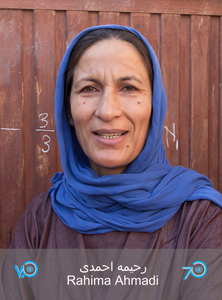
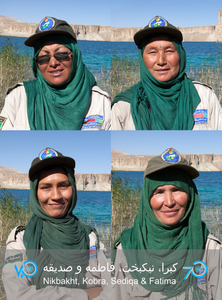
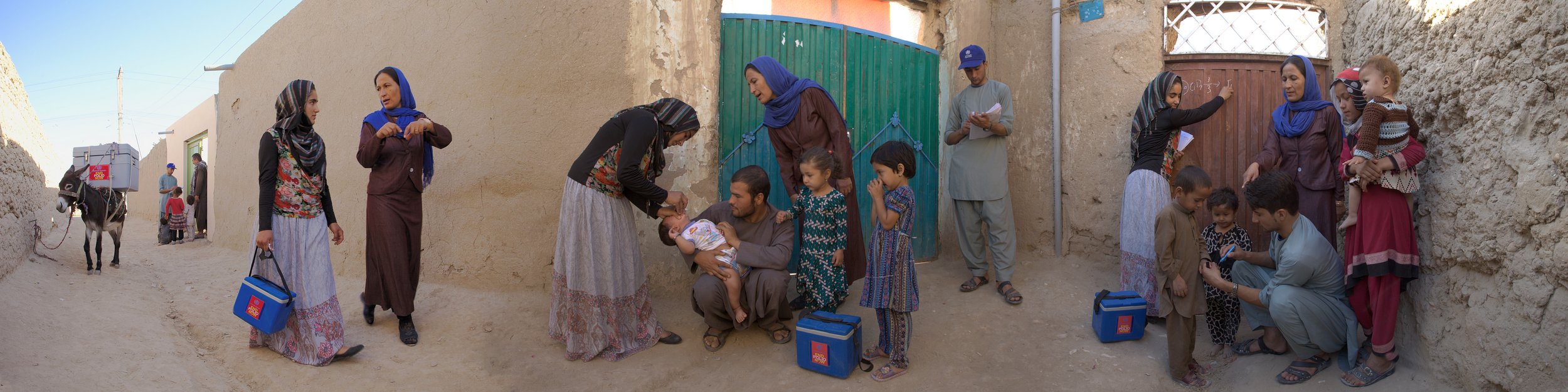
A typical polio team in a high-risk district is small, fast, and local. Two vaccinators, often women drawn from the same village, carry a cold box stocked with ice packs and oral vaccine vials, a tally sheet, and a marker pen to mark each finger of every child reached. They are accompanied by a community mobiliser who explains the campaign to parents and a supervisor who verifies coverage at the end of the day. The whole unit moves on foot, by motorbike, or in a marked vehicle, depending on terrain and threat level.
What looks like a simple act of handing a child two drops of vaccine is the visible tip of a deep logistics chain. Planners use satellite imagery and household micro-plans to identify missed settlements, cold-chain technicians test freezers against power cuts, and data managers reconcile paper registers with electronic dashboards by nightfall. The teams are paid a small stipend that, in a country where average incomes remain very low, makes the difference between a campaign that functions and one that collapses.
Measles campaigns in a post-pandemic world
Measles immunisation took a hit globally during the COVID-19 era, and Afghanistan was no exception. Disruption to routine services left a pool of susceptible children, and outbreaks followed within months in provinces from Herat to Kunduz. The UN's response, led by UNICEF with WHO technical guidance, has been to fold measles vaccination into polio campaign platforms wherever feasible, so that a household visit delivers protection against more than one disease at once.
These combined campaigns require careful training because the contraindications and side-effect profiles of measles and polio vaccines differ. Health workers in the field are taught to screen children for signs of severe acute malnutrition, which can complicate measles vaccination, and to refer complicated cases onward. In border districts near Spin Boldak and Torkham, returnees from Pakistan are offered catch-up doses for both diseases as they cross, a small intervention that limits the chance of imported outbreaks taking hold.
The last mile of polio eradication
The phrase "last mile" appears constantly in polio literature, and in Afghanistan it remains literal. Reaching every child means walking up valleys where roads wash out in winter, convincing families in conservative areas that a foreign-funded campaign has their children's interests at heart, and maintaining cold chains through altitudes of more than two thousand metres. The Global Polio Eradication Initiative, which channels significant UN funding, has shifted tactics in recent years to integrate polio with broader essential immunisation, recognising that standalone vertical campaigns have reached the limits of what they can achieve.
Tactics now include intensified focus on the eastern and southern regions, where virus persists, and on transit populations moving between formal and informal settlements. Environmental surveillance, sampling sewage in cities like Kandahar and Jalalabad, has become a critical early warning tool, picking up viral signals before paralytic cases appear. The data from these sites feed directly into the next campaign's micro-plan, redirecting teams to where the virus is most likely to be hiding.
Partnerships with local NGOs
UN agencies cannot reach every household in Afghanistan without trusted local partners, and that is why coordination with Afghan civil society is treated as a campaign priority rather than an afterthought. National and provincial NGOs, often staffed by women who would be excluded from international rosters, handle household visits in conservative districts and provide the cultural fluency that outside teams rarely possess. Their work, documented in coverage assessments and independent monitoring reports, is what turns a campaign plan on paper into vaccinated children on the ground.
Reports from this collaboration highlight how joint planning meetings, shared data systems, and pooled logistics budgets have improved campaign quality in several provinces. For readers interested in the mechanics of this partnership model, an overview of Afghan NGO aid coordination offers a useful entry point into the broader architecture of effective delivery in a complex operating environment.
How Australia connects to the effort
The connection between a vaccination post in Kandahar and a parent in suburban Brisbane may seem remote, but it runs through funding, policy, and diaspora ties. Australia channels significant support to the World Health Organization and to UNICEF, both of which play leading roles in Afghan immunisation. Researchers at the University of Sydney and the Burnet Institute in Melbourne have contributed to surveillance methodologies now used in polio endemic zones, and Australian paediatricians have participated in WHO technical advisory bodies that shape the campaigns.
Australia's domestic success in driving childhood immunisation to consistently high levels is itself a product of careful legislation. Requirements that children be fully immunised before enrolling in childcare, and the "No Jab, No Pay" rule that ties the Family Tax Benefit Part A supplement to a child's immunisation record, have pushed coverage well into the mid-nineties. Afghan families in Sydney's western suburbs, in Melbourne's northern growth corridor, and in Perth's growing Hazara community bring with them firsthand knowledge of vaccine-preventable disease, and many maintain direct links with relatives in provinces where these campaigns run. The diaspora is, in its own way, a bridge between two health systems.
Challenges that continue to shape the response
Security incidents affecting vaccinators, sudden access restrictions in certain districts, and the chronic underfunding of routine immunisation all weigh on every campaign cycle. Climate-related displacement, increasingly common after successive droughts and floods, scatters families and makes returning to a fixed health post unlikely. The UN's response has been to build flexibility into micro-plans, hold buffer stocks of vaccine, and pre-position teams in displacement hosting areas before crises peak.
Workforce mobility is another quietly important factor. Health workers recruited for campaign surges sometimes travel from neighbouring countries or from distant provinces, and the administrative frameworks that govern their movement can determine whether a team deploys on time. Broader trends in streamlined mobility, including initiatives such as remote work residence permits for globally mobile professionals, point to a wider international appetite for faster, clearer cross-border documentation. In the humanitarian sector, similar thinking is beginning to apply to surge health teams, where delays in accreditation can mean delayed vaccinations.
Stand with Afghanistan's children
Every polio case in Afghanistan is, in a sense, a test of whether the world can finish the job it started in 1988. Every measles outbreak is a reminder that the routine immunisation systems taken for granted in countries like Australia require constant reinforcement elsewhere. The UN's vaccination drives, funded by member states and delivered in partnership with Afghan organisations, represent one of the clearest examples of multilateral cooperation saving lives at scale.
Australians who want to follow the campaigns closely can subscribe to updates from UN Afghanistan, engage with the country's WHO and UNICEF country offices, and support the NGOs that work alongside UN teams in high-risk districts. Sustained attention, in the long run, is what keeps the drops flowing, the cold chain running, and the door-knock turning into another child marked, another family protected, and another step closer to a country where polio and measles are finally part of history rather than part of the morning news.