News

Afghan professionals focus of new UN70 radio shows

KABUL, 2 November 2015 — The second in a series of special ‘Afghanistan Emrooz’ radio programmes, which are part of the United Nations’ 70th anniversary celebrations, will be broadcast across Afghanistan this week.

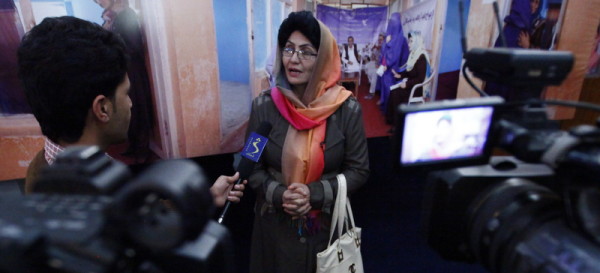
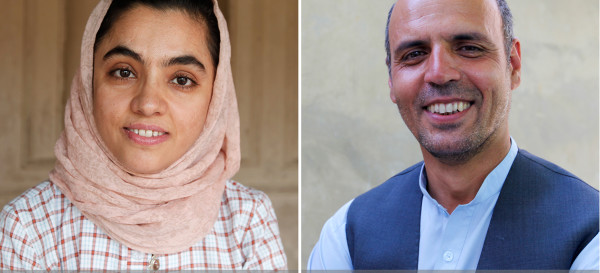
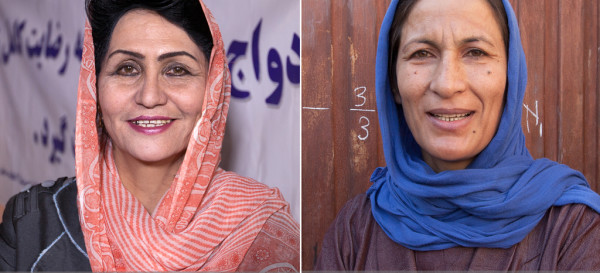
To be broadcast in Dari and Pashto, the programme features two Afghan professionals who are making positive contributions in support of a stronger Afghanistan: women’s rights activist, Magheferat Samimi and polio vaccination coordinator, Rahima Ahmadi.

Mrs. Samimi is the Head of the Afghan Human Rights Organisation of Jowzjan, Sari-Pul & Faryab Provinces. She is a tireless human rights activist, especially in the field of protecting women against violence and assisting survivors of violence.

Her work on women’s rights includes working against forced and underage marriage, sexual abuse, abductions, imprisonment, torture and murder, in addition to self-immolation and other types of suicide.

Cultural constraints are a key challenge, with many families not referring cases to the authorities due to a feeling of shame. This is changing, however, in part due to advocacy efforts with elders and religious scholars.

“I am committed to continue serving the Afghan people: to prevent rape and sexual harassment of children; to prevent underage and forced marriage; to prevent kidnappings and to prevent the violation of women. Afghans should not be victims to these crimes.” said Ms. Samimi.

Polio is another significant challenge facing Afghanistan, which is one of only two countries in the world where polio is endemic. According to the latest figures, Afghanistan currently has 13 cases of wild polio virus.

Mrs. Ahmadi, a polio vaccination coordinator in Mazar-e-Sharif, has dedicated much of her life to seeing Afghanistan polio-free.

For the past 15 years she has worked in the Child Promotion Unit of the Provincial Health Department, with the World Health Organization (WHO) to carry out the country’s polio vaccination programme. Beginning as a volunteer, she was later employed as a supervisor and today is a programme coordinator.

“When a child is affected by polio, then 200 children in his or her area could be affected,” said Mrs. Ahmadi. “We can prevent this disease with two drops of polio vaccine. This vaccine has a very strong antibody and can prevent children under 5 years of age from getting polio.”

Mrs. Ahmadi and her team visit home-by-home, street-by-street, to ensure all children are immunized. Security, however, is an ongoing challenge: “In a number of places, due to the level of insecurity, children can’t receive the vaccine and it is difficult for me and colleagues to go there.”

The United Nations Children’s Fund works with WHO and the Afghan authorities in the polio vaccination drive.
Afghanistan’s First Lady attends UN 70 photo exhibition

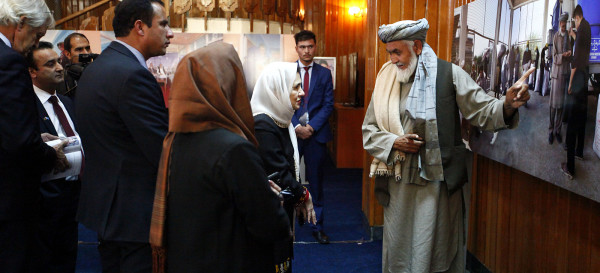
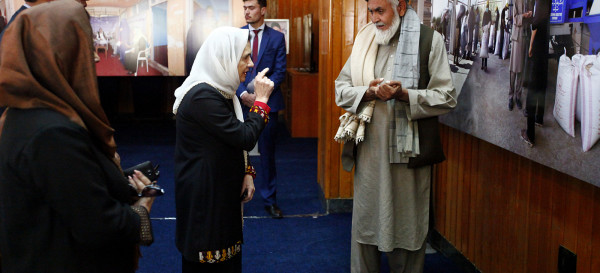
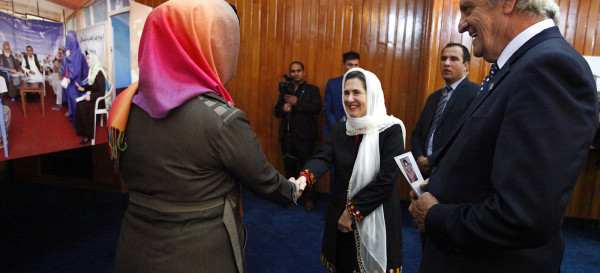
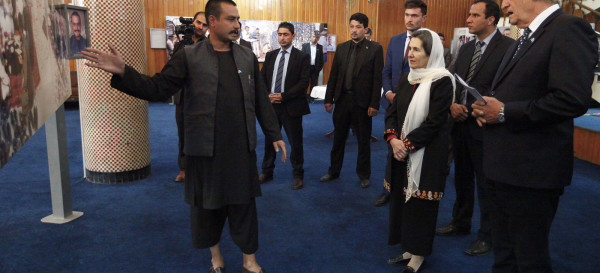
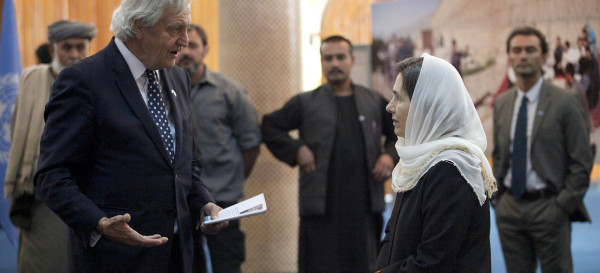
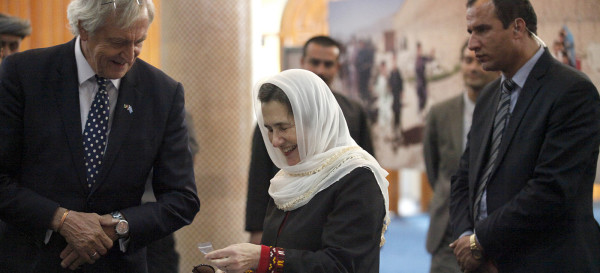
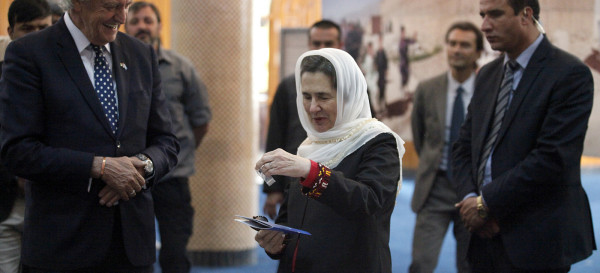
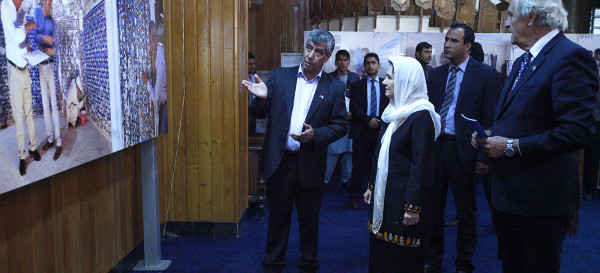
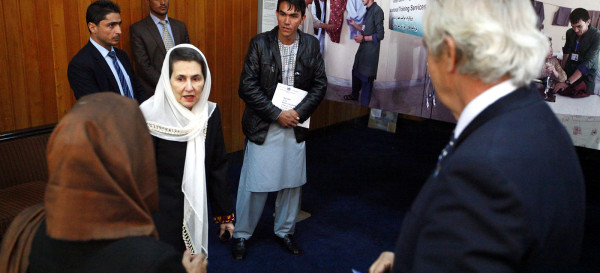
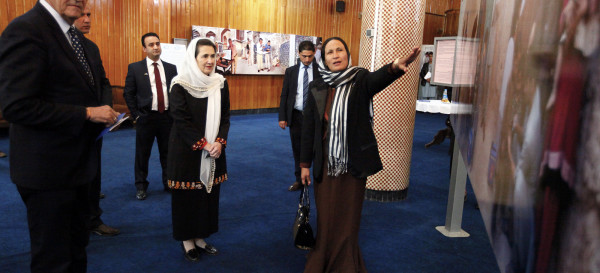
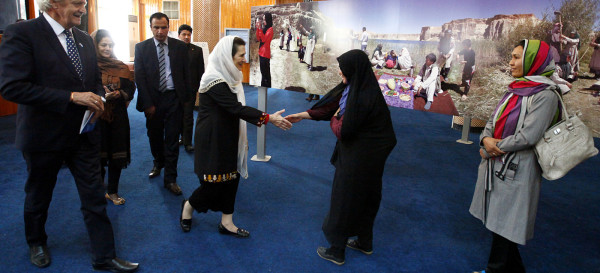
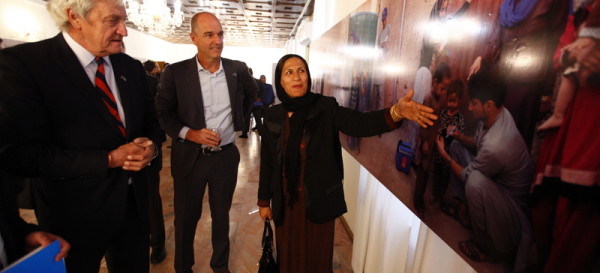
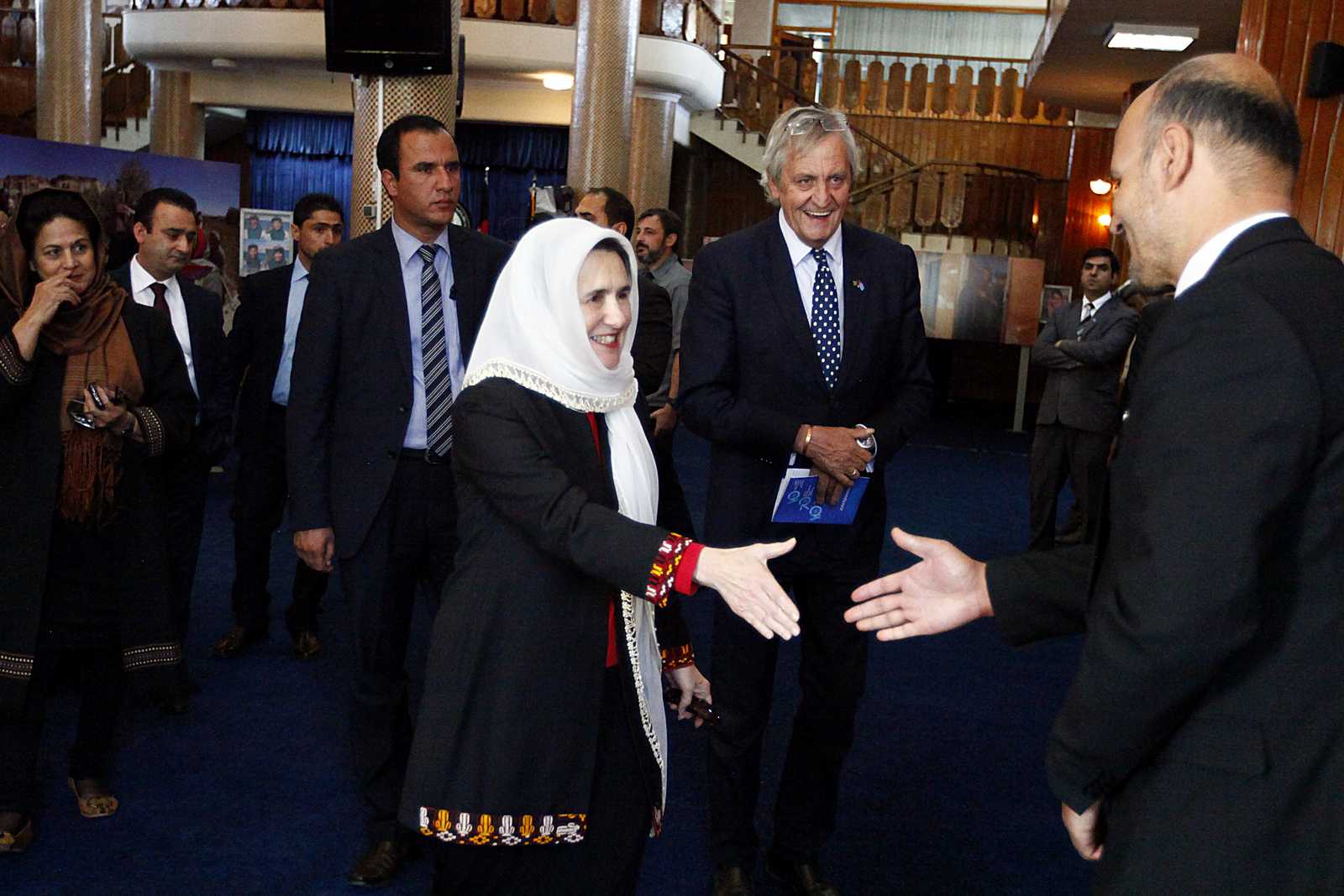
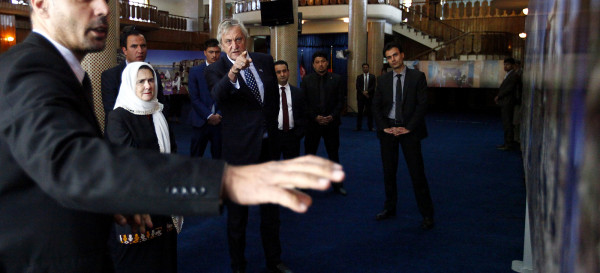
KABUL, 29 October 2015 – Afghanistan First Lady Rula Ghani was among an estimated 150 people to attend a UN photographic exhibition in Kabul celebrating the extraordinary work of a group of Afghan professionals.

Each of the professionals – working in areas such as improved health care, de-mining, support for returning refugees and environmental protection – have made a positive difference in their fields, for the betterment of Afghanistan.

The audience, which included Afghan journalists, civil society groups and UN representatives, viewed a collection of specially commissioned panoramic photographs. Each photo (which can be viewed on unafghanistan.org ) contains three main scenes, highlighting key aspects of the professionals’ work.

Afghan professionals celebrated at Kabul media event

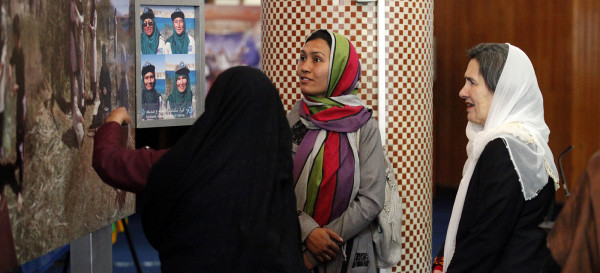
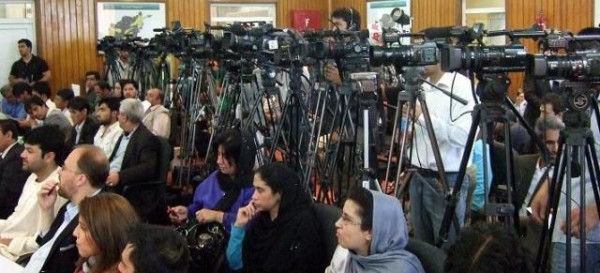
KABUL, 29 October 2015 – The extraordinary work of a group of Afghan professionals who have made a positive difference in their fields, for the betterment of Afghanistan, was celebrated at a photographic exhibition in Kabul today.

An estimated 150 people, from Afghanistan’s media outlets and civil society groups, along with UN representatives, attended the exhibition, which featured a collection of specially commissioned panoramic photographs measuring 4 metres wide.

Each photo (which can be viewed on unafghanistan.org ) contains three main scenes, highlighting key aspects of the professionals’ work in areas such as improved health care, de-mining, support for returning refugees and environmental protection.

Nicholas Haysom, the UN Secretary-General’s Special Representative for Afghanistan and head of UNAMA, said Afghanistan has been an “active, full and vibrant member of the United Nations almost since the beginning of the United Nations.”

The envoy said the UN’s 70th anniversary in Afghanistan is marked by celebrating “the work of ordinary Afghans, although they are also extraordinary Afghans.”

He said the Afghan professional featured in the exhibit represent activities that stretch across the full diversity of UN engagement in Afghanistan: “Their work best expresses our ideals. Their work is a credit to them and to Afghanistan.”

More importantly, he went on to say, their work recognizes that the UN can do nothing except through its capacity to work with and through Afghans. Mr. Haysom said the UN intends to stay in Afghanistan for as long as it will take for Afghans to accomplish their aspirations – a stable and prosperous Afghanistan.

Two of the professionals included in the exhibition addressed the audience: Maternal and Child Health Advocate Feroza Mushtari and National De-mining Director Mohammad Sediq Rashid.

Ms. Mushtari is one of Afghanistan’s leading maternal health advocates. She studied at Afghanistan’s first formal midwifery programme, graduating at a time when the country was one of the most dangerous places to be an expectant mother and few women had access to specialized midwife services.

Before Feroza started work in 2004, there were around 1,600 deaths of women for every 100,000 births in Afghanistan. Today, this number has been reduced to 327 deaths. Child mortality rates have been similarly reduced.

“My biggest wish is to make every pregnancy and every birth safe,” says Ms. Mushtari. “I am committed to it.”

Feroza has worked with several national and international organizations, including training midwives in a United Nations Population Fund (UNFPA) obstetrics project between 2006 and 2012, and a United Nations Children’s Fund (UNICEF) training project for midwives in 2014. She is currently the Acting President of the Afghan Midwives Association.

“UN agencies have a played a vital role in my capacity-building,” says Ms. Mushtari.

Mohammad Sediq Rashid is Director of the Mine Action Coordination Centre of Afghanistan (MACCA). He has spent more than 25 years in different posts with UN-related organizations helping to rid the country of mines and other explosive remnants of war, protecting communities and opening land for productive use.

Previously known as UN-MACA, MACCA is supported by the United Nations Mine Action Service (UNMAS) and the UN Office for Project Services (UNOPS).

“One of the worst phenomena of the war is the existence of large numbers of landmines and explosive remnants of war [that] exist in residential areas, agricultural areas, schools and roads, making life difficult for the Afghan people,” he says.

Sediq and his dedicated colleagues have performed a vital role in reducing mine-associated casualty rates in almost all regions of the country. Since he began de-mining work in 1989 with the Mine Clearance Planning Agency – an NGO that was primarily funded by the UN Office for the Coordination of Humanitarian Affairs (OCHA) – around 80 per cent of mine-contaminated areas have been cleared.

“I hope and wish that one day this problem will come to an end,” he says. “There should be no more new contamination created in this country, and the minefields and other hazards left behind from previous and current conflicts should be cleared.”

The exhibition photos and information about all the Afghan professionals featured in the exhibit are available on www.unafghanistan.org .

View a transcript of comments made by Nicholas Haysom, the UN Secretary-General’s Special Representative for Afghanistan.

Special radio programmes highlight unique UN-Afghan partnership

KABUL, 29 October 2015 – The first in a series of special ‘Afghanistan Emrooz’ radio programmes that celebrate the unique partnership between the United Nations and the Afghan people has been broadcast across the country as part of the UN’s 70 th anniversary.

The programmes feature Afghan professionals who are making positive contributions to the life of their communities and the country. The premier episode features Sediq Rashid, Director of the Mine Action Coordination Centre of Afghanistan (MACCA) and Feroza Mushtari, a maternal and child health advocate.

“In Afghanistan, conflict has taken place everywhere and left villages, cities, agricultural lands and roads contaminated with landmines and explosive remnants of war,” said Mr. Rashid, who noted that thousands of villages are affected and national infrastructure projects impeded.

According to the United Nations Mine Action Service, although 83 per cent of minefields have been cleared, the remaining hazardous areas are enough to classify Afghanistan as one of the most contaminated in the world. On average, 33 civilians were injured or killed each month in 2015.

Maternal and child health is another big issue facing Afghanistan. There has been an almost 80 per cent decrease in maternal mortality since 2002, from 1,600 deaths for every 100,000 live births to a mortality rate of 327. This is a real achievement, yet maternal mortality in Afghanistan remains amongst the highest in the world.

UN agencies and other international partners have provided support to midwives through training and capacity-building.

“The first aim of a midwife is to be with mothers and assure them of a safe birth process,” said Ms. Mushtari.

“I think this is the most sacred and dearest job. Whenever I help a mother and she takes her baby in her arms with a smile, it is the biggest prize for me and gives me energy and motivation to work even harder,” said Ms. Mushtari.

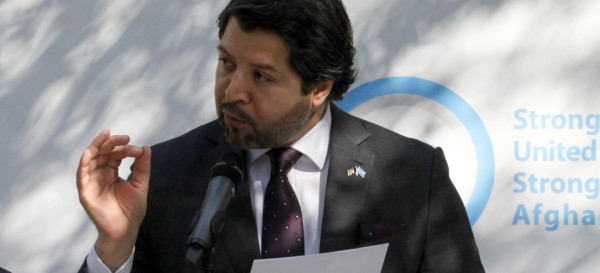
Afghan Foreign Affairs Minister addresses UN70 reception

KABUL, 28 October 2015 – The Acting Minister of Foreign Affairs of Afghanistan addressed guests at a reception in Kabul marking the 70th anniversary of the United Nations.

The Minister’s remarks are below:

On behalf of the Afghan government, it is my distinct pleasure to attend today’s reception on the occasion of the 70th Anniversary of the United Nations. Let me and take this opportunity and extend my heartfelt thanks and appreciation to my good friend Ambassador Haysom for organizing this gathering.

The very existence of the United Nations is a unique achievement in the history of mankind – one Afghanistan is extremely proud to be a part of, having joined one year after its formation.

We are all thankful to those who have contributed to its successes during the first 70 years and I would like to take this opportunity to congratulate all the men and women who serve the UN. Their efforts and sacrifices have contributed greatly to peace, security, development, and human rights not only in my country but all over the world.

I would also like to pay tribute to Afghan and international UN staff members who have lost their lives serving humanity both here and elsewhere in the world. Their work does make a difference in making this world a better place for all of us.

As such, we must continue to work in pursuit of the ideals enshrined in the UN Charter for peace, development, and respect for human rights. Our common responsibility remains critical in strengthening the capacity of the UN to protect and defend international peace and stability and provide help and assistance to those in need.

The historic adaption of the SDGs last month underscores long standing truth that peace and development are integrally linked – it is impossible to have one without the other under a rights-based paradigm. The 2030 agenda compels us to look beyond national boundaries and short-term interest and act in solidarity for the greater good in the long-term.

In doing this, we must acknowledge that there are challenges to the existing UN mandate including its structure, resources, and traditional approaches to dealing with global issues. The organization has tried its best to keep up and adapt to evolving environment and bring about the necessary reforms to effectively resolve the complex issues we face today.

This celebration today offers an opportunity to reflect back on the UN’s history with Afghanistan and take stock of our enduring achievements. The UN has been a longstanding reliable partner of Afghanistan, even when other member states looked the other way, the UN was here, standing ready to support and help us.

The UN was in Afghanistan helping with development and poverty reduction well before the wars here consumed the country over 30 years ago. And while peace and stability remain the key goals of the UN mission here in Afghanistan, there is so much else that the UN family contributes to that I would be remiss not to mention them – including de-mining, clean water initiatives, and humanitarian aid, which is particularly relevant today, given Monday’s earthquake.

All these programs have had direct impact on helping us improve conditions for all Afghans, since we began this journey in 2001.

Afghanistan has witnessed many defining events in recent past such as the successful security transition, first ever peaceful and democratic transfer of political power, and decrease in donor funding. We have entered into the transformation decade to achieve self-reliance, building on the gains made over the last 14 years of reconstruction and development.

In view of this changing context, the time has come to further strengthen our relationship with UN by making it more focused and result-oriented.

The UN’s engagement in Afghanistan will continue to require a critical component of the International Community’s overall support. And we will need to work with the UN to identify where we need to increase efforts to meet current and future challenges to best serve all Afghans while also aligning UN efforts in the best way to realize our own self-reliance reform plan to ensure the goals of the transformation decade are met – and are Afghan-owned and led.

I take this opportunity, once again, to thank Ambassador Haysom and the UN staff for their support in standing firm with us helping Afghanistan move towards a better future.

The UN can be home for all of us to advance the vision of a peaceful, sustainable, and just world. Let me reiterate our government’s steadfast commitment for promoting the very principles on which the United Nations was founded. We are confident that with the continued support of the family of nations represented in this noble organization; we will realize our shared goal of peaceful, stable and prosperous nation.

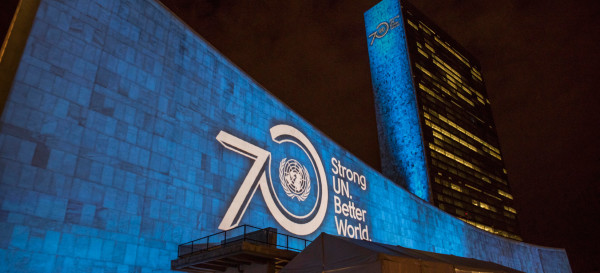
We hope to serve as a catalyst for security and prosperity in our region and beyond – and continue to turn our major cities blue in honor of UN anniversaries in years to come.

I’d like to close with words more eloquent than my own, those of a renowned poet Saadi. These words graced the entrance of the United Nations and underscore Afghanistan’s commitment to working with our fellow member states in pursuit of a better world:

“Human beings are members of a whole, In creation of one essence and soul,

If one member is afflicted with pain, Other members uneasy will remain,

If you have no sympathy for human pain, The name of human you cannot retain.”

Thank you.

UN70 event celebrates Afghans and UN’s enduring partnership with Afghanistan

KABUL, 28 October 2015 – Afghan political leaders and professionals joined with UN officials in Kabul to celebrate Afghans and the UN’s enduring partnership with Afghanistan on the occasion of the Organization’s 70th anniversary.

Speaking at the event, which included a photography exhibition of the work and achievements of a group of Afghan professionals, Chief Executive Abdullah Abdullah and Acting Foreign Minister Hakmat Karzai highlighted the unique association between Afghanistan and the UN.

Dr. Abdullah thanked the UN for working with Afghans through difficult years in the past decades, including during the recent earthquake. He said the UN has played an important role in facilitating the political process and coordinating efforts supporting humanitarian assistance and development.

Mr. Karzai said Afghanistan is proud to be part of the UN and thanked those who have served in the world body, both Afghans and non-Afghans. “Their efforts and sacrifice have contributed greatly to peace, security, development and human rights,” he said.

“The UN has been a long-standing, reliable partner of Afghanistan,” he stressed. “Even when others looked the other way, the UN was here standing ready to support and assist us.”

Nicholas Haysom, the UN Secretary-General’s Special Representative for Afghanistan and head of UNAMA, said Afghanistan has been a full and vibrant member of the UN community of nations and one of its earliest members.

“The UN has been in Afghanistan, partnering with its people, for 60 years, including the turbulent last 30 years,” he said. “We intend to stay for the next 60 years or to the extent that the Afghan people wish to continue partnering with the UN.”

The exhibition brought together a series of specially commissioned panoramic photographs featuring a group of Afghan professionals, women and men, who have been assisted by the UN and are making a difference in fields such as improved health care, support for returning refugees and environmental protection.

Mr. Haysom said the best way to mark the UN anniversary is to celebrate the achievements of Afghans, in particular a group of ordinary Afghans who are doing extraordinary work in human rights, the protection of women’s rights, the maintenance of the cultural heritage of Afghanistan and mine clearance.

“These individuals and the exhibition of photographs of their work traverse the full range of activities in which the UN would want to see its ideals expressed,” he said. “We understand and recognize that the UN’s ideals are best expressed through the work of Afghans and working with Afghans.”

Mr. Haysom affirmed that the UN “will walk the rest of the journey, hand-in-hand, with Afghans toward the realization of their aspirations for a stable, secure and prosperous Afghanistan.”

The nine panoramic photographs featured in the exhibition, along with the profiles of the outstanding professionals, are available on UNAfghanistan.org .

View a transcript of comments made by Nicholas Haysom, the UN Secretary-General’s Special Representative for Afghanistan.

View remarks of Hakmat Karzai, Afghanistan’s Acting Foreign Minister.

Afghanistan Journalists Council congratulates UN on 70th anniversary

KABUL, 28 2015 –The Afghanistan Journalists Council has congratulated the United Nations on their 70th anniversary and their vital work for peace, development and human rights.

A statement from the Council, which represents Afghan journalists, said that during the past seven decades the UN had worked to maintain peace and security, promoted human rights, fostered social and economic development, protected the environment and provided  humanitarian assistance.

“The Afghanistan Journalists Council congratulates the United Nations on the 70th anniversary of their establishment,” said the statement.

The Council noted that UN officials work in the service of peace, development and human rights often under difficult conditions.

Key achievements have included finding solutions to disputes between countries and the prevention of major conflicts.

The Council expressed hope that the UN will continue its work and assistance across the globe, including in helping to find solutions to the Afghan conflict.

UN family in Afghanistan celebrates Afghans making a difference

KABUL, 25 October 2015 – The United Nations family in Afghanistan marked UN Day by highlighting the work of some of the outstanding Afghan professionals it has assisted or worked with in recent years.

These professionals, together with many other empowered Afghans, are leaders in fields of critical importance to the building of a stable, peaceful and prosperous Afghanistan. In the coming days, they will be featured in national television and radio broadcasts, and will appear at various events acrosss Afghanistan.

To learn more about these extraordinary Afghans, and hear their stories, visit the UN Afghanistan website .

The UN family in Afghanistan is marking the 70th anniversary of the world body under the headline ‘Strong UN – Strong Afghanistan’. Events and activities began on 24 October, UN Day, and run through the end of November 2015.

World turns blue on UN’s 70th anniversary

KABUL, 24 October 2015 – Iconic landmarks around the world were illuminated in blue light to mark the United Nations 70 th anniversary.

Ban Ki-moon, the UN Secretary-General described the Organization as a “beacon for all humanity,” as UN Headquarters and the Empire State Building in New York were lit in UN blue along with around 250 other buildings and sites across the globe.

The celebration kicked off in New Zealand on Friday and from there a wave of blue – the official colour of the UN – moved across countries and continents as monuments around the world take part in the event to commemorate UN Day .

Among the famous landmarks to turn blue will be the Great Pyramids of Giza in Egypt, the Great Wall of China, Russia’s Hermitage Museum, and the ancient city of Petra in Jordan.

UN Day marks the anniversary of the entry into force of the UN Charter . With the ratification of this founding document by the majority of its signatories, including the five permanent members of the Security Council, the Organization officially came into being. Afghanistan became a member state of the UN on 19 November 1946.

“Seven decades after its founding, the United Nations remains a beacon for all humanity,” said the Secretary-General. “Every day, the United Nations feeds the hungry and shelters those driven from their homes.  The United Nations vaccinates children who would otherwise die from preventable diseases.  The United Nations defends human rights for all, regardless of race, religion, nationality, gender or sexual orientation.”

“The world faces many crises, and the limits of collective international action are painfully clear.  Yet no single country or organization can address today’s challenges alone.  The timeless values of the United Nations Charter must remain our guide.  Our shared duty is to ‘unite our strength’ to serve ‘we the peoples’,” said the Secretary-General.

In addition to events around UN Day, a range of other activities and events have been organized throughout the year under the theme of “Strong UN. Better World.” Key events included a ceremony held in San Francisco in June to commemorate the anniversary of the signing of the UN Charter in that city in 1945.