
Making a Difference

Afghan Rural Market Construction Creates Space For Women Traders
In Afghanistan’s rural districts, a market stall can represent far more than a roof, a counter and a secure place to store goods. For women traders, a purpose-built kiosk may provide a safer way to sell vegetables, dairy products, handicrafts, clothing or household items while remaining connected to family responsibilities and local community life. Small-scale infrastructure can therefore support income, dignity and a stronger village economy at the same time.
The United Nations’ work in Afghanistan has often linked physical improvements with broader goals such as participation, livelihoods and social cohesion. The archived UN70 “Strong UN. Strong Afghanistan.” campaign presented Afghan people as contributors to their country’s future, rather than as passive recipients of assistance. Within that wider picture, rural market construction and vendor stalls for women show how practical facilities can give development a visible, everyday form.
Why A Market Stall Matters
A rural market is an important meeting point between producers and buyers. Farmers need somewhere to sell surplus crops, families need access to affordable goods, and small traders need reliable foot traffic. When women have a designated place to trade, they can turn skills and household production into regular earnings. A stall can support sales of embroidery, dried fruit, bread, poultry, fresh produce and other goods that might otherwise be sold informally or not at all.
The design of a market affects who feels able to use it. Open ground beside a road may expose vendors to dust, extreme weather, theft or unwanted attention. A row of sturdy stalls with shade, clear walkways and lockable storage gives traders greater predictability. It can also make the market easier for customers to navigate, improving the commercial value of the whole site.
For women, visibility and safety are especially significant. A well-planned market may include separate entrances, screened areas, adequate spacing and facilities that respect local customs without isolating women from customers. The result is a trading environment shaped around local realities rather than a generic construction model.
Building For Local Conditions
Afghanistan’s rural settlements vary widely in climate, terrain and access to services. A market in a dry, hot district must cope with dust and intense sunlight, while a highland site may need stronger protection from snow, frost and seasonal rain. Construction materials have to be durable, repairable and available locally. A design that depends on imported components or specialised maintenance may quickly become impractical.
Simple features can have a substantial effect. Raised floors help protect merchandise from water and mud. Wide roof overhangs provide shade. Ventilation reduces heat inside enclosed kiosks, while secure shutters help traders leave goods overnight. Drainage channels, waste collection points and handwashing facilities protect public health and keep the market usable after bad weather.
Community participation is central to successful market construction. Local builders understand materials, transport routes and seasonal conditions. Women traders can identify problems that may be missed in a technical inspection, including poor sightlines, difficult access, inadequate privacy or stall dimensions that do not suit their products. Consultation is therefore a construction input, not an optional public-relations exercise.
Supporting Women’s Economic Participation
A vendor stall lowers some of the barriers that prevent women from entering or expanding small business. It creates a recognised place to trade and can reduce the costs associated with repeatedly setting up temporary displays. A permanent location also helps a trader build a customer base, plan stock and compare prices with other sellers.
Market infrastructure works best when paired with practical economic support. Women may need training in bookkeeping, pricing, packaging, food hygiene and inventory management. Access to small loans or savings groups can help traders purchase stock without relying on high-cost informal credit. Where possible, connections to wholesalers, cooperatives and transport providers can extend the benefits beyond the market itself.
The broader effect reaches households. Additional income can help pay for food, healthcare, school materials and agricultural inputs. Women who manage a trading business may gain greater confidence in household decisions and local discussions. These changes are gradual, but they can strengthen resilience when harvests fail, prices rise or employment opportunities shrink.
Markets, Public Investment And Accountability
Constructing rural stalls is a public investment decision. It involves land, procurement, labour, materials, maintenance and long-term ownership. Transparent budgeting helps communities understand what has been funded and who is responsible for repairs. This is relevant across development work: readers can see how public agencies report operational costs in coast guard spending, even though the sector and country are different. Clear expenditure records make it easier to judge whether public money is serving its intended purpose.
For a rural marketplace, accountability should cover more than the initial building phase. Questions of access, stall allocation, rent, security, waste collection and maintenance all influence whether women can continue trading. If stalls are captured by powerful intermediaries or fees become unaffordable, the physical structure may remain while its development purpose disappears.
A fair management committee can include women vendors, local elders, municipal representatives and relevant community organisations. Written rules should explain how stalls are assigned, how disputes are handled and how repairs are financed. Transparent arrangements reduce uncertainty and help protect the market from becoming an asset controlled by only a few individuals.
Lessons For Australian Readers
Australian audiences can recognise the importance of market design through familiar places such as Melbourne’s Queen Victoria Market, Sydney’s Paddy’s Markets or weekend farmers’ markets in regional towns. These venues depend on stall allocation, food safety, trading hours, public amenities, waste services and clear pedestrian movement. The Afghan rural context is very different, yet the basic principle is familiar: a market succeeds when its physical setting supports the people who use it.
Australian local councils commonly require permits for temporary or permanent trading, while food businesses must follow food safety rules and workers are protected by workplace health and safety legislation. Stallholders often use card readers alongside cash, manage weather-resistant displays and plan around public transport or car access. In Afghanistan, infrastructure and regulation may be more limited, so a market project may need to build capacity as well as structures.
Everyday habits also shape market use. Australians may buy coffee at a Saturday market, carry reusable bags and expect accessible toilets, shade and clearly marked parking. Afghan customers and traders have their own routines, cultural expectations and seasonal patterns. The lesson is not to copy an Australian market, but to apply the same habit of designing around real users, local rules and ordinary behaviour.
Measuring The Value Of Vendor Stalls
The number of stalls built is an easy figure to report, but it does not show whether the project has improved livelihoods. Stronger measures might include the number of women trading regularly, average changes in household income, customer numbers, stall occupancy and the proportion of spaces maintained after several seasons. Feedback from traders can reveal whether the market is safe, affordable and commercially useful.
Other indicators relate to community wellbeing. A market may improve access to food, create work for local builders, reduce travel time for buyers and strengthen links between nearby villages. It may also give women a recognised platform for cooperation through producer groups or savings associations. These outcomes should be tracked without treating income as the only measure of progress.
Monitoring must remain sensitive to privacy and security. Publicly identifying women traders or publishing detailed financial information could create risks in some communities. Data collection should be voluntary, proportionate and designed with local partners. The purpose is to learn whether infrastructure is working, not to expose individuals.
Keeping The Market Active
A completed construction project is only the beginning of a market’s life. Roofs require repairs, drainage needs clearing, locks wear out and waste services must continue. A maintenance fund, modest user fees and agreed responsibilities can prevent small defects from becoming expensive failures. Local tradespeople should be able to repair common elements without waiting for outside contractors.
Market activity also benefits from connections beyond the physical site. Agricultural extension services, women’s associations and local civil society groups can help traders improve production and find buyers. Training in mobile payments may be useful where network coverage and access to phones allow it, while cash-based systems may remain essential in other districts. Flexibility matters more than imposing a single business model.
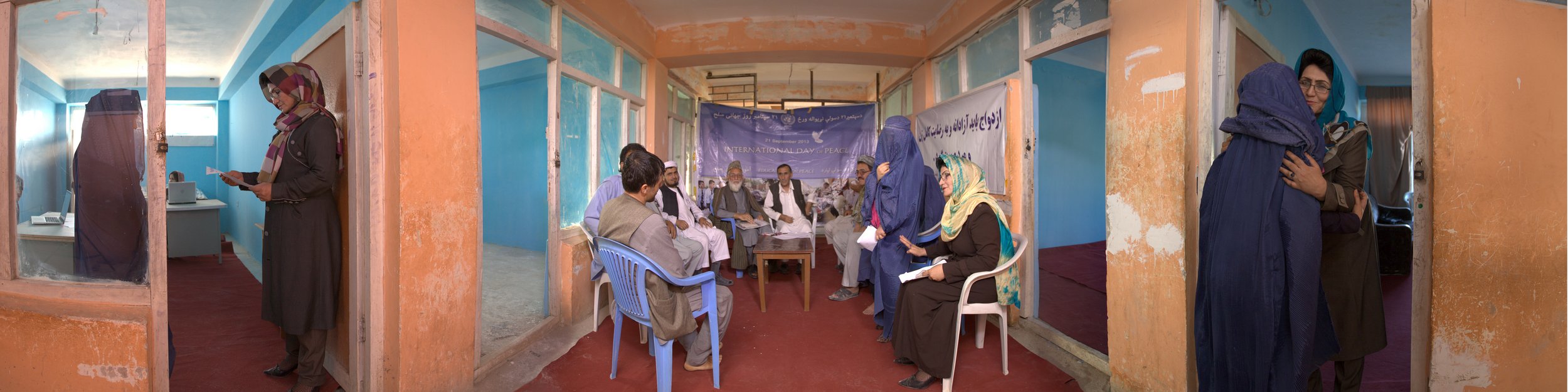
Community dialogue supports the market’s social role. The UN’s wider engagement with Afghan youth, including university peace debates, shows why participation and public discussion matter alongside physical development. A marketplace can become another setting where people exchange information, resolve practical concerns and build relationships across villages, provided it remains inclusive and trusted.
Practical Features That Strengthen Rural Trading
Two groups of details can help planners, donors and local managers think about whether a proposed marketplace is genuinely usable. The first concerns the built environment:
- Weather-resistant roofs, secure shutters and lockable storage
- Safe paths, drainage, shade and accessible water points
- Stall sizes suited to food, livestock products and handicrafts
- Lighting and visibility that support safer opening and closing times
The second concerns management and livelihoods:
- Transparent stall allocation with women represented in decisions
- Affordable fees and a clear plan for repairs and cleaning
- Training in pricing, hygiene, stock control and record keeping
- Feedback systems that protect traders’ privacy and safety
These measures are mutually reinforcing. A secure kiosk cannot compensate for unaffordable rent, and training cannot solve a market that floods every rainy season. Construction, governance and economic support should be planned as one connected intervention.
The archived UN70 campaign provides a useful frame for understanding this approach. “Strong UN. Strong Afghanistan.” is not simply a statement about an institution; it points towards partnership with people who build, trade, organise and care for their communities. Women vendors are part of that national story through the value they create every day.
Rural market construction deserves attention because it turns broad development aims into an asset that communities can see and use. A row of vendor stalls can support safer commerce, local employment and women’s economic participation when it is designed with care and managed fairly. Readers, researchers and development professionals can help keep this work visible by sharing credible evidence, supporting responsible local initiatives and recognising women traders as business owners and community contributors.