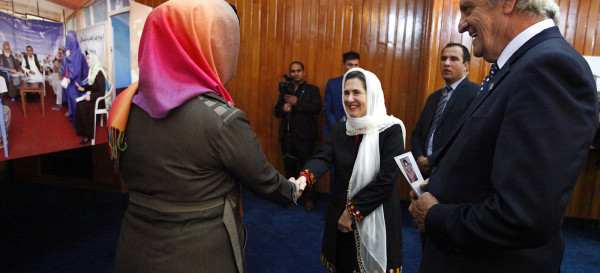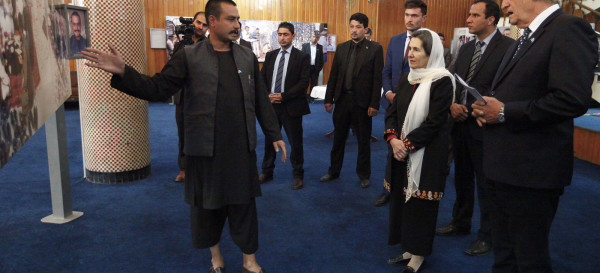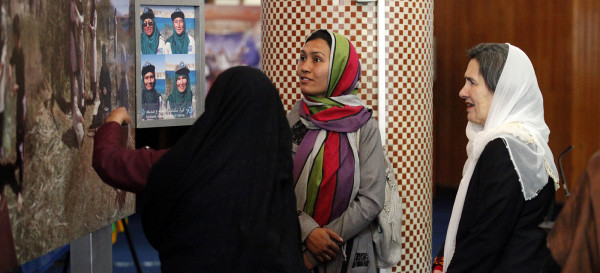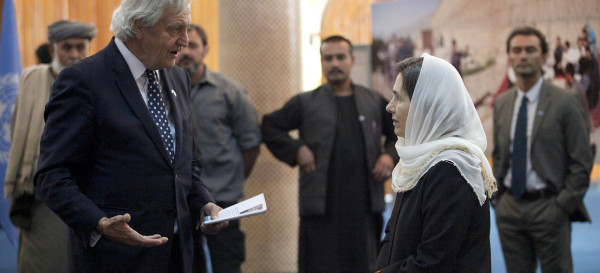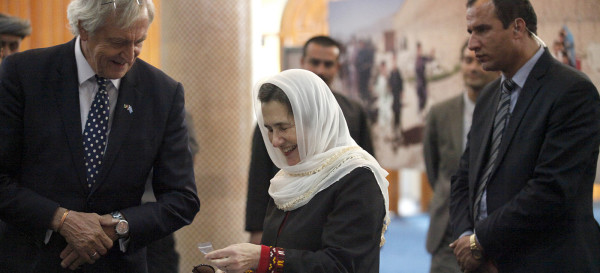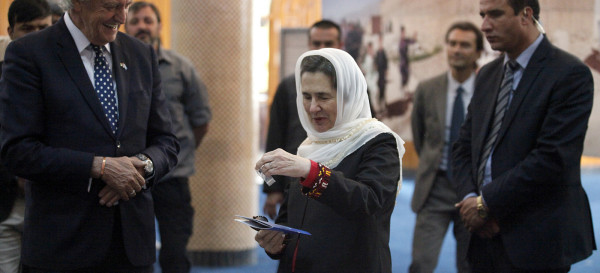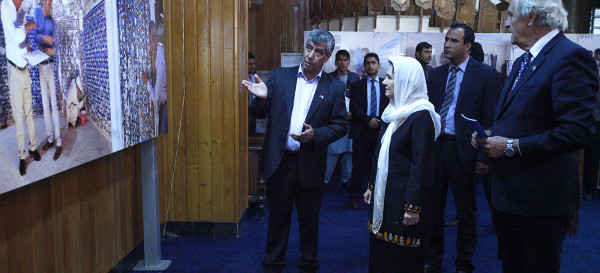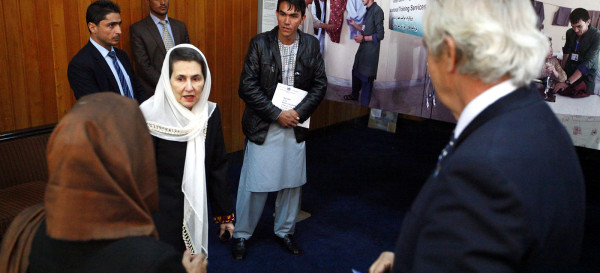
KABUL, 2 November 2015 — The second in a series of special ‘Afghanistan Emrooz’ radio programmes, which are part of the United Nations’ 70th anniversary celebrations, will be broadcast across Afghanistan this week.
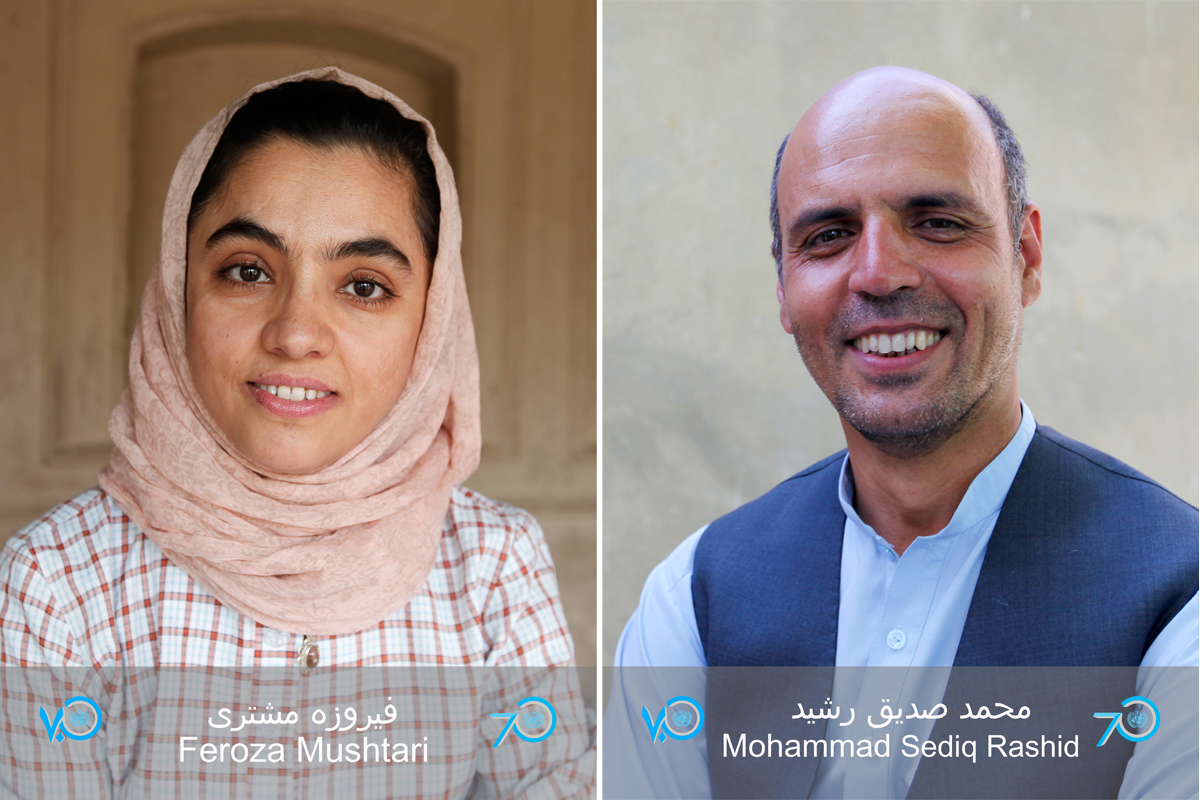
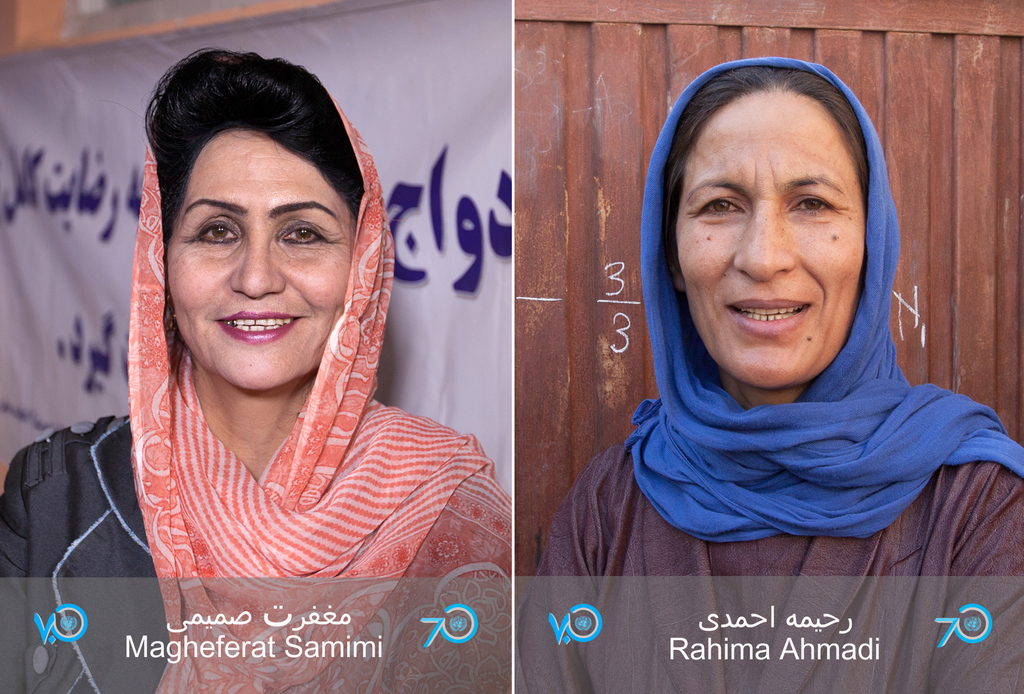
To be broadcast in Dari and Pashto, the programme features two Afghan professionals who are making positive contributions in support of a stronger Afghanistan: women’s rights activist, Magheferat Samimi and polio vaccination coordinator, Rahima Ahmadi.
Mrs. Samimi is the Head of the Afghan Human Rights Organisation of Jowzjan, Sari-Pul & Faryab Provinces. She is a tireless human rights activist, especially in the field of protecting women against violence and assisting survivors of violence.
Her work on women’s rights includes working against forced and underage marriage, sexual abuse, abductions, imprisonment, torture and murder, in addition to self-immolation and other types of suicide.
Cultural constraints are a key challenge, with many families not referring cases to the authorities due to a feeling of shame. This is changing, however, in part due to advocacy efforts with elders and religious scholars.
“I am committed to continue serving the Afghan people: to prevent rape and sexual harassment of children; to prevent underage and forced marriage; to prevent kidnappings and to prevent the violation of women. Afghans should not be victims to these crimes.” said Ms. Samimi.
Polio is another significant challenge facing Afghanistan, which is one of only two countries in the world where polio is endemic. According to the latest figures, Afghanistan currently has 13 cases of wild polio virus.
Mrs. Ahmadi, a polio vaccination coordinator in Mazar-e-Sharif, has dedicated much of her life to seeing Afghanistan polio-free.
For the past 15 years she has worked in the Child Promotion Unit of the Provincial Health Department, with the World Health Organization (WHO) to carry out the country’s polio vaccination programme. Beginning as a volunteer, she was later employed as a supervisor and today is a programme coordinator.
“When a child is affected by polio, then 200 children in his or her area could be affected,” said Mrs. Ahmadi. “We can prevent this disease with two drops of polio vaccine. This vaccine has a very strong antibody and can prevent children under 5 years of age from getting polio.”
Mrs. Ahmadi and her team visit home-by-home, street-by-street, to ensure all children are immunized. Security, however, is an ongoing challenge: “In a number of places, due to the level of insecurity, children can’t receive the vaccine and it is difficult for me and colleagues to go there.”
The United Nations Children’s Fund works with WHO and the Afghan authorities in the polio vaccination drive.