
Making a Difference
UN-Backed Wheat Seed Initiative Strengthens Afghan Harvests
Wheat has shaped Afghan rural life for generations, supplying the flour that fills flatbreads in homes from Herat to Jalalabad and providing income for hundreds of thousands of smallholder families. When harvests fall short, the impact reaches city markets almost immediately, pushing households to sell livestock, skip meals or send children to work instead of school. Recognising this vulnerability, the United Nations has partnered with Afghan ministries and farmer cooperatives to distribute certified wheat seed, helping growers replace degraded or saved seed lots with varieties bred for resilience. The aim is a steady lift in production that allows communities to feed themselves, sell surplus and gradually rebuild seed stocks from their own harvests.
For readers in Australia, the link may feel distant, yet the underlying story of seed, soil and seasonal risk is surprisingly familiar. Wheat paddocks stretch across the Wimmera in western Victoria and through the Darling Downs of southern Queensland, where growers weigh the cost of certified seed against the savings of keeping their own grain for sowing. Supermarkets in Melbourne, Sydney and Perth stock flatbreads, naan and specialty flours that increasingly trace back to imported or locally milled heritage wheats. Understanding how a UN-supported program improves Afghan yields therefore touches on questions of food security, regional trade and consumer choice that resonate well beyond Kabul.
Why Wheat Matters in Afghanistan's Food System
Wheat covers more cultivated land in Afghanistan than any other crop, accounting for the bulk of calories eaten by most rural households each year. National shortfalls have historically pushed the country toward heavy import dependence, draining foreign currency and exposing consumers to volatile global grain prices. A single poor harvest can mean the price of a staple sack of flour doubles in city markets from Mazar-i-Sharif to Kandahar within weeks. Strengthening domestic output is treated as both an economic priority and a humanitarian safeguard, since every extra tonne grown locally reduces the need for emergency food assistance later in the year.
Farmers across Afghanistan contend with thin soils, limited irrigation and a climate that swings between biting winter cold and dry summer heat. Many still sow traditional landrace varieties passed down through families, but those older lines can be susceptible to rust and may yield poorly when rainfall is below normal. The UN-supported seed program focuses on releasing improved varieties that hold up against these pressures, and on multiplying them in ways that keep quality high. By doing so, it offers growers a practical alternative rather than asking them to abandon familiar seed entirely.
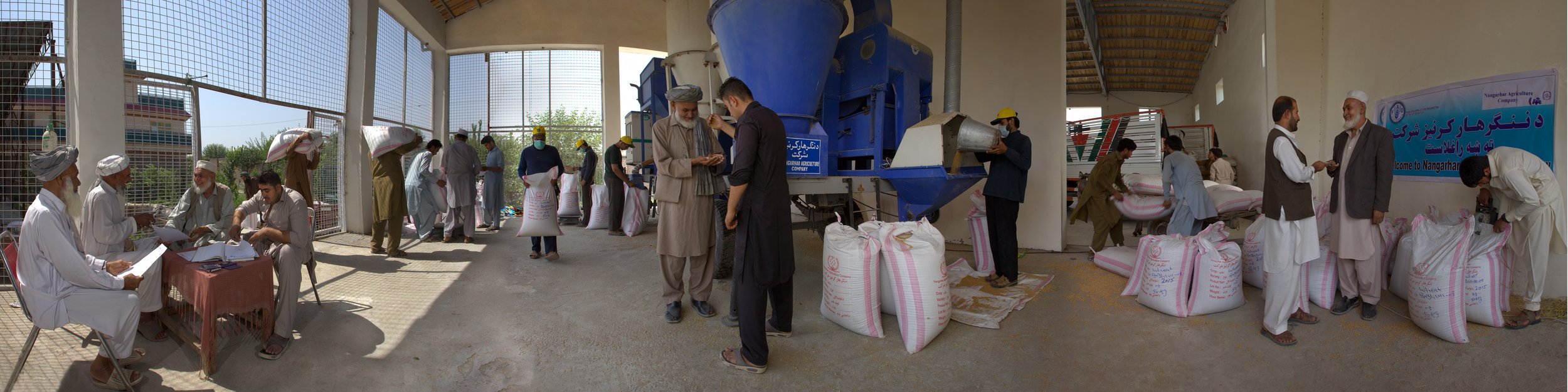
The varieties promoted through these campaigns are tested for drought tolerance, early maturity and resistance to common fungal diseases, then handed to certified growers and cooperatives that can produce clean, reliable seed in volume. Seed produced this way is cleaned, treated, bagged and labelled so that farmers know what they are planting. In a country where informal seed exchange between neighbours remains common, formal certification brings a measure of predictability to a critical farm input.
How Certified Seed Distribution Reaches Farmers
Distribution typically moves through a layered network that starts at the provincial agriculture directorate and flows down to district extension officers and village shuras. When a new consignment arrives, lists of recipient farmers are drawn up based on need, willingness to test the variety and willingness to share what they learn with neighbours. Seed is often subsidised in part, recognising that even a small premium over the cost of saved grain can be a barrier for households recovering from drought or displacement. The scheme is designed to be transparent so that communities can see who is receiving inputs and why.
Practical details matter at the farm level. Seed needs to arrive in time for the autumn sowing window, and bags must be stored away from rodents and direct sunlight. Farmer field schools sit alongside the seed handover, teaching topics such as row spacing, the difference between clean seed and weedy grain, and how to spot early signs of rust. Follow-up visits during the growing season allow extension staff to answer questions and gather feedback on performance, which then feeds into decisions about which varieties to multiply next.
For a farmer who has planted the same family-saved seed for two decades, the switch to a certified line is a calculated gamble. The promise of higher yields only holds if the season cooperates and the farmer can follow basic agronomic advice, from timely weeding to balanced fertiliser use. Programs therefore place strong emphasis on demonstration plots and farmer-to-farmer exchanges, letting growers see results in their own valley before committing their full sowing area to an unfamiliar line. This patient approach mirrors the cautious adoption of new cultivars that has long shaped grain growing in parts of New South Wales and South Australia.
Cross-Border Trade and Seed Supply
Seed does not exist in isolation from trade. For Afghanistan, the ability to move goods across borders efficiently affects both the cost of importing improved seed lines and the price that local farmers eventually receive for their grain. Logistics hurdles, paperwork and informal levies can erode margins and discourage the private traders who are essential to keeping supply chains moving. Programs that work alongside traders are therefore seen as part of the wider effort to strengthen food security.
A useful overview of how these mechanisms operate for Afghan merchants can be found through regional trade facilitation, which describes practical steps being taken to streamline procedures for cross-border consignments. Reading about such arrangements helps connect the dots between seed and grain markets, showing how small administrative gains can translate into better prices for farmers and steadier supplies for millers.
In Australia, the same conversation plays out through different institutions. The Biosecurity Act and the Plant Biosecurity Act 2010 govern what plant material can enter the country, with strict conditions on seed imports to protect local growers from exotic pests and diseases. Biosecurity officers at airports and ports routinely inspect luggage and commercial shipments, and travellers arriving with untreated seed or soil can face on-the-spot fines. These rules, sometimes seen as inconvenient, are the reason Australian wheat paddocks remain comparatively free of some of the rust strains that complicate life for Afghan and South Asian farmers. Recognising that parallel vigilance underpins both systems is a useful reminder that food security is shaped as much by border policy as by field practice.
Yield Gains and Household Food Security
Independent evaluations of similar distributions have pointed to yield improvements in the range of 20 to 40 percent when improved seed is combined with basic fertiliser and good agronomic practice, although outcomes vary year to year. The arithmetic is straightforward: a household that harvests an extra 300 kilograms of grain per jerib has that much more flour for the family and that much more to sell at the local bazaar. Extra income flows into school fees, medicine, livestock and small business, gradually shifting the balance from survival toward modest accumulation.
The benefits are not confined to the household that receives the seed. Surplus grain traded at local markets helps stabilise prices in nearby towns, where shopkeepers and bakers benefit from steadier supply. Seed retained from a successful crop can be passed to relatives or neighbours, extending the reach of the original distribution well beyond the formal list of recipients. In this way, the program leverages informal social networks that have always been central to Afghan rural life, turning a single intervention into a multiplier.
Yields can disappoint when rain fails, when fertiliser is unavailable, or when conflict disrupts access to fields at critical times of the year. Programs therefore frame their ambitions in terms of risk reduction as well as gain, recognising that any lift in average output must come with greater resilience in the bad years. That blended outlook, focused on both productivity and stability, is something agronomists working across the Murray-Darling Basin have also stressed as they guide Australian grain growers through increasingly variable seasons.
Connections Across Continents
Food habits bring the link between Afghanistan and Australia closer than many people realise. Suburbs such as Lakemba in Sydney and Broadmeadows in Melbourne host large communities with roots in Afghanistan and neighbouring countries, and the flatbreads baked in home kitchens draw on flours that are often imported or milled locally from specialty wheats. Restaurants and takeaway shops in these neighbourhoods serve tens of thousands of customers a week, creating steady demand for both mainstream and heritage grain varieties. Some Australian millers have begun offering stone-ground atta specifically to meet this market.
Australian weekend farmers markets, from the Queen Victoria Market in Melbourne to the Fremantle Markets in Western Australia, are another quiet bridge. Stallholders who sell organic or heritage grain often speak about the same trade-offs that Afghan farmers face: the higher cost of certified seed, the long wait for a return on investment, and the satisfaction of a harvest that looks and tastes right. Conversations at these stalls occasionally touch on drought policy and the Murray-Darling Basin Plan, themes that echo the resilience discussions running through Afghan agricultural programs.
Consumers can play a role simply by being curious about where their flour comes from and how it was grown. Reading labels, asking bakers about their grain, and supporting businesses that source transparently all help shape a market that values quality and provenance. Australians who travel to Afghanistan to visit family or work in development also have a personal stake in keeping biosecurity rules front of mind, since bringing back even small quantities of untreated seed can put entire rural industries at risk. Awareness on both sides keeps the relationship between distant fields and local plates a healthy one.
Get Behind the Stories
The Afghan wheat seed campaign sits within a wider United Nations effort to support communities across the country, from health and education to trade and infrastructure. Following the campaign's photographs, news and updates through the official UN Afghanistan channels helps ensure that the stories of the farmers involved reach a global audience. Sharing those stories with friends, colleagues and community groups in Australia keeps the conversation alive and reminds decision-makers that rural food security deserves sustained attention. Anyone keen to dig deeper can explore the campaign archive and the broader UN presence in Afghanistan, and can pass the link along to others with an interest in how seed, soil and human effort combine to put bread on the table.