
Making a Difference
UN-backed training lifts Afghan herbal practitioners toward safer patient care
For centuries, Afghan villages have relied on herbalists who learned their craft from grandparents, recognising the difference between a healing root and a poisonous one by touch, smell and season. The United Nations has worked with these community practitioners to formalise that knowledge, offering structured classes in pharmacology, ethics and hygiene that complement rather than replace inherited wisdom. The effort, documented through the UN Afghanistan portal, treats traditional medicine as a frontline health resource in districts where clinics are hours away.
Australian readers may be surprised to learn how much their own complementary medicine culture intersects with this work. In Melbourne, where one of the largest Afghan communities in the southern hemisphere has settled in suburbs such as Dandenong and Broadmeadows, herbal remedies travel in suitcases alongside family photos. The same herbs ground in Paktia mortar shops appear in Melbourne apothecaries, raising questions about safety, labelling and cross-cultural respect that the UN training programme was designed to address.
A living library of mountain plants and remedies
Afghan traditional medicine rests on a sophisticated botanical vocabulary. Practitioners catalog more than four hundred medicinal plants, from the bright orange resin of asafoetida used for digestive complaints to the silvery leaves of wormwood taken for fever. Each remedy carries precise instructions on harvest time, plant part and preparation method, often passed down through generations of women in the household.
The UN programme recognised that this body of knowledge deserved the same rigour given to modern pharmacology. Trainers worked with village councils to document the uses, contraindications and preparation techniques of each plant, creating written records in Dari and Pashto so that future practitioners would not have to rely solely on memory. Sessions covered plant identification in the field, recognising adulterated herbs sold in unregulated bazaars and safe storage to prevent contamination.
In Afghan communities resettled in Sydney's western suburbs, similar conversations unfold around kitchen tables. Women who once gathered wild thyme on the slopes of Panjshir now find the same plant in packets labelled in English at grocery stores in Auburn and Lakemba. The UN's documentation effort gives these diaspora families a way to verify that what they buy matches what they remember.
Why standardised training matters for community healers
Herbal medicine in Afghanistan has long filled a gap left by an under-resourced formal health system. In provinces where the nearest doctor can be a day's drive away, a trained herbalist is often the first and only point of care for childbirth complications, infected wounds and chronic pain. The UN understood that dismissing this workforce would leave millions without care, while ignoring it risked preventable harm from incorrect dosing or misidentification.
Standardised training addresses those risks without erasing cultural identity. The curriculum covers basic anatomy, wound care, the recognition of red-flag symptoms that require referral and the ethical boundaries of practice. Herbalists learn when to treat, when to monitor and when to insist that a patient travel to a clinic. They also study hygiene protocols, including clean water sources for infusions and proper drying of plant material to prevent mould.
Australia's Therapeutic Goods Administration enforces strict rules on what can be sold as a herbal medicine, requiring evidence of quality and safety. While Afghan practitioners working in Australian settings must comply with these regulations, the underlying clinical reasoning about dosage, interactions and contraindications is shared across both systems. The UN's emphasis on documentation prepares Afghan practitioners to engage with regulators rather than work in the shadows.
Inside the curriculum for herbal practitioners
Trainees attend modular courses held over several weeks, often at regional health centres that double as classrooms. Mornings are spent in lectures on plant chemistry, common drug-herb interactions and the principles of informed consent. Afternoons move outdoors, where students walk through terraced fields and forest patches, learning to identify species at different growth stages and to harvest without endangering wild populations.
Assessment is practical as much as written. Students prepare decoctions, infusions and poultices under supervision, with trainers checking concentration, cleanliness and accurate dosing. Case studies drawn from real clinics help learners practise clinical reasoning, distinguishing between a condition that responds to herbal care and one that demands antibiotics or surgery. Graduates receive a certificate recognised by the Afghan Ministry of Public Health, allowing them to register as community herbal practitioners.
The teaching methods echo approaches used in Australian adult education for complementary health workers. TAFE NSW and similar institutions run short courses in western herbal medicine that combine classroom theory with supervised clinical placement. Both systems recognise that competence comes from repetition, feedback and reflective practice rather than memorising a textbook.
Women practitioners reshaping rural care
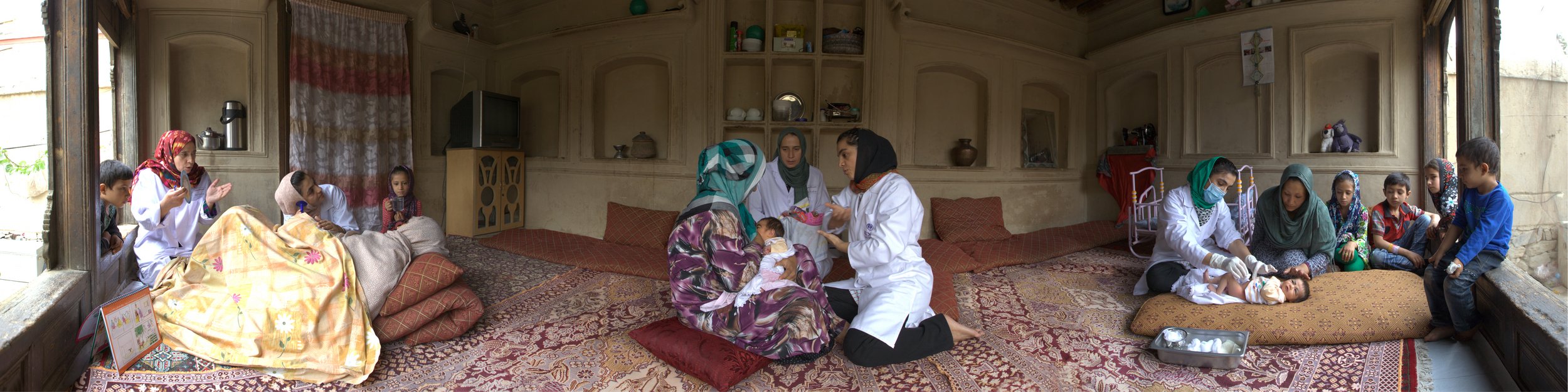
One of the most significant shifts has been the rise of female herbalists. In conservative districts, women often cannot be examined by male clinicians, leaving maternal and reproductive health dangerously underserved. The UN programme prioritised female enrolment, offering childcare during training sessions and stipends to cover travel costs so that women with young families could attend.
Female graduates now run herbal practices in villages from Badakhshan to Herat, treating anaemia with iron-rich nettles, easing pregnancy nausea with ginger preparations and supporting new mothers with galactagogue blends. Their presence has measurably improved antenatal attendance, because women who trust their local herbalist are more willing to seek further care when referred.
In Melbourne, organisations such as the Australian Afghan Women's Network have called for more recognition of traditional birth and postpartum practices, including the role of plant-based remedies. The Afghan diaspora's advocacy for culturally responsive maternity care has influenced health policy in Victoria, where the government funds bilingual maternity liaison officers who understand both biomedical and traditional approaches.
Research partnerships reaching across the Indian Ocean
Australian universities have begun to study Afghan medicinal plants with new interest, recognising that some species grow in similar arid conditions to parts of inland Australia. Researchers at the University of Melbourne have collaborated with Afghan counterparts to investigate the antimicrobial properties of wild oregano varieties native to the Hindu Kush, publishing findings in peer-reviewed journals.
These partnerships create a virtuous circle. Australian scientists gain access to plant material and traditional knowledge, while Afghan researchers receive training in laboratory methods, grant writing and ethical research with Indigenous communities. Funding has flowed from the Australian Research Council and from private foundations interested in biodiversity conservation, with field stations established in provinces where plant habitats are under threat.
Such work also benefits Aboriginal and Torres Strait Islander communities, who have long advocated for greater respect for bush medicine. Cross-cultural exchanges between Afghan herbalists and Aboriginal knowledge holders, facilitated through community organisations in Naarm Melbourne, are exploring shared concerns about biopiracy, sustainable harvesting and intergenerational teaching.
Lessons Australian practitioners can learn
Australian herbalists and naturopaths have much to gain from the Afghan experience of professionalising traditional medicine without losing its soul. The UN programme demonstrates that rigorous training and cultural continuity are not opposites but partners. Documentation does not replace oral teaching; it amplifies and protects it.
Regulators in Australia are watching closely. The Therapeutic Goods Administration's review of listed complementary medicines has raised questions about evidence requirements that smaller traditional products struggle to meet. Afghan-trained practitioners who have navigated similar regulatory hurdles in rebuilding health systems offer practical insights into bridging worlds.
For Australian consumers, the lesson is to ask harder questions of herbal products, whether they originate in a Tasmanian farm or a Paktira hillside. Where was the plant grown? How was it identified? Was it tested for heavy metals or adulterants? The UN's Afghan training programme has set a benchmark for transparency that benefits anyone who reaches for a herbal remedy on a pharmacy shelf.
Practical guidance for cross-cultural herbal practice
- Ask patients directly about herbal remedies they are taking, including teas, powders and topical preparations, as these may interact with prescribed medication.
- Refer to registered practitioners who have completed recognised training programmes, such as those accredited by the National Herbalists Association of Australia.
- Support community-led documentation projects that record traditional knowledge with full consent, so that cultural heritage is preserved by its holders rather than extracted by outsiders.
- Encourage suppliers to provide certificates of analysis for herbal products, covering identity, purity and contaminant testing.
- Stay informed about Therapeutic Goods Administration rulings on specific herbs, particularly those flagged for safety review in recent years.
Afghan herbalists trained through UN-supported programmes now serve communities from Herat to Dandenong, carrying knowledge that predates modern borders while meeting standards designed for today's patients. Their work shows what is possible when traditional wisdom is treated as a partner in public health rather than an obstacle to it. Australians interested in supporting culturally responsive healthcare can seek out training scholarships, contribute to community-led documentation projects, mentor a young herbalist from a refugee background, or simply choose products that meet transparent safety standards when stocking their shelves.