
Making a Difference
UN-Facilitated Mediation and Local Peace Committees in Afghanistan
Afghanistan's prolonged conflict has generated multiple overlapping mediation efforts, from high-stakes national dialogue to community-level reconciliation. The United Nations Assistance Mission in Afghanistan (UNAMA) has worked since 2002 to support these processes, with Local Peace Committees emerging as a foundational mechanism for addressing disputes where they most directly affect ordinary Afghans.
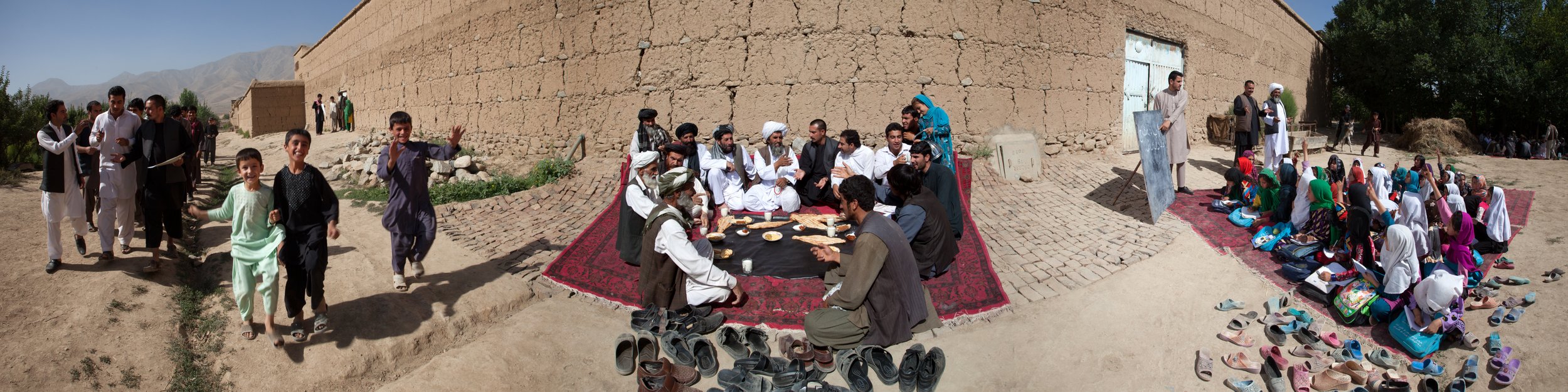
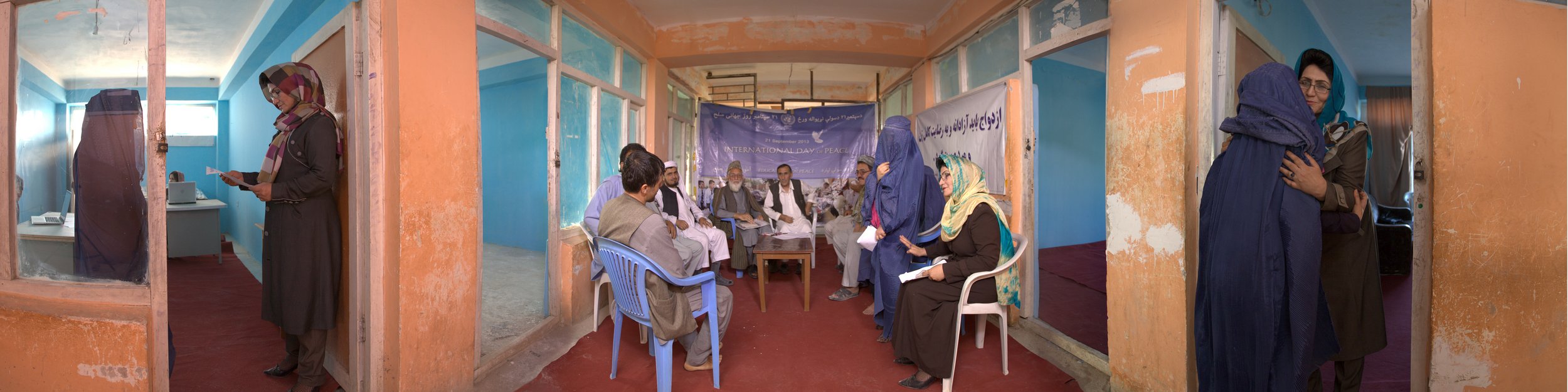
These committees draw on long-standing Afghan traditions of collective decision-making, including jirgas, shuras, and tribal councils, while incorporating international standards of human rights and gender inclusion. By bringing together elders, religious figures, women, youth, and local officials, Local Peace Committees create spaces where factional differences can be examined through dialogue rather than violence.
UN-facilitated factional mediation rests on the understanding that sustainable peace requires both top-down political agreements and bottom-up reconciliation. Local Peace Committees serve as the institutional bridge between these layers, translating national peace frameworks into community-level practice while feeding local realities back into broader policy discussions.
Historical Roots of Community-Based Mediation
Mediation in Afghanistan predates modern international involvement by centuries. Tribal jirgas in Pashtun areas, shuras among Tajik and Hazara communities, and councils among Uzbek populations have long served as forums for resolving land disputes, water conflicts, blood feuds, and inter-village tensions. These institutions carried authority because they were rooted in local legitimacy rather than imposed from outside.
When the UN re-engaged with Afghanistan in the aftermath of the 2001 Bonn Agreement, the international community faced a difficult question: how to support governance without undermining traditional dispute-resolution mechanisms. UNAMA's early work, in coordination with the Afghan Independent Human Rights Commission and the Ministry of Justice, focused on mapping existing local structures and identifying entry points for international support rather than creating entirely new bodies.
The Local Peace Committee model evolved from this mapping exercise. Pilot committees were established in eastern and southeastern provinces, where factional tensions between communities supporting different former mujahideen factions ran particularly high. The committees were designed to operate independently from any armed faction while drawing on the membership of respected community figures from across the political and ethnic spectrum.
Structure and Composition of Local Peace Committees
A typical Local Peace Committee in Afghanistan includes between nine and fifteen members, selected to represent the demographic composition of the district or village where it operates. Membership categories generally include tribal elders, religious scholars, representatives of local government, women, youth, and in some cases representatives of displaced populations or minority groups.
Gender inclusion has been a particular focus of UN-facilitated committees. Early models sometimes included only male elders, reflecting traditional practices but limiting the committees' ability to resolve disputes involving women, such as inheritance conflicts or domestic violence. Subsequent iterations of the model mandated at least three women members, with training provided to ensure their meaningful participation rather than symbolic presence.
Committees typically meet weekly or as disputes arise, working through consensus rather than majority vote. Decisions are recorded in simple registers, with copies shared with provincial peace councils and, in cases involving serious criminal matters, with the formal justice sector. This structure allows local decisions to be recognised by higher authorities while maintaining community ownership of outcomes.
UN support for committees has included basic training in mediation techniques, human rights standards, and conflict analysis, as well as modest operational support such as transport allowances for members attending distant meetings. The UN has worked to avoid creating dependency on external funding, recognising that committees must be perceived as locally owned to retain legitimacy.
UN Methodologies and International Support
UNAMA's mediation support follows a three-tiered approach: supporting national-level dialogue between the Afghan government and armed opposition groups, facilitating provincial peace councils that bridge districts and the centre, and backing Local Peace Committees that operate at the most granular level. Each tier informs the others, with local insights frequently reshaping national priorities.
The UN's methodology emphasises neutrality and inclusivity. Mediators are drawn from both Afghan and international staff, with gender balance maintained where security conditions allow. Where possible, UN facilitators work through Afghan partners rather than directly, building local capacity rather than creating parallel structures.
Coordination with international partners has been essential. Australia contributed civilian personnel to UNAMA during the mission's active years, including through the Department of Foreign Affairs and Trade and the Australian Federal Police, bringing expertise in mediation, community policing, and program management developed through domestic contexts such as Indigenous community engagement and neighbourhood policing initiatives. These contributions helped shape UNAMA's approach to community-based security and reconciliation.
Beyond Australia, countries including Norway, Japan, the United Kingdom, and several European Union member states have supported Local Peace Committees through funding, training, and technical assistance. The UN system has coordinated this support through joint programming with UNDP, UN Women, and UNICEF, recognising that peace mediation touches on development, gender, and child protection concerns.
Achievements and Persistent Challenges
Local Peace Committees have recorded measurable successes since their expansion in the late 2000s. Independent evaluations have noted reductions in local violence, faster resolution of land and water disputes, and increased confidence among community members, particularly women, to raise concerns through recognised channels. In several provinces, committees have facilitated the return of displaced families by mediating agreements between returning communities and those who remained.
Yet the model has faced persistent challenges. Security remains the most acute: committee members, particularly women, have faced intimidation and targeted violence from armed groups opposed to any form of community-based governance. The Taliban's sustained campaign against local governance structures, especially after 2010, forced many committees to suspend operations or operate clandestinely.
Funding constraints have also limited the model's reach. While international donors supported pilot programs, sustained national funding for Local Peace Committees has been inconsistent, leaving many committees dependent on UN or NGO support that can evaporate with political shifts. The Afghan government's own peace architecture, including the High Council for National Reconciliation established in 2010, has sometimes operated without close integration with local-level structures.
Critically, the relationship between Local Peace Committees and formal justice institutions has remained ambiguous. In some districts, committees have effectively filled gaps left by under-resourced courts and police, raising questions about their formal legal standing. The UN has worked to clarify these relationships, supporting guidelines that position committees as complementary to rather than substitutes for the formal justice sector.
Australia's Role in Afghan Peace Mediation
Australia's engagement with Afghan peace mediation has extended beyond military deployment, though the country's military presence in Uruzgan Province from 2005 to 2013 shaped its approach to local reconciliation. Australian troops worked alongside Dutch, US, and Afghan forces in areas with active tribal mediation traditions, and Australian officers frequently participated in shuras convened to address local security concerns.
Following the drawdown of combat troops, Australia redirected significant resources toward development assistance and diplomatic support for peace processes. The Australian government provided funding to UNAMA and to Afghan civil society organisations working on reconciliation, with particular attention to women's participation and media freedom. Australian diplomats have participated in international contact groups supporting Afghan peace negotiations, bringing perspectives shaped by regional engagement and a commitment to human rights standards.
The large Afghan-Australian community, concentrated in suburbs such as Dandenong in Melbourne and Lakemba in Sydney, has maintained strong connections to Afghanistan's peace efforts. Diaspora organisations have facilitated dialogue between Australian policymakers and Afghan civil society, supported family reunification for those fleeing conflict, and channelled remittances that have underwritten community-level reconciliation projects. Their advocacy has helped keep Afghan peace issues on Australia's foreign policy agenda.
Domestically, Australia's experience with community-based approaches to security, including initiatives in Indigenous communities and multicultural neighbourhoods, has informed its contributions to international peace mediation training. Programs run through the Australian Federal Police and state justice departments have shared practical lessons about building legitimacy for community mediation in diverse societies, lessons that have resonated with Afghan practitioners seeking to adapt traditional structures to contemporary challenges.
The UN campaign invites you to share this article with colleagues working on peace mediation, comment on how Local Peace Committees might inform community-level approaches in your own context, and subscribe to updates from UN Afghanistan as the country documents its ongoing work on reconciliation. Your engagement helps ensure that Afghan experiences of mediation continue to inform international practice.