
Making a Difference


The UN’s Role in Afghan Agriculture: From Fields to Food Security
Agriculture is central to Afghanistan’s economy, livelihoods and social fabric. Millions of people depend on farming, livestock, horticulture and agricultural wage work, while rural markets connect producers with traders, processors and consumers. When drought, conflict, displacement or economic disruption affects a harvest, the consequences reach far beyond the farm gate.
The United Nations has supported Afghanistan’s food systems through humanitarian assistance, rural development, climate adaptation, market support and coordination among national authorities, donors and local organizations. Its role has changed with the country’s circumstances, but the broad purpose remains consistent: helping people access food today while strengthening the capacity to produce, store and sell food tomorrow.
This work is best understood as a partnership rather than a single UN agriculture programme. Agencies bring different capabilities, from emergency food assistance and nutrition services to irrigation rehabilitation, seed distribution, livestock support and policy advice. Together, these interventions link fields to household food security.
Agriculture at the heart of Afghan livelihoods
Afghanistan’s farms operate in an environment shaped by limited water, difficult terrain, fragile infrastructure and recurring climate shocks. Wheat is vital to national food supplies, while maize, rice, barley, vegetables, fruit, nuts and livestock contribute to household income and dietary diversity. Smallholders often combine several activities to spread risk, raising animals, cultivating crops and relying on seasonal labour.
The sector’s importance also means that agricultural disruption can intensify poverty. A failed harvest may reduce food available at home, lower cash income and force families to sell animals or productive tools. Farmers who lose seed, irrigation access or livestock may need several seasons to recover. For this reason, food security policy in Afghanistan must address both immediate consumption and the productive assets that sustain rural communities.
UN-supported assessments help identify where drought, flooding, pests, displacement and market price changes are placing the greatest pressure on households. This evidence allows assistance to be directed toward vulnerable provinces and groups, including female-headed households, landless labourers, returnees and communities hosting displaced people. It also helps humanitarian and development actors avoid treating every rural area as if it faced the same problems.
From emergency relief to productive recovery
During acute food crises, UN agencies and partners provide assistance designed to prevent hunger and protect household purchasing power. Depending on the situation, this can include food distributions, cash transfers, nutrition support and school-based or community-based services. These measures are especially important during the lean season, when household stocks are low and the next harvest is still months away.
Food assistance, however, cannot replace a functioning agricultural economy. Alongside emergency relief, UN programmes have supported farmers with improved seed, tools, fertilizer, animal health services and training. Livestock packages can help families rebuild herds, while poultry and kitchen-garden activities may improve access to eggs, vegetables and small sources of income. Such interventions are most effective when they are adapted to local farming systems and delivered before planting windows close.
The distinction between relief and resilience is therefore less rigid than it may appear. A cash transfer can help a family avoid selling its seed. Veterinary care can protect an asset that provides milk, transport or income. A repaired canal can support several harvests. Well-designed assistance protects lives in the present while preserving the means to recover.
Water, climate and the productivity of land
Water management is one of the defining issues for Afghan agriculture. Much cultivation depends on rainfall that is variable in timing and volume, while irrigated farms rely on canals, wells, springs and traditional systems that require regular maintenance. Drought reduces yields and pasture, but intense rainfall and flash floods can damage fields, wash away topsoil and destroy rural roads.
UN agencies and implementing partners have supported activities such as canal cleaning, irrigation repairs, watershed management, water harvesting and rehabilitation of community infrastructure. These projects can create short-term employment while restoring productive assets. They also offer a practical route to climate adaptation because communities gain greater control over the timing and distribution of scarce water.
Climate-smart agriculture in Afghanistan does not require every farmer to adopt the same technology. It may involve drought-tolerant seed, improved planting schedules, soil conservation, efficient irrigation, crop diversification or better rangeland management. Local knowledge is essential, especially in areas where farmers understand seasonal water flows, customary land arrangements and the performance of different crops better than outside specialists.
Connecting farmers with food markets
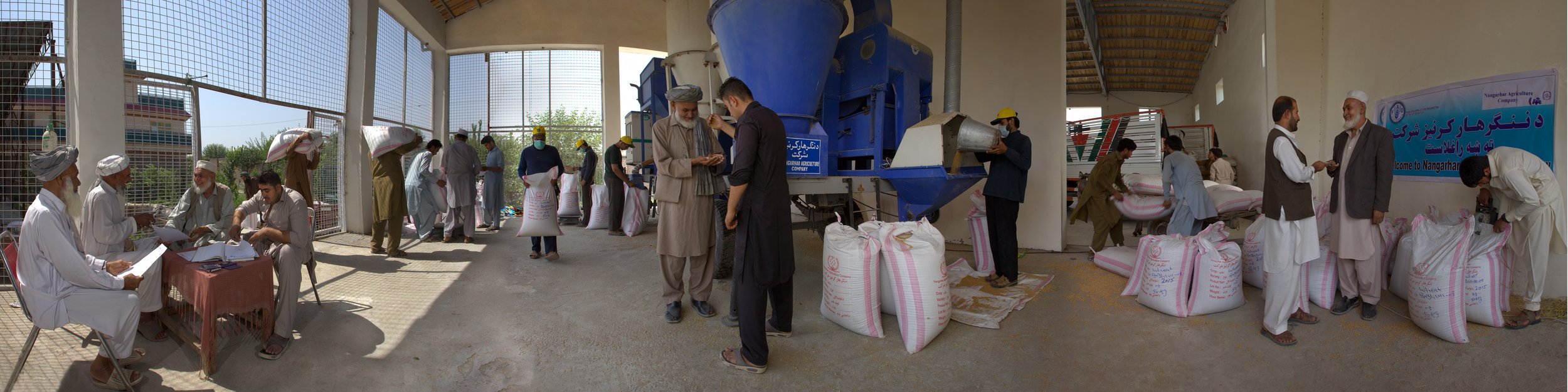
Producing a crop is only one stage of food security. Farmers also need ways to store, transport, process and sell it at a fair price. Poor roads, limited cold storage, weak access to finance and sudden market interruptions can cause post-harvest losses and reduce the value of agricultural work. Perishable products such as fruit, vegetables, milk and meat are particularly exposed.
UN-supported rural development initiatives have worked to strengthen value chains, producer groups and market links. Activities may include farmer training, improved storage, small-scale processing, packaging, quality standards and support for agricultural enterprises. These measures can help producers move from selling raw goods immediately after harvest toward receiving greater value through timing, grading or processing.
Market support also contributes to food availability in towns and cities. When local supply chains function, consumers have better access to diverse foods and producers have stronger incentives to invest in the next season. The United Nations’ wider role in Afghanistan includes coordination and analysis that can clarify where bottlenecks are emerging. The UN Afghanistan platform provides broader context on the organization’s partnership with Afghan communities, including the public-facing legacy of its “Strong UN. Strong Afghanistan.” campaign.
Comparing agricultural support approaches
Different forms of assistance serve different purposes. A seed package may be critical before planting, while cash may be more appropriate where markets are functioning and families need flexibility. Irrigation rehabilitation can create benefits across a community, whereas livestock treatment may protect the assets of a particular household. Effective planning considers timing, local conditions, gender, accessibility and the risk that aid could distort markets.
| Support approach | Main purpose | Typical benefit | Key condition for success |
|---|---|---|---|
| Emergency food or cash assistance | Meet immediate household needs | Prevents hunger and harmful coping strategies | Reliable targeting and functioning delivery systems |
| Seeds, tools and farm inputs | Restore or maintain crop production | Supports the next planting and harvest | Inputs must suit local conditions and arrive on time |
| Livestock and veterinary services | Protect household productive assets | Preserves income, nutrition and animal value | Access to animal health workers and feed or pasture |
| Irrigation and watershed work | Improve water access and land productivity | Supports repeated production and climate resilience | Community maintenance and fair water management |
| Storage, processing and market support | Reduce losses and increase farm income | Improves returns and food availability | Roads, buyers, finance and transparent market links |
This range shows why a single measure cannot resolve Afghanistan’s food security pressures. Relief protects consumption, agricultural inputs support production, and infrastructure or market investment strengthens the system around both. Coordination helps prevent gaps, such as distributing seed without ensuring irrigation or expanding production without addressing storage.
Women, local leadership and inclusive rural recovery
Women play substantial roles in farming, livestock care, food processing, household nutrition and informal trade, although their work is often undercounted. In many communities, women manage poultry, dairy products, kitchen gardens and post-harvest activities. Restrictions on movement, employment and access to services can therefore affect the entire food economy, not only women’s individual incomes.
UN programmes have sought, where feasible and in line with operational access, to include women in livelihood assistance, nutrition services, training and community decision-making. Female field workers and women-led local organizations can be especially important for reaching households that cannot be served effectively through male-only teams. Inclusive design also improves the accuracy of needs assessments because it captures activities that may not appear in formal agricultural statistics.
Local leadership matters for every rural intervention. Community committees, farmers’ groups, water users and traditional authorities understand land boundaries, seasonal migration, local disputes and practical maintenance requirements. Their participation can improve accountability and reduce the risk that infrastructure will be abandoned after an externally funded project ends. Consultation must be meaningful, with clear information about eligibility, resources and responsibilities.
Coordination, evidence and long-term resilience
The UN’s agricultural role includes convening actors that might otherwise work in isolation. Humanitarian agencies, development institutions, government bodies, donors and civil society organizations often operate on different timelines and use different measures of success. Coordination can align seasonal planning, share assessments and connect emergency support with longer-term investment.
Data is central to that process. Crop and livestock conditions, food prices, rainfall, household purchasing power, nutrition outcomes and displacement patterns can change quickly. Monitoring these indicators helps identify whether a programme is preventing a crisis, supporting recovery or failing to reach those most in need. Independent feedback channels are equally important because official data may miss remote villages or households facing social barriers.
Resilience should be measured in practical terms. Can a household plant again after drought? Can a community repair its canal? Can a farmer keep animals alive through a dry season? Can families afford a nutritious diet when prices rise? These questions connect agricultural policy with everyday security and make it easier to judge whether assistance is creating durable benefits.
Priorities for stronger food systems
- Protect farmers’ access to seed, livestock, tools and water before critical seasonal deadlines.
- Combine food assistance with livelihood protection so families do not have to sell productive assets.
- Invest in irrigation, soil conservation, storage and rural roads alongside farm-level support.
- Include women, smallholders, landless workers and displaced households in assessments and programme design.
- Use local markets, community institutions and Afghan technical expertise to sustain results after external funding changes.
Afghanistan’s food security depends on the health of the entire agricultural chain: water flowing to fields, farmers receiving suitable inputs, animals receiving care, harvests being stored safely, traders reaching villages and households obtaining nutritious food. The United Nations contributes by filling urgent gaps, supporting recovery, coordinating partners and helping build evidence for more effective decisions.
Its impact is strongest when programmes are timely, locally grounded and connected across humanitarian, development and peacebuilding priorities. Rural communities need immediate protection from hunger, yet they also need the tools and conditions to produce, earn and recover. By linking emergency assistance with climate resilience, inclusive livelihoods and functioning markets, UN-supported work can help turn agricultural recovery into a foundation for broader food security.
Support informed, community-led approaches to Afghan agriculture by following UN reporting, sharing credible information and recognizing the farmers, workers and local organizations who keep food systems operating. The path from fields to food security begins with practical investment in the people and resources that make each harvest possible.