
Making a Difference


Building better classrooms in Afghanistan’s rural schools
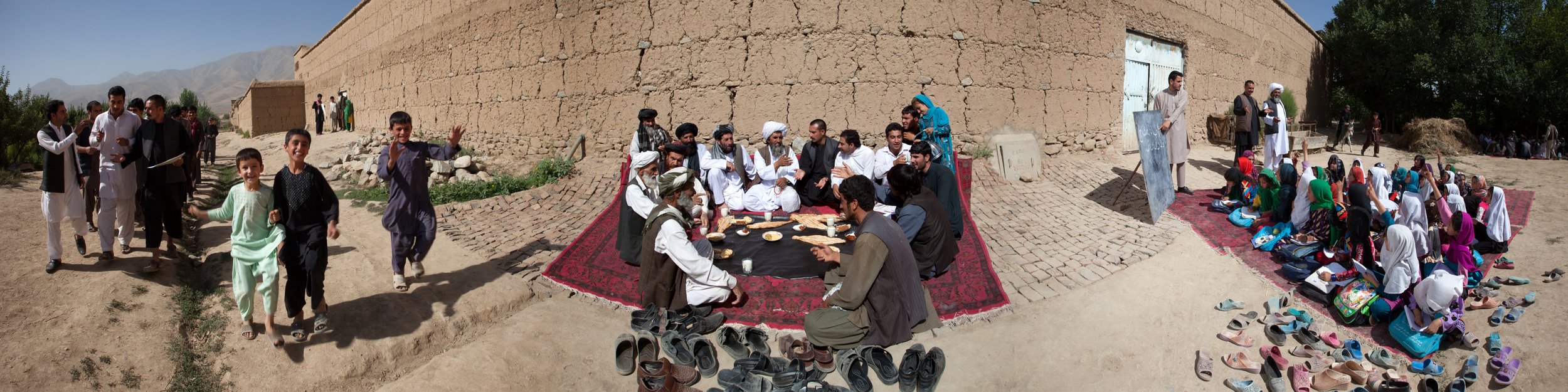
Education access in Afghanistan depends on more than school buildings, enrolment campaigns and learning materials. Children also need capable teachers who can explain ideas clearly, manage mixed learning needs and respond to what they see in each classroom. The UN’s Afghan school teacher training has therefore placed classroom practice at the centre of its work, with pedagogy workshops offering rural educators practical methods they can apply when they return to their schools.
These workshops are designed as sustained professional learning rather than one-off lectures. Participants examine curriculum expectations, rehearse lessons, analyse pupils’ work and receive feedback from fellow teachers. The approach recognises that teachers are better placed than visiting specialists to adapt a teaching method to local languages, available resources, community expectations and the realities of a rural classroom.
The archived Strong UN. Strong Afghanistan. campaign documents a completed effort built around Afghan participation and partnership. For Australian educators, policymakers and education organisations, its value lies in demonstrating how international support can strengthen local expertise instead of replacing it. Afghan experience remains the central reference point, while Australian systems can contribute useful approaches to remote professional learning without assuming that their contexts are interchangeable.
Why classroom practice decides learning
A child attending school confirms access, but it does not automatically confirm learning. In rural Afghan communities, teachers may work with several age groups, limited textbooks, large classes and pupils who have missed school for extended periods. Improving the quality of instruction is therefore a direct response to the conditions families already face, rather than an additional programme layered on top of them.
Rural teachers often carry responsibilities beyond a single classroom. They may prepare lessons, manage attendance, communicate with families, organise materials and provide continuity during disrupted school terms. A workshop that treats them simply as recipients of outside knowledge can miss this wider role. Effective training instead connects new methods with the decisions teachers already make each day.
The strongest pedagogy programmes allow professional learning and curriculum support to reinforce each other. Workshop techniques are trialled in real classrooms, teachers report back on what worked, and facilitators adjust later sessions. This creates a practical cycle in which guidance is tested locally, adapted by educators and retained by the school rather than remaining in workshop notes.
What the pedagogy workshops cover
A central strand focuses on foundational literacy and numeracy. Literacy sessions explore sound awareness, letter–sound relationships, reading fluency, comprehension and the difference between decoding words and understanding a text. Numeracy sessions begin with number sense, place value, mental calculation and the use of objects or locally available diagrams to explain mathematical ideas.
Another strand strengthens the craft of instruction. Teachers practise using questions that require pupils to explain their reasoning, leading short group activities, checking understanding and adjusting a task when students are struggling. Demonstration lessons make these techniques visible, while peer feedback helps participants distinguish a classroom-management problem from a teaching problem.
Inclusive education runs through the entire programme. Facilitators consider how multilingual learners, pupils with disabilities and students who have experienced disruption can participate without being singled out. Low-cost materials, visual explanations, repeated vocabulary and flexible grouping offer teachers options that can work where specialist equipment or additional staff are scarce.
Adult learning is treated as an active process. Participants are not asked to memorise a long list of principles; they plan, teach, observe and discuss. Classroom observation rubrics provide a common language for constructive feedback, and every teacher leaves with a small action plan tied to a subject, group of pupils and school timetable.
Training for rural realities
Rural delivery requires careful attention to distance, weather and the school calendar. Roads can become difficult to travel after snow, rain or flash flooding, while seasonal closures may affect both pupils and facilitators. Training schedules need to account for agricultural demands, examinations and the limited time teachers can spend away from their classes.
Cascade delivery can extend a workshop’s reach, but it must be supported rather than used as a shortcut. A district facilitator trains school-level lead teachers, who then facilitate short sessions in their own communities. Printed guides, audio resources and low-bandwidth digital materials can reinforce the learning when face-to-face contact is unavailable. Regular coaching visits then help prevent misunderstandings as information moves through the system.
Language, gender and safety also shape participation. Workshops need to reflect the languages pupils use at home while maintaining clear links to national curriculum expectations. Women educators may face particular travel, accommodation and security constraints, so training must offer safe and accessible formats that recognise their expertise without placing an extra administrative burden on them.
Community expectations can strengthen the workshop when they are handled with care. Teachers benefit from hearing how families value a particular learning habit, whether it is reading aloud, solving a practical calculation or working respectfully in groups. Such information helps educators adapt examples and communicate purpose, making classroom improvements more relevant to daily life.
Afghan teachers as programme leaders
The most durable training model treats educators as designers of their own development. Afghan teachers can identify which classroom challenge deserves attention, select an appropriate strategy and judge whether a change has improved learning. This professional judgement is especially valuable when national guidance must be translated into a lesson for a particular community.
Teacher leaders can support peer learning after the formal workshops end. They can host short classroom discussions, demonstrate a technique and invite colleagues to observe one lesson. Action research gives teachers a structured way to test a question, such as whether more guided reading improves pupils’ participation or whether visual planning helps younger students complete a task.
Partnership works best when Afghan institutions retain control over priorities, content and evaluation. UN agencies, education officials and donors can provide finance, technical resources and external connections, but they should not decide every classroom detail. Strong local ownership also supports continuity when international attention moves elsewhere or a short funding cycle comes to an end.
Listening has a practical role as well. Facilitators learn by visiting schools, reviewing teachers’ explanations and adapting examples after each session. This approach treats cultural knowledge as expertise rather than an obstacle to overcome, and it gives communities a visible role in improving the education their children receive.
Measuring learning beyond attendance
Workshop attendance is a measure of participation, not proof of improved teaching. A useful evaluation begins with a baseline, followed by classroom observation, samples of pupils’ work and brief interviews with teachers and school leaders. Together, these sources show whether participants are applying new methods and whether those methods are reaching pupils.
Measures should remain manageable for busy schools. Teachers can keep simple records of reading progress, mathematical strategies or the number of pupils responding during an activity. Lesson plans, marked work and observation notes can reveal growth without requiring extensive testing systems. Repeated measures are more informative than a single examination result.
Training quality and learning outcomes should be assessed separately. A well-organised workshop can still produce weak classroom change, while a modest local session may have a meaningful effect. Combining participant feedback with evidence from classrooms helps programme teams identify where support is needed and avoid rewarding attendance figures that conceal little change.
Data collection also requires restraint. Pupil names, disability information and detailed family circumstances should not be collected without a clear educational purpose and appropriate safeguards. School-level discussion is often more useful than public rankings, especially where small numbers of pupils could be identified or where families view sensitive information as intrusive.
What Australian partners can contribute
Australian schools in Central and Western Australia, the Northern Territory and Far North Queensland offer a useful reference point for distance education. Some communities face extreme heat, wet-season travel disruption, fly-in staffing arrangements and multi-grade classrooms. These similarities do not make the Afghan context identical, but they demonstrate how short learning cycles, local facilitators and practical coaching can function across large geographical areas.
The Australian professional development market also provides a model for structured partnerships. State and territory education departments, Catholic systems, independent school networks and teacher registration bodies often expect clearly defined learning outcomes, evidence of effectiveness and alignment with curriculum or workplace standards. International partners can contribute expertise, but proposals need to fit these local governance and funding pathways rather than arriving as isolated short courses.
Aboriginal and Torres Strait Islander educators and community-controlled schools in Australia have developed their own approaches to culturally responsive teaching, local language, community authority and learning accountability. Australian organisations working in Afghanistan should listen to these practitioners, centre Afghan leadership and avoid presenting local knowledge as a gap that outside specialists can fill.
Australian workplace language often celebrates having a go, trying an idea and giving everyone a fair go. In educational terms, that can translate into low-stakes experimentation, equitable classroom participation and permission to revise a lesson. The contribution Australian partners can make is therefore not a fixed curriculum package, but experience in remote learning design, peer coaching and professional learning that remains useful when tested in Afghan classrooms.
Preserving gains after the workshop
Improvement lasts when teacher learning becomes part of the school’s ordinary work. Coaching cycles, protected collaboration time, accessible materials and brief refresher sessions are more useful than a single course followed by months without support. School leaders can establish these routines, while district and national authorities can provide the budget and policy framework that make them possible.
Train-the-trainer models require careful quality assurance. Local facilitators need continued access to updated guidance, opportunities to practise and a route for reporting classroom results. Poorly supported cascading can dilute a programme, especially when complex teaching methods are reduced to slogans. Regular observation and two-way feedback help protect the integrity of the original approach.
Afghan teachers and education institutions are the foundation of that continuity. Their experience can inform future curricula, coach visiting teams and preserve practical knowledge when international programmes close. The completed UN campaign provides a record of that partnership, but its lasting value will be found in teachers who continue refining their practice and schools that keep creating space for better teaching.
Support evidence-led teacher learning in Afghanistan by sharing Afghan educators’ expertise, backing locally led coaching and helping schools retain practical methods after external programmes end. Partnerships should be built around Afghan priorities, transparent evaluation and long-term professional relationships.
To learn more about the people and partnerships behind the campaign, explore the UN Afghanistan archive and help keep attention focused on the teachers whose daily decisions shape what children learn.