
Making a Difference
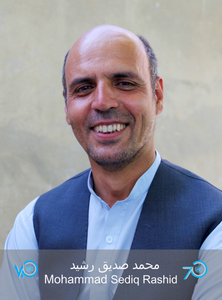


How livelihood diversification grants are reshaping rural Afghanistan
For nearly two decades, counter-narcotics policy in Afghanistan swung between forced eradication and quiet neglect, often punishing the same farming families whose land propped up the world's largest opium supply. The United Nations, working through agencies such as UNODC, UNDP, and UNAMA, has gradually reoriented its approach. Rather than burning fields in a single season, the UN now invests in long-term rural transition: grants, technical training, and market linkages that let households replace poppy income with legal crops, livestock, and small enterprise. The shift recognises that rural Afghan economies are not monolithic. Many families grow wheat, vegetables, and fruit alongside poppy; their decision to cultivate opium is shaped by debt, water access, road proximity, and the absence of a credible buyer for anything else.
Australia has watched these developments closely, partly through researchers in Canberra and partly through the deep ties of the Afghan-Australian diaspora. Melbourne's northern suburbs, Sydney's western neighbourhoods, and the smaller Afghan communities around Brisbane and Adelaide carry direct memory of villages in Helmand, Kandahar, and Badakhshan. Conversations about aid, counter-narcotics, and rural development are rarely abstract in those communities; they are family conversations. The UN's grant-based model also offers a useful comparison point for Australian rural policy, where programmes such as the Regional Investment Corporation and drought resilience initiatives similarly rely on patient capital and producer choice rather than coercion.
From forced eradication to farmer-led transition
The earliest phases of international counter-narcotics work in Afghanistan leaned heavily on manual eradication: teams dispatched to destroy standing poppy crops before harvest. The visible outcome looked decisive, but the impact on household incomes, food security, and community trust was severe. Compensation was rarely paid, alternative income was rarely available, and the following season often saw replanting on the same land. Over time, evaluation studies from UNODC and partner research institutes made clear that supply-side enforcement alone would not dent the opium economy. Demand in regional and global markets, along with the economic gravity of poppy per hectare, kept pulling farmers back to the crop.
Livelihood diversification grants emerged from that evidence base. Instead of paying farmers to destroy what they had planted, the UN began underwriting what they could plant next. Grants typically fund improved seed, fertiliser, tools, orchard saplings, livestock, beehives, or training in food processing. The model borrows from community development practice in places as different as the Kenyan highlands, the Andean coca zones, and the dryland farming systems of inland Australia, where successful transitions depend as much on extension services, storage, and transport as on the seed packet itself. What distinguishes the Afghan approach is its scale and the depth of the security environment in which it operates.
How the grants reach farming families
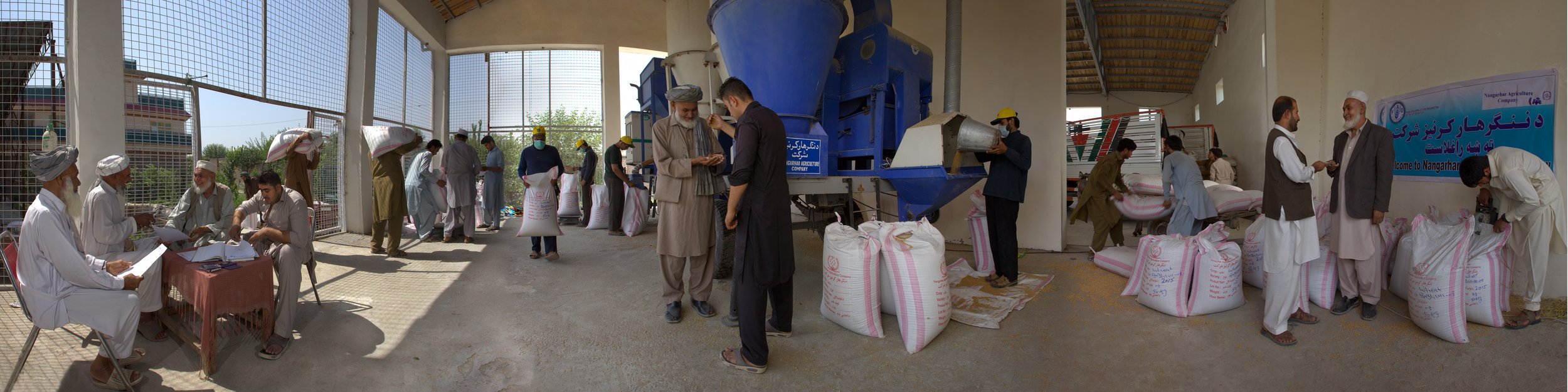
The mechanics of a diversification grant are deliberately simple. A village shura or community development council identifies households that have voluntarily stopped cultivating poppy or wish to do so. Applications are verified jointly by UN field staff and provincial authorities. Approved applicants receive a combination of inputs and a modest cash component, often disbursed through mobile money or a partner bank, alongside extension visits from agronomists. The grants are small by comparison with infrastructure budgets, but they are targeted, time-stamped, and accompanied by training in soil management, water-efficient irrigation, and post-harvest handling.
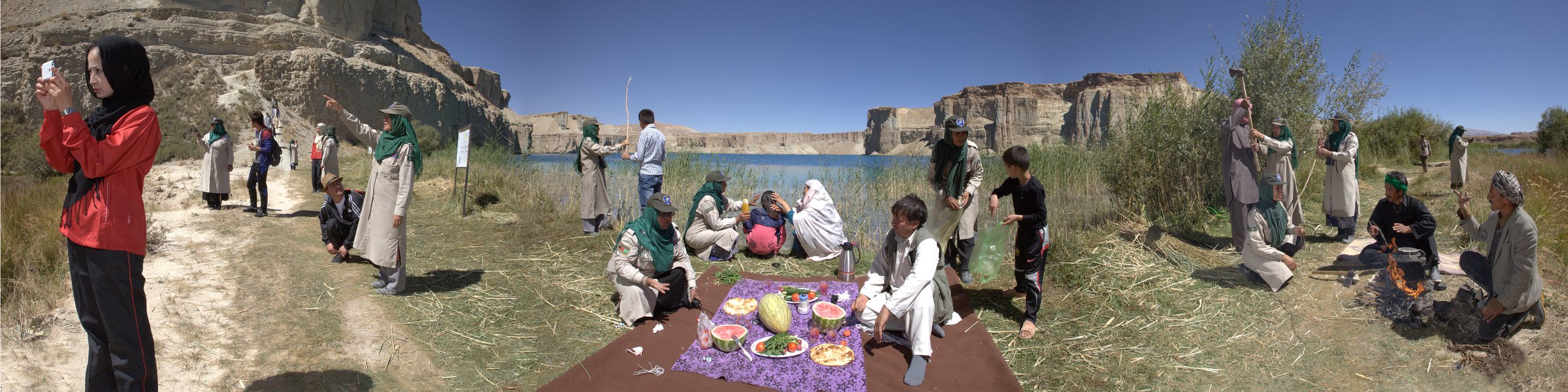
In provinces such as Balkh, Takhar, and Nangarhar, the grants have been linked to specific value chains: almonds and pistachios in the north, pomegranates in the east, and high-value vegetables around the peri-urban districts. The approach mirrors what Australian horticultural producers in the Murray-Darling basin have practised through industry levies: collective investment in research, biosecurity, and market development that no single farmer could finance alone. There is also a quiet parallel with Indigenous-led ranger programmes in the Northern Territory, where economic diversification goes hand in hand with cultural and environmental stewardship. In Afghanistan, the equivalent is the inclusion of women farmers in seed distribution and small-ruminant grants, a slow but steady shift in a context where female labour has long been invisible in formal agricultural statistics.
Cash-for-work, saffron, and the economics of replacement
Poppy earns farmers a high gross return per hectare, partly because buyers come to the farm gate and partly because the crop tolerates poor soil and uncertain rainfall. Any credible replacement has to compete on those terms. Cash-for-work programmes, often funded alongside the grants, pay daily wages for building check-dams, terraces, irrigation channels, and rural roads. These schemes put money into circulation during the lean months between winter wheat harvest and the summer crop, reducing the household's need to borrow against the next poppy season.
The UN and its partners have also pushed alternatives with comparable margins: saffron, cumin, and other high-return cash crops; off-season vegetables for nearby urban markets; dairy and poultry for household nutrition and sale; and beekeeping, which fits neatly into marginal land and requires little capital. Saffron has been a particular focus. Cultivation trials in Herat and Daikundi have produced encouraging yields, and Afghan saffron now appears in specialty shops from Sydney's Paddy's Markets to importers in Melbourne's Kensington. The economics are not yet transformational, but they show that the country's agricultural branding can carry more than almonds and raisins. For diaspora buyers curious about ethical sourcing, the saffron trade offers a small but visible way to support alternative development without the political baggage of aid debates.
Measuring what matters: yields, incomes, and food security
Counting hectares of poppy destroyed is easy; counting alternative livelihoods is harder. UNODC and UNDP have invested heavily in baseline surveys, satellite imagery, and household-level panels to track whether grant recipients actually shift their cropping patterns the year after receiving support. The indicators that matter most are not headline reduction figures but underlying household metrics: dietary diversity, school attendance, debt levels, and the share of income coming from licit sources. When those move in the right direction, the visible poppy numbers usually follow.
The Australian connection reappears in how those indicators are interpreted. Researchers at the Australian National University and the University of Sydney have collaborated on rural survey methods used in Afghan provinces, and analysts in Perth and Adelaide have worked on supply-chain modelling for legal crops. Their frameworks, familiar from studies of drought recovery in the Western Australian wheatbelt and flood recovery in Queensland, treat rural households as adaptive economic units rather than passive recipients of policy. That lens is quietly reshaping how the UN reports progress: less focus on eradicated hectares, more on whether a household can plan for the next season without relying on opium as a financial shock absorber.
Security, markets, and the limits of grant-based approaches
None of this happens cheaply or quickly. Grant-based diversification depends on roads that reach a market, a market that will buy the produce, and a security environment in which farmers can plant, store, and sell without being taxed by armed groups along the way. In many Afghan districts, those conditions are fragile at best. A harvest of onions or almonds can be just as exposed to road checkpoints as a harvest of poppy, and the absence of cold storage or grading facilities can wipe out margins overnight. The grants can lower the entry cost of legal farming, but they cannot, on their own, build the wholesale logistics that a legal agricultural economy requires.
There are also political constraints. Counter-narcotics policy in Afghanistan has long been entangled with broader debates about governance, human rights, and the legitimacy of provincial authorities. Grant programmes that flow through official channels can strengthen those authorities, but they can also be captured by them. The UN's emphasis on community-based targeting, transparent disbursement, and independent monitoring is an attempt to thread that needle, drawing on lessons from rural development programmes in the Pacific and from the governance work that Australian agencies have supported in Melanesia. The grant model is not a silver bullet; it is one instrument among many, and its effectiveness depends on what surrounds it.
Practical pathways for a transition that holds
- Sequence grant components so that cash-for-work, inputs, and extension support arrive before, not after, households have committed to a non-poppy cropping plan for the season.
- Couple grant support with investments in local storage, grading, and transport, so legal crops can reach buyers in provincial capitals at competitive cost.
- Strengthen women's access to extension services and inputs, recognising that female labour shapes household decisions about which crops to plant and sell.
- Build long-term market links with diaspora-led importers, including the Afghan-Australian business networks in Sydney and Melbourne, to anchor demand for saffron, almonds, and dried fruits.
- Maintain independent monitoring of both poppy reduction and household food security, so policy adjustments rest on evidence rather than visible but misleading eradication totals.
If you work in international development, agricultural policy, or ethical sourcing, follow the UN's reporting cycle on alternative development in Afghanistan and engage with the Afghan-Australian community organisations in your city. Their knowledge of the villages behind the statistics is the missing variable in too many rural transition programmes, and the cheapest, most reliable source of correction for any policy that mistakes hectares destroyed for lives improved.