
Making a Difference

Preserving Afghanistan’s Heritage Through Digital Archives
Afghanistan’s cultural heritage is held in many forms: ancient sites, Islamic architecture, manuscripts, coins, textiles, music, oral histories and the everyday knowledge carried by families and communities. War, displacement, looting, neglect and environmental damage have placed much of this inheritance at risk. Digital documentation cannot replace a monument or a living tradition, but it can preserve evidence, improve research and support future restoration.
The United Nations’ work in this area sits within a wider international effort involving Afghan institutions, community groups, universities, museums and specialist heritage organisations. UNESCO has a central cultural mandate, while other parts of the UN system contribute through education, emergency coordination, mapping, recovery planning and support for public institutions. The strongest projects connect these roles rather than treating digitisation as a stand-alone technical exercise.
An online record may include a high-resolution photograph, a 3D model, a map reference, a conservation report, a translated inscription or an interview with a custodian. Together, these records create a digital archive that can be searched, copied and shared when physical access is restricted. They also help distinguish verified evidence from images circulating without dates, locations or reliable provenance.
For an Australian audience, the subject has a familiar point of connection. Institutions such as the National Library of Australia in Canberra, the State Library of New South Wales in Sydney and Museums Victoria in Melbourne manage large collections through cataloguing, digitisation and public access systems. Afghanistan’s circumstances are different, yet the underlying questions are similar: who records cultural material, who controls access, and how can digital files remain trustworthy for decades?
Why Digital Documentation Matters
Afghanistan contains heritage from many periods and cultural traditions. Sites such as the Bamiyan Valley, the old city of Herat, the Minaret of Jam and the archaeological landscapes around Balkh demonstrate the country’s importance across Central and South Asian history. Manuscripts, religious buildings, fortifications and archaeological objects add further layers to this record.
Conflict can cause sudden physical destruction, but heritage also disappears gradually. Buildings may be altered without documentation, archives can be scattered, and specialists may leave the country. A digital inventory creates a baseline. Even when a structure is damaged, earlier photographs, plans and geographic coordinates can help experts assess what survives and identify appropriate conservation priorities.
Digitisation also supports cultural rights. A collection is not automatically made more legitimate because it is placed online. Afghan communities need meaningful involvement in deciding what may be photographed, described, translated or published. Sacred objects, private family records and materials connected with vulnerable communities may require restricted access rather than unrestricted global distribution.
The UN’s Role In Heritage Records
The UN’s role is generally one of coordination, standards, technical assistance and advocacy rather than ownership of every digital collection. UNESCO can help establish documentation methods, strengthen museums and archives, and connect Afghan professionals with international conservation networks. UN country teams and humanitarian partners may also support institutional resilience, education and recovery planning where cultural heritage forms part of community life.
Satellite imagery and geospatial analysis can add another layer. Specialist UN capacity, including damage assessment and mapping expertise, can compare imagery over time and identify changes to archaeological landscapes or historic urban areas. Such analysis is especially useful when field visits are unsafe or access is limited. It does not replace on-site inspection, but it can guide researchers and help prioritise urgent work.
Partnerships are essential because heritage knowledge is distributed across many organisations. Afghan universities, museums, libraries, provincial authorities and local custodians may hold the original information, while overseas institutions may have older photographs, excavation notes or objects collected decades ago. A responsible project connects these records without presenting foreign holdings as a complete account of Afghanistan’s history.
What A Digital Heritage Project Contains
A digital archive begins with structured metadata. A record may identify an object or site, its location, language, date, materials, dimensions, ownership history, conservation condition and the person or institution that supplied the information. Consistent metadata makes it possible to compare records from different provinces and search across separate collections.
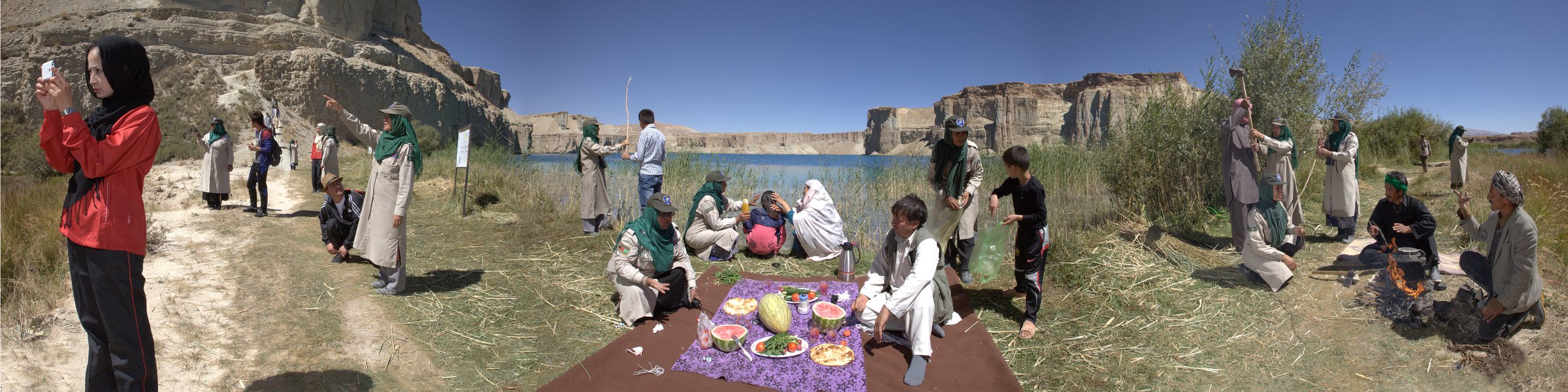
Images are only one part of the process. Conservators may scan manuscripts, photograph architectural details, record inscriptions, capture panoramic views or create photogrammetric models from overlapping images. Audio and video can preserve poetry, craft techniques, stories and interviews with elders. Transcription, translation and accurate spelling of place names are vital because a collection that cannot be searched is difficult to use.
Useful digital preservation projects commonly include:
- High-resolution photography and 3D site recording
- Geographic information systems and satellite imagery
- Scanned manuscripts, catalogues and excavation records
- Oral-history interviews with community custodians
File quality and preservation planning matter as much as the initial capture. Archives need master files, access copies, documented formats, multiple backups and regular checks that data has not been corrupted. A low-cost website may disappear, while carefully managed files can be migrated to new systems as technology changes.
A second layer of work concerns provenance. Each image or scan should have a clear source, date, creator and permissions statement where possible. This is particularly important for Afghan material held in overseas collections, online marketplaces or private archives. Digital records can help researchers identify duplicate objects, trace movements and support claims against illicit trafficking, although they cannot settle every ownership dispute.
Mapping Sites And Landscapes
Cultural heritage documentation increasingly combines photography with geographic information. A mapped record can show the relationship between a monument, a settlement, a road, a water system and the surrounding landscape. This broader view is important because archaeological value often extends beyond a single building. Development, mining, uncontrolled construction and climate-related hazards may affect an entire cultural landscape.
Remote sensing can identify changes in soil patterns, walls, roads and settlement outlines that are difficult to see from ground level. Historical aerial images and satellite data can be compared with recent views to detect damage or encroachment. Geographic datasets can also assist emergency planning by showing which heritage places are near flood-prone channels, earthquake zones or rapidly expanding urban areas.
Mapping must be interpreted carefully. A satellite image cannot explain a site’s spiritual significance or confirm every detail about its history. Local testimony and field documentation remain necessary. Community members may know the name of a place, the location of buried remains or the customary rules surrounding a shrine, while a technical map may show only a shape on the ground.
This principle has parallels in Australia, where cultural landscape mapping increasingly involves Aboriginal communities and Indigenous data governance. A database in Canberra or Melbourne may be technically impressive yet ethically incomplete if the people connected with the material have no authority over its description or use. Afghan digital heritage projects face their own cultural and political circumstances, but the need for consent and respectful stewardship is widely shared.
Manuscripts, Languages And Living Traditions
Afghanistan’s written heritage includes Persian, Pashto, Arabic and other linguistic traditions. Digitising manuscripts and historical documents can protect fragile paper, parchment and bindings from repeated handling. It can also make resources available to scholars who cannot travel and help dispersed Afghan communities reconnect with family, religious or regional histories.
Optical character recognition is useful for some printed materials, but handwritten manuscripts and complex scripts usually require specialist review. A scan without transcription may preserve the image while leaving its content inaccessible to many users. Translation, transliteration and searchable descriptions should be added carefully, with uncertainty clearly marked rather than silently corrected.
Living heritage requires a different approach. Music, storytelling, calligraphy, carpet weaving, woodwork, food traditions and ceremonial knowledge cannot be fully represented by a catalogue entry. Recording a demonstration or interview should involve the practitioners themselves, including decisions about attribution, payment, publication and future reuse.
Digital access can also create commercial risks. A high-quality image of a design may be copied by manufacturers, sellers or online platforms without credit or compensation. This matters in Australia’s cultural economy too, where galleries, craft markets and online stores increasingly rely on digital promotion. Clear licences and community-controlled access can help prevent documentation from becoming an unpaid source of cultural extraction.
Access, Ownership And Digital Ethics
Public access is valuable when it supports education, research and cultural exchange. Students in Sydney, Perth or Adelaide may learn about Afghan history through a digitised manuscript or a virtual site visit that would otherwise be inaccessible. Researchers can compare architectural forms, study historic trade routes and identify connections across Central and South Asia.
Access should not mean that every file is open to everyone. Some records may contain personal information, sacred knowledge, images of human remains or details that could assist looting. A tiered system can provide open descriptions while limiting sensitive photographs, precise coordinates or downloadable master files. Afghan custodians and relevant institutions should be involved in setting these rules.
Ownership questions are particularly complex. An object may have been excavated during a foreign expedition, purchased during a period of instability or transferred through several private collections. A digital copy does not resolve legal title, and placing an object online does not prove that its current holder acquired it ethically. Catalogues should preserve uncertainty and record competing claims rather than presenting a simple, definitive story.
Australian collecting institutions have faced similar scrutiny over provenance, repatriation and the authority to describe cultural materials. Lessons from museum catalogues, library archives and First Nations cultural protocols can inform international practice, while Afghan partners must determine what is appropriate for their own communities. Ethical metadata is therefore as important as image resolution.
Keeping Archives Safe And Usable
Long-term preservation depends on infrastructure that is often invisible to the public. An archive needs more than a web page: it requires secure storage, backup copies in separate locations, documented workflows, staff training and funding for maintenance. Political disruption, power shortages, cyberattacks and institutional turnover can all threaten continuity.
A practical preservation system may use open or widely supported file formats, checksums to detect alteration, and an audit trail showing when records were created or changed. Copies should be held by trusted Afghan institutions and carefully selected international partners. Redundancy reduces the chance that a fire, flood, failed server or sudden closure will erase irreplaceable data.
Digital collections should also remain usable on modest internet connections. Large files can be accompanied by compressed viewing copies, descriptive catalogues and downloadable research packages. Persian and Pashto interfaces, accessible design and consistent place-name standards can make a collection more useful to Afghan users than a platform designed solely for international researchers.
The Australian GLAM sector offers a relevant reference point because libraries and museums routinely balance public discovery with collection security. Tools such as national discovery services and digitised newspaper repositories show the value of consistent metadata and persistent links. Afghanistan’s needs are more urgent in many places, but the same principle applies: preservation succeeds when the archive is maintained as a service, not launched as a one-off technology project.
Building A Shared Record Of Afghanistan
Digital archiving is most effective when it brings separate forms of evidence together. A photograph may show a building before damage, a manuscript may explain its historical importance, a map may locate it within a wider landscape, and an oral-history recording may preserve the name used by local residents. Linking these records produces a richer account than any single collection can provide.
The UN’s wider contribution is to help create the conditions for this cooperation. International standards, training, emergency coordination and cultural advocacy can support Afghan professionals while reducing duplication between projects. The long-term aim should be stronger Afghan stewardship, with international organisations acting as partners rather than permanent substitutes for local institutions.
For Australians, engagement can take practical forms through university research, museum partnerships, ethical philanthropy and informed use of online collections. Visitors to exhibitions in Canberra, Sydney or Melbourne can look for provenance information and community attribution. Buyers in the local art and craft market can favour work that identifies makers and avoids designs reproduced without permission.
A digital archive cannot return a destroyed building or undo the loss of a manuscript. It can, however, preserve evidence, support accountability and keep knowledge available to future Afghan generations. When documentation is accurate, consent-based and properly maintained, it becomes part of cultural recovery as well as historical research.
Support trustworthy Afghan heritage documentation by learning from established digital collections, checking provenance before sharing images, and backing museums, libraries, universities and community-led preservation programmes that respect Afghan authority over Afghan culture. Use digital archives as a bridge to responsible scholarship and solidarity, not as a substitute for the people and places they represent.