
Making a Difference


UN anti-corruption training for Afghan civil servants
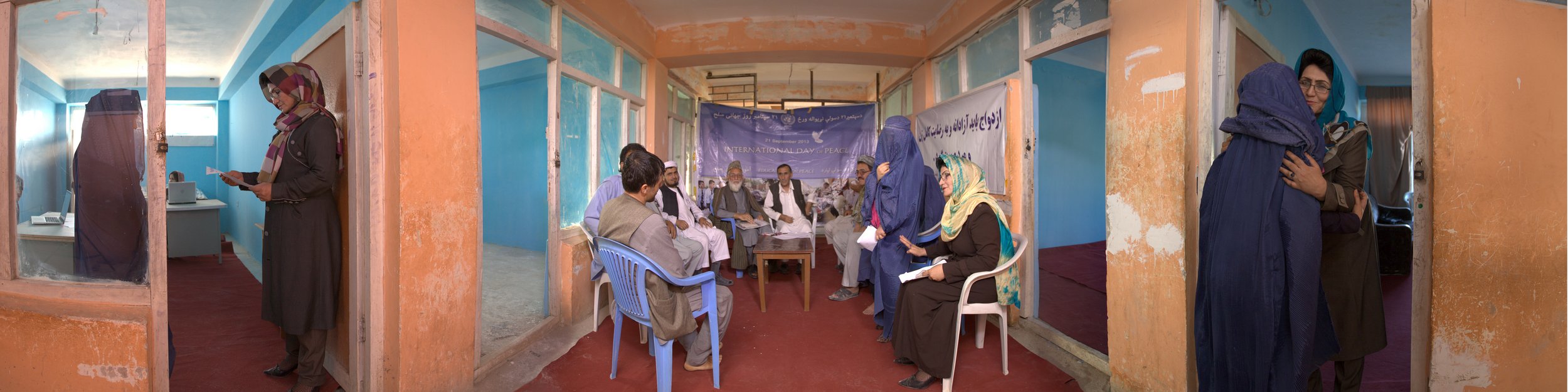
Corruption weakens public services by diverting resources, distorting decisions and eroding trust. For Afghan communities, the harm is tangible: clinics lack supplies, projects stall, and households face avoidable fees. The UN’s Afghan anti-corruption workshops equipped civil servants to identify misconduct, apply the law, report concerns and safeguard public assets in their daily work.
These sessions formed part of the archived UN70 “Strong UN. Strong Afghanistan.” campaign, which spotlighted Afghan people and institutions advancing shared goals. The material captures a practical principle: public integrity depends on capable officials and credible systems working together. That principle reaches far beyond formal rules, extending to procurement, service delivery, supervision and complaint handling.
Why integrity training matters
Civil servants sit at the point where policy becomes a public service. They decide who receives a contract, whether a fee is lawful, how an aid or facility is used, and whether a case is referred for scrutiny. Each decision can either reinforce trust or create an opening for abuse of office, fraud and conflicts of interest.
Training gives officials a shared language for those risks and a practical route for acting on them. It can reduce the belief that corruption is an unavoidable feature of administration while making clear that individual choices occur within institutional incentives. People need to know where the boundaries lie and how to seek advice without fear of retaliation.
Effective programmes also recognise that an honest official can be trapped by weak procedures. Procurement systems, payment controls, transparent recruitment and accountable supervisors matter as much as personal integrity. The workshops therefore treated anti-corruption as both a matter of ethical conduct and a management responsibility.
Preventing corruption also protects the people who depend on public institutions. When officials handle funds, documents and decisions according to clear standards, families and businesses are more likely to receive services without discrimination or unofficial payments. Training contributes to that protection by helping civil servants recognise questionable requests and respond consistently.
What the workshops put into practice
Workshop content connected Afghan law and public-service duties with international standards, including the United Nations Convention against Corruption. Participants examined bribery, embezzlement, misuse of assets, favouritism and conflicts of interest. This provided a common framework for discussing misconduct while keeping attention on obligations that officials could apply in their own offices.
Case studies turned those definitions into decisions. Participants considered tender irregularities, unofficial payments for public services, political influence in recruitment, misuse of vehicles or equipment, and the handling of complaints about colleagues. Such examples exposed the small warning signs that often precede a serious breach and allowed officers to rehearse alternatives before facing them in a live situation.
Reporting was presented as a core public duty rather than a sign of disloyalty. Officials explored how to preserve evidence, use internal and independent channels, protect confidentiality and escalate urgent risks. Supervisors learned that they must respond to allegations consistently, document their actions and avoid conflicts when handling a matter involving someone they know.
The wider goal was efficient and equitable public service. When records are complete, approvals are visible and funds reach intended programmes, officials can see that integrity supports outcomes as well as compliance. That message counters the false idea that proper process is merely paperwork or obstruction.
Learning that changes daily decisions
The most useful sessions were participatory. Officials discussed situations, defended or challenged proposed actions, and then compared the result with legal and ethical expectations. This adult-learning approach acknowledged that experienced civil servants already understand the realities of their workplaces; it built on that knowledge instead of treating them as passive recipients of instructions.
Peer discussion also surfaced barriers that a manual cannot show. A participant might know the correct rule but lack access to a manager, fear reputational damage, or worry that a complaint will disappear into a large bureaucracy. The facilitator could address those obstacles in the room and agree on realistic next steps.
| Training element | Rule-centred briefing | Scenario-based workshop |
|---|---|---|
| Knowledge | Definitions and legal duties explained | Officials apply duties to realistic decisions |
| Practice | Instructor-led presentation | Role-play, discussion and peer challenge |
| Reporting | Available channels outlined | Participants test safe escalation and documentation |
| Organisational response | Attendance recorded | Managers receive coaching and agreed actions |
Follow-up then turned the exercises into institutional memory. Action notes, refresher discussions and links to trusted advisers helped newly learned procedures survive beyond the workshop. Attendance showed that people had arrived; it did not establish that behaviour had changed or that management would act.
Designing training for Afghanistan’s public service
Afghanistan’s public administration operates across national ministries, provincial services and facilities with very different capacities. Some participants worked in secure urban offices, while others faced limited connectivity, scarce specialist support or difficult travel. A common curriculum therefore needed room for local conditions, with examples selected for the decisions participants faced rather than imported from another political setting.
Language was another practical consideration. Workshops had to make legal and ethical concepts clear without losing precision, and delivery in provincial centres could require locally appropriate examples and interpretation. Inclusive participation also mattered, especially for women and officials from communities that often had less access to senior decision-making. A credible integrity programme needed to model the equal treatment it expected agencies to provide.
Facilitators also had to handle sensitive examples responsibly. Detailed allegations involving identifiable staff, security-sensitive locations or active investigations should not be repeated in a training room. Generic cases, anonymised material and clear referral procedures allowed officials to explore misconduct without compromising privacy, due process or safety.
Practical resources expanded the reach of the programme. Printed guides, discussion notes and accessible referral information were valuable where internet access or continued travel could be difficult. Trainers also needed feedback from participants about unclear terminology, unrealistic scenarios and inaccessible reporting arrangements.
Partnerships that strengthen accountability
National ownership was essential. The role of UN support was to strengthen Afghan institutions, not create a parallel system that would disappear when a project ended. Workshops were most useful when ministries, oversight bodies and training institutes helped define priorities, supply relevant cases and committed staff time for follow-up.
Partnership linked classroom learning to formal accountability. The Supreme Audit Institution, national anti-corruption authorities, civil-service bodies and legal institutions each had distinct roles in prevention, investigation and correction. UN technical support could help translate policies into teaching materials, while national bodies retained responsibility for decisions about individual cases and institutional reform.
Communities had a complementary role. Residents, civil society groups and responsible media could identify service failures, document patterns and support a safe reporting culture. Feedback from citizens was especially valuable because corruption can be hidden inside offices but is often visible in daily life, such as unexplained fees, missing supplies or delays that favour connected applicants.
Partner coordination also improved consistency. Agencies working with the same public institutions could align their integrity messages, avoid duplicating training and prevent parallel reporting channels from confusing staff. Shared standards did not erase institutional differences; they created a predictable route for cooperation.
Lessons for Australian public administrators
Canberra offers a useful comparison, although Australia’s institutional setting is far more resourced and stable. Commonwealth officials work under the Australian Public Service Code of Conduct, with integrity functions supported by the Commonwealth Integrity Commission and independent scrutiny from the Australian National Audit Office. Training can connect the Code to procurement decisions, recruitment, gifts, conflicts and the use of public information.
State-level practice adds another dimension. Sydney’s NSW Independent Commission Against Corruption and Brisbane’s Queensland Integrity Commission illustrate how dedicated oversight bodies can investigate serious misconduct outside the ordinary service chain. Australian agencies can draw lessons from the workshop method by testing their own reporting channels and asking whether junior staff can challenge a senior decision without damaging their career.
Australian workplace culture also shapes how training must be delivered. Conversations may be direct, sceptical and fairly informal; a “fair dinkum” session can make participants comfortable, while the expectation of mateship can sometimes discourage a junior colleague from questioning a senior one. Melbourne and Sydney’s culturally diverse populations add another layer, requiring public servants to communicate clearly across languages and backgrounds. Scenario work can expose where those cultural and workplace barriers affect fair access to services.
The comparison should be handled carefully. Afghan workshops addressed serious gaps in access, security and institutional capacity, while Australian training usually operates within mature legal and administrative frameworks. The transferable method is the habit of realistic discussion, not an assumption that institutions or pressures are alike.
Turn lessons into stronger public trust
The Afghan workshops demonstrate that anti-corruption education is strongest when it is practical, inclusive and tied to functioning accountability. Civil servants need credible rules, safe reporting routes, capable supervisors and evidence that concerns are investigated. Communities need confidence that public decisions can be explained and challenged. These elements turn integrity training from a one-off course into part of how public service is delivered every day.
Australian readers can act on the legacy of the archived campaign by reviewing its messages and stories, sharing the lessons with colleagues, and supporting transparent, accessible public institutions. They can also revisit their own agency’s reporting channels, conflicts policy and procurement controls. Visit the archived UN Afghanistan campaign resources and help keep the focus on capable Afghan institutions, accountable public service and the people whose trust makes both essential.