
Making a Difference


Restoring Afghanistan's Soils with Compost and Farmer Outreach
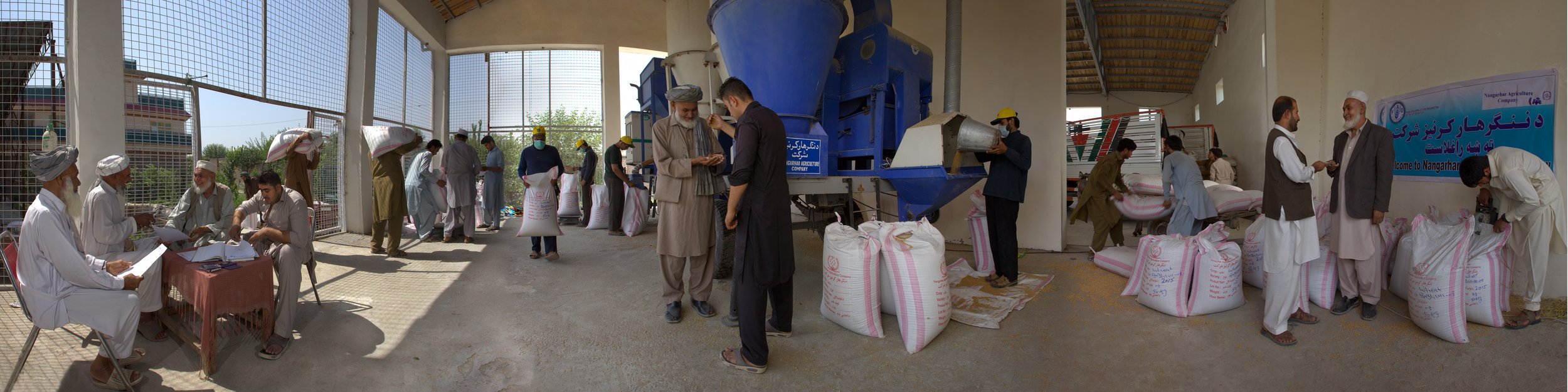
For decades, the productivity of Afghan farmland has been quietly eroding. Centuries of wheat cultivation on rainfed terraces, repeated cycles of drought, and the heavy reliance on chemical fertilisers that smallholders can rarely afford have left large tracts of the country's arable land short on organic matter and biological activity. The United Nations, working alongside national authorities and rural councils, has been investing in a remedy that is both ancient and surprisingly modern: compost made from crop residues and animal manure, paired with agricultural extension services that bring tested techniques to farming families across the provinces.
The approach recognises that soil fertility cannot be restored by a single delivery of inputs. It requires a continuing relationship between farmers, local trainers, and the institutions that support them. From the highland orchards of Bamyan to the wheat belts around Mazar-i-Sharif, village-level demonstrations have shown that well-made compost returns nitrogen, carbon, and microbial life to tired soils while reducing dependence on costly synthetic fertilisers. The story of how this work began, and why it still matters, also carries lessons for readers in Australia who tend backyard plots, volunteer at community gardens, or watch the price of vegetables at suburban markets.
The slow crisis beneath Afghan fields
Soil degradation rarely announces itself. It creeps in through falling yields, thinner straw, more dust on the wind, and the slow retreat of trees that once shaded field edges. In Afghanistan, where roughly sixty percent of the population lives in rural areas and farming remains the single largest source of household income, the signs have become harder to ignore. Surveys conducted with UN support in recent years have shown organic matter levels in many cultivated plots dropping well below the threshold that agronomists consider sustainable for continuous cropping.
Several pressures feed the problem at once. Fuel shortages push families to gather manure for cooking and heating rather than returning it to the field. Crop residues are often fed to livestock or burned because storage is limited. And where synthetic urea is available, it is frequently applied without the organic carbon that helps nitrogen stay in the root zone. The result is a pattern of nutrient mining in which each harvest removes more than is replaced, slowly starving the very ground that feeds the household.
Climate stress deepens the cycle. Erratic rainfall, longer dry spells, and warmer growing seasons have shortened fallow periods and reduced the regeneration of natural vegetation between crops. When the soil loses its sponge-like organic layer, the little rain that does fall runs off rather than soaking in, and seedlings struggle to establish. Rebuilding that organic layer is the entry point for nearly every UN-backed soil fertility programme in the country, and compost is the most accessible tool available to the smallholders who farm the majority of Afghan land.
Turning household waste into field amendment
Compost making is, at its core, a controlled version of what every forest floor does naturally. Microbes, fungi, and small invertebrates break down green and brown materials into a dark, crumbly substance that holds water, releases nutrients slowly, and feeds the soil ecosystem. The UN's work in Afghanistan has focused on teaching farmers and their families to run this process deliberately, in pits, heaps, or simple enclosures close to the home or the barn.
Training sessions led by extension officers demonstrate how to layer manure, chopped straw, kitchen scraps, and ash, then turn the heap at intervals to keep it aerated. Moisture is checked by hand, and a wooden stake pushed into the centre serves as a primitive thermometer. Within two to three months, depending on the season, the result is a nutrient-rich amendment that can be spread on vegetable plots, fruit trees, or cereal fields before planting. Because most of the inputs are already on the farm, the cost is measured in labour rather than cash, which suits households operating on tight margins.
Beyond fertility, compost improves the physical structure of the soil. Heavier clay loams in the north drain better when organic matter is restored, while the sandy soils common in southern provinces hold moisture longer after amendment. Farmers involved in pilot programmes have reported fewer irrigation turns, stronger seedling vigour, and, in several districts, modest but meaningful gains in wheat and barley yields. These gains compound over seasons, and they reduce the need for expensive external inputs that smallholders often cannot reliably source.
A simple compost routine for Afghan smallholders
- Layer manure, chopped straw, kitchen scraps, and wood ash in a pit or heap close to the home.
- Keep the pile as moist as a wrung-out cloth and turn it every two or three weeks.
- After two to three months, sift the finished compost and apply it to vegetable beds, fruit trees, or cereal plots.
Extension officers as the bridge between science and the village
Compost only delivers its benefits when it is made and applied correctly, which is why the UN's soil work in Afghanistan is inseparable from agricultural extension. Extension services are the networks of trained advisors who carry new practices from research stations and ministry offices out to farming communities, and who carry farmers' questions back in the other direction. In provinces where UN agencies operate alongside the Ministry of Agriculture, Irrigation and Livestock, extension officers have become the central figures in the soil fertility story.
Their daily work is hands-on and unhurried. A typical week might include a demonstration in one village, a follow-up visit to a group that has just finished its first compost cycle, and a coordination meeting with district officials about seed distribution or irrigation repair. Trust is built over cups of green tea and repeated visits, and officers learn to listen as much as they teach. When a farmer asks whether compost will burn young seedlings, or whether chicken manure needs to be mixed with straw, the officer's response shapes whether the practice spreads or stalls.
The training model also reaches women, who play a substantial role in small-scale agriculture, dairy production, and kitchen gardening across Afghanistan. Female extension workers, where they can operate safely, have run dedicated sessions on household-level composting using materials that families already handle. This inclusion matters because decisions about kitchen waste, animal pens, and home gardens are often made by women, and equipping them with practical knowledge extends the reach of the programme far beyond formal training events.
What the Afghan experience means for backyards from Sydney to Perth
Although the scale could hardly be more different, the soil lessons travelling out of Afghan provinces resonate with what is happening in Australian neighbourhoods. In Sydney, local councils have rolled out kerbside food organics collections to hundreds of thousands of households, and the resulting material is composted at industrial facilities before being returned to farms and parks. In Melbourne, the state's ban on food waste going to landfill has pushed cafés, schools, and apartment blocks to set up shared bins and worm farms. Brisbane's community gardens have grown steadily through the pandemic years, with many waiting lists stretching into double digits.
Australian households have also been nudged toward better soil management by market signals. Organic produce commands a premium at suburban farmers' markets, and the national organic industry continues to expand each year. Legislation has reinforced the trend. The National Waste Policy and related state targets aim to halve organic waste sent to landfill by 2030, and environment protection authorities in New South Wales, Victoria, and Western Australia have tightened rules around commercial food waste. For many Australians, composting has shifted from a niche hobby into a regulated, supported everyday habit.
There are practical parallels worth drawing. A backyard compost heap in Adelaide and a pit composter outside a Bamyan farmhouse share the same basic biology and respond to the same balancing of carbon and nitrogen. Both rely on consistent moisture, occasional turning, and a steady supply of mixed materials. Both reward patience with richer soil that holds water through dry spells, an increasingly relevant benefit as parts of southern Australia face longer and hotter summers. The Afghan extension model, with its emphasis on demonstration plots and peer learning, also mirrors the way Australian Landcare groups and community garden coordinators spread new practices among neighbours.
Composting habits spreading across Australian suburbs
- Joining a local community garden or Landcare group to share tools, knowledge, and compost bays.
- Setting up a worm farm or bokashi bucket for households without outdoor space.
- Checking council websites for kerbside organics collections or subsidised compost bins.
Sustaining gains when the funding cycle ends
The most persistent challenge for soil fertility work in Afghanistan, as in many places, is what happens after the project formally ends. Compost piles can stop being turned, extension officers can be reassigned, and the organic matter gains built up over several seasons can be lost within a few cropping cycles if practices lapse. Building lasting change requires more than technical training; it requires embedding the habits inside local institutions and market relationships that survive changes in donor priorities.
In practice, this has meant linking compost programmes to cooperatives, school gardens, and small enterprises that can carry the work forward. Some villages have started selling surplus compost to neighbouring households or to peri-urban farmers who lack livestock. Others have woven soil health messaging into literacy classes and radio programmes, so that the rationale for composting is understood alongside the method. The UN's continuing role is to support the policy environment, share evidence from the field, and help national partners access the technical expertise they need.
For observers in Australia and elsewhere, the Afghan experience offers a sober reminder that soil is a long-term asset. It can be stripped quickly through neglect and rebuilt only through patient, repeated effort. Whether the setting is a wheat field in Balkh or a raised bed in suburban Brisbane, the path back to fertile ground runs through compost, through extension, and through people willing to learn together. Supporting that work in Afghanistan is not simply a humanitarian gesture; it is a contribution to the global knowledge of how to live well with the land.
Take a closer look at the stories behind the UN's soil fertility work in Afghanistan and see how small changes in how waste is treated can reshape harvests, water use, and rural futures for years to come.