
Making a Difference

Building Toilets for Afghan Girls: How UN Schools Are Changing Lives
For many families in Afghanistan, sending a daughter to school is not a simple decision. Long before a girl picks up a textbook, parents weigh whether she will be safe, whether she can walk the distance, and whether the school has what she needs to get through the day. One of the most overlooked requirements is also the most basic. A girl who has reached puberty needs a private, clean toilet. When that facility does not exist, families keep her home, and a single missing amenity quietly shapes the future of an entire generation.
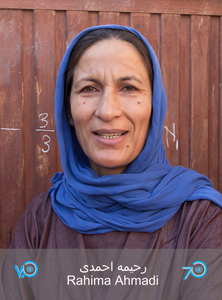
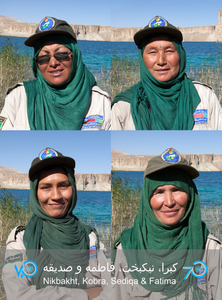
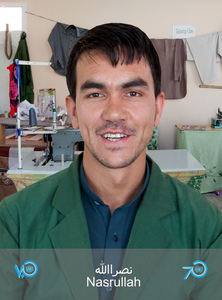
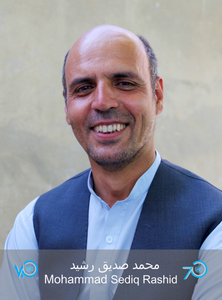
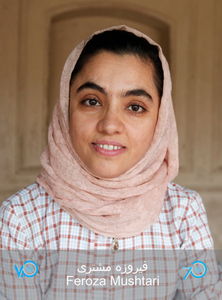
The United Nations recognised this decades ago and has funded sanitation facilities in Afghan schools as part of broader Water, Sanitation and Hygiene programmes run with partners on the ground. Building separate toilets for girls sits inside a wider push to keep children, especially adolescent girls, enrolled through their primary and lower secondary years. The work connects to campaigns such as the Strong UN. Strong Afghanistan. effort, which highlighted ordinary Afghans whose contributions often go unheard abroad.
For readers in Australia, the issue lands closer than it might first appear. Remote communities in the Northern Territory and Western Australia have spent years negotiating for functioning sanitation infrastructure in schools, and Australian non-profits have long partnered with UN agencies in Afghanistan. The conversation about toilets, dignity and education is not foreign to a country where the phrase "a fair go" has shaped school funding debates and overseas aid.
The Hidden Reason Girls Leave School
Schools in rural Afghanistan often share a single block of toilets between dozens of children, with no separation by sex. For a girl who menstruates, the prospect of queuing with boys, using a broken or soiled latrine, or having no place to wash herself and her cloth is enough to make a parent withdraw her from class. UNICEF surveys have long identified the absence of adequate sanitation as one of the top reasons Afghan families cite for pulling daughters out once they reach puberty.
The consequences stretch well beyond missed lessons. Girls who drop out early are far more likely to marry young, earn less across their lifetimes, and miss the protective effects of continued schooling on maternal and child health. The slow-burn nature of those outcomes makes the topic easy to neglect for donors and ministries juggling tight budgets, security and competing priorities.
UN teams in Afghanistan have responded by treating school toilets as core infrastructure rather than a finishing touch. The logic is straightforward: a latrine built correctly earns the family's trust and keeps the girl at her desk. UNICEF Australia points to Australian-funded sanitation blocks in places as varied as Timor-Leste and the Pacific as an extension of the same principle applied closer to home.
The UN Agencies Behind the Bricks and the Pipes
Several UN bodies share responsibility for sanitation in Afghan schools, and their work overlaps by design. UNICEF takes the lead on physical infrastructure, drilling boreholes, sinking septic tanks and constructing ventilated pit latrines where water tables allow. UN Women works alongside ministries to make sure girls are consulted on layout, lighting and locks. WHO contributes standards for hygiene, water quality and the safe management of waste. UNESCO folds the facilities into its wider push for inclusive, safe learning environments.
Coordination happens through provincial working groups that include Afghan government engineers, local imams who often advise on what the community will accept, and partner non-government organisations. The model is iterative. A school that receives a new toilet block is typically paired with menstrual hygiene education for both girls and boys, since the curriculum aims to reduce the stigma that drives girls indoors in the first place.
Australia fits into this picture through its development programme managed by the Department of Foreign Affairs and Trade, which has co-financed water and sanitation projects in Afghanistan for years. Australian aid has also reached UN trust funds that pool money from many donors, allowing the construction of dozens of facilities in provinces that single budgets could not stretch to on their own.
Designing Latrines That Respect Culture and Climate
A school toilet in Bamyan looks nothing like one in Brisbane. Designs must account for harsh winters, searing summers, conservative dress codes, the absence of running water, and the need for every component to be maintainable by local staff without outside contractors. Engineers working under UN contracts typically specify pour-flush latrines where water can be hauled in by hand, or ventilated improved pit latrines where the geology and distance from aquifers allow.
Privacy is treated as a structural requirement. Walls are built high enough to be screened from outside view, doors are fitted with inside bolts that cannot be opened from outside, and the path between classroom and latrine is lit or shaded so a girl can use it at any hour without drawing attention. Where possible, the girls' block is placed slightly apart from the boys' block, with its own hand-washing station.
Practical features that earn a family's trust:
- A solid lockable door with a bolt accessible only from inside.
- A covered water point and soap within a short walk of the latrine.
- Clear separation between the girls' block and the boys' block.
- A lit or screened path so the facility stays safe after dark.
UN drilling teams have become skilled at locating deep boreholes that serve both the latrines and the wider community, turning a school project into a neighbourhood asset. Communities that see the pumps flowing are also more willing to police the latrines and keep them clean, a quiet but critical form of local ownership.
Building on the Ground, Province by Province
Rolling out a sanitation block involves more than a builder and a cement mixer. UN staff and partner agencies walk through each district with the Ministry of Education, identifying the schools where girls' enrolment has dropped sharply between grades four and six, and where existing facilities are unusable. The priority list is shared with elders and parent committees before construction begins, which usually heads off later complaints.
Logistics in Afghanistan are demanding. Materials are trucked along roads that become impassable after heavy snow or in the wet season, and security escorts are sometimes needed for convoys. Contractors are pushed to source as many components locally as possible, from fired bricks in Balkh to timber doors in Kunar. That approach keeps money circulating in the province and shortens the supply chain when something needs fixing later.
The construction phase is also a chance to train. Local masons are taught how to set up a pit latrine to a standard that can be replicated across the district, and at least one caretaker, often a woman, is paid to manage daily cleaning. Once the block opens, the school records attendance closely for several months so the impact of the new facility can be measured.
Menstrual Hygiene and What Happens After Opening Day
The gap between construction and habit change is where many sanitation schemes falter. A toilet block left unrepaired for a season quickly becomes unusable, especially where spare parts are scarce. UN partners have learned to keep things simple, using locally available materials wherever possible and training a caretaker from the village to manage daily upkeep.
Menstrual hygiene management is woven into the same handover. Girls learn how to use washable cloth safely, how to dispose of materials discreetly, and where to seek help if they feel unwell. Boys are brought into the conversation so they grow up understanding that menstruation is a normal part of life and not something to mock. Australian donors have backed training materials in Dari and Pashto through their contributions to UN trust funds.
The result is a small but measurable shift in attendance. Where UNICEF and partners have tracked outcomes, schools that have received proper sanitation blocks for girls report fewer drop-outs at the upper primary level. The data is imperfect, but the direction is consistent and matches what similar programmes have shown in South Asia and sub-Saharan Africa.
A Familiar Story from Remote Australia
For Australians, the geography of the challenge is not as far away as it sounds. In remote communities across the Top End and the Kimberley, families have campaigned for decades for functioning toilets and showers in schools, and for culturally appropriate menstrual hygiene support for Aboriginal girls. Federal and state governments have poured money into the gap, yet attendance still suffers where the infrastructure lags.
Engineers and community health workers who have worked on both sides of the equation often remark on the parallels. Logistical headaches, supply runs that take days, climate extremes that punish cheap materials, cultural protocols around who can talk to whom about bodily matters, and the simple reality that a child with no safe place to go to the toilet will not stay at school. A worker who has installed a septic tank outside Katherine will recognise the constraints faced by a builder contracted to a UN school in Daikundi.
This shared experience has also seeded Australian expertise. Engineers from firms in Perth and Adelaide have consulted on UN sanitation projects, and academics at universities including Melbourne and Western Sydney have researched the social side of school hygiene in low-income settings. Their work feeds into the standards that UN agencies adopt across countries.
Beyond Toilets, Towards a Generation of Readers and Leaders
Separate sanitation is only one piece of a larger puzzle. Schools also need female teachers, safe roads, lighting and textbooks, and families need income that lets them forgo a daughter's labour at home. UN agencies working in Afghanistan understand that no single latrine will change a girl's life on its own. What the facility does is remove a daily reason to leave school, giving the rest of the system room to do its job.
The path ahead remains fragile. Funding for Afghanistan has fluctuated with political mood and donor fatigue, and the schools that have already received new sanitation blocks need continued maintenance to keep functioning. Climate stress is reshaping the engineering challenge, with longer droughts forcing deeper wells and heavier rains threatening low-lying pit latrines.
Australians who care about this work have several practical entry points. They can back established groups supporting UN sanitation work, push for sustained federal funding through DFAT, or support research that builds the evidence base for what works. Australian organisations active in Afghan school sanitation include:
- UNICEF Australia, which channels donations into country-specific WASH programmes.
- CARE Australia, which runs gender and education projects across Afghanistan.
- Plan International Australia, with a long record of school-based sanitation in Asia.
- WaterAid Australia, which supports community sanitation in conflict-affected settings.
The clearest signal the aid sector can send is that sanitation is not a soft add-on. It is the foundation that lets every other piece of a girl's schooling hold together. Reach out to the organisations listed here, lend your time or your voice, and help keep the conversation, and the funding, flowing.