
Making a Difference
Protecting Afghan Children From Mines And Explosive Remnants
For children in Afghanistan, a familiar path to school, a field beside a village or a discarded metal object can conceal a life-changing danger. Landmines, unexploded ordnance and other explosive remnants of war continue to affect communities long after fighting has moved elsewhere. Mine clearance removes hazards, but children also need practical information that helps them recognise risk and make safer choices.
The United Nations has supported Afghanistan through mine action coordination, clearance programmes, victim assistance and risk education. The UN70 “Strong UN. Strong Afghanistan.” campaign, preserved as an archived record of a completed campaign, placed Afghan people and their contributions at the centre of the wider UN partnership. Its message remains relevant: safety depends on local knowledge, trusted institutions and sustained international support.
Why Children Face Particular Risks
Children encounter explosive hazards during ordinary activities. They may collect scrap metal, play near abandoned military positions, walk across open ground to reach school or follow animals into areas adults know to avoid. Curiosity and a limited understanding of danger can turn an unfamiliar object into an immediate threat. Younger children may also struggle to describe where they found an item or remember detailed instructions under pressure.
Afghanistan’s geography adds to the difficulty. Villages can be separated by rugged terrain, seasonal rivers and damaged roads. Families displaced by conflict may settle in places they have not previously known, while returning families can find old paths, orchards and homes contaminated by mines or unexploded weapons. Agricultural work, collecting firewood and fetching water may bring children close to hazardous areas even when parents have provided clear warnings.
Risk is also shaped by poverty. A child who sees a piece of metal as a potential toy may not understand that it could be valuable scrap to a family with few resources. Adolescents may be asked to help with farming, herding or construction, increasing their exposure to former battlefields and abandoned compounds. Effective education must therefore reflect daily pressures rather than relying on abstract warnings.
What Mine Risk Education Teaches
Mine risk education gives people the knowledge and behaviour needed to reduce exposure. For children, the core message is often simple: do not touch, approach or move an unfamiliar object; move away using the same route; warn others; and tell a trusted adult or the appropriate authority. Lessons may also teach children to recognise warning signs, disturbed ground, unusual wires, ammunition shapes and areas that should never be entered.
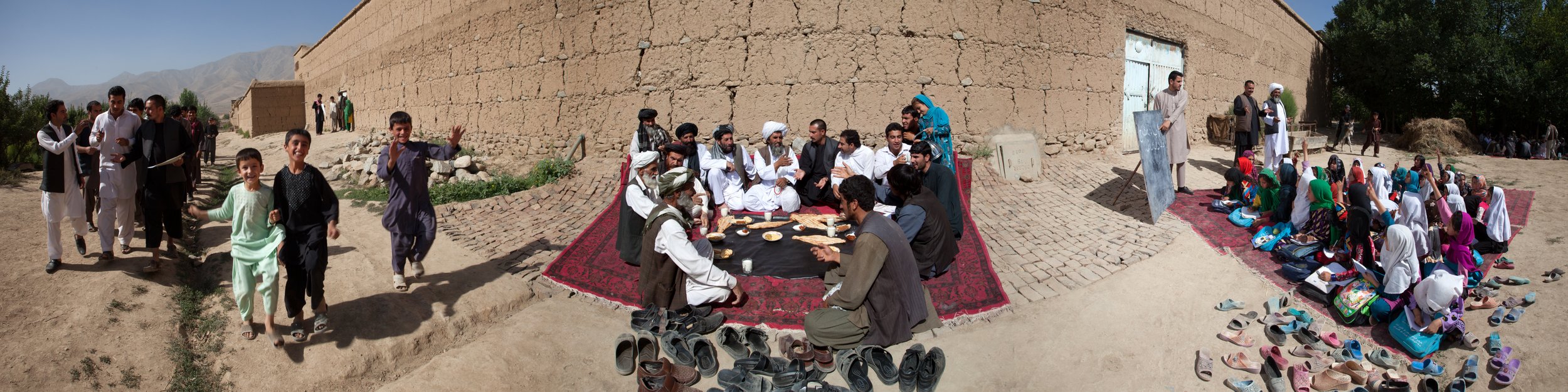
Good programmes use language and examples that children understand. A classroom session might include pictures, storytelling, role-play, songs or demonstrations with safe replicas. Teachers and community educators can practise how to respond if a child discovers an object on the way to school. Repetition matters because children may encounter risk months or years after a lesson, and because displacement can interrupt schooling.
Messages must be adapted for language, age, disability and local custom. A lesson delivered in Dari or Pashto may need different examples for a farming village, an urban settlement or a nomadic community. Girls and boys may use different routes and carry out different household tasks, so educators need to understand who is exposed, when and where. Radio, mobile messaging and community meetings can extend information to children who are not regularly attending school.
The strongest programmes connect education with reporting and clearance. Telling a child to avoid an area is insufficient if there is no functioning way to mark the location, inform specialists and protect the community. Local leaders, teachers, health workers and mine action teams can create a chain from warning to action, while survivors and families bring essential knowledge about the consequences of explosive injuries.
How The United Nations Supports Safer Communities
The UN’s role involves more than sending clearance teams. Through mine action partners, it helps coordinate surveys, identify contaminated land, prioritise areas, deliver community liaison and provide risk education. Coordination is important because Afghanistan’s needs are extensive and resources are limited. Information about suspected hazardous areas must be shared so that clearance, humanitarian access, education and reconstruction do not work at cross-purposes.
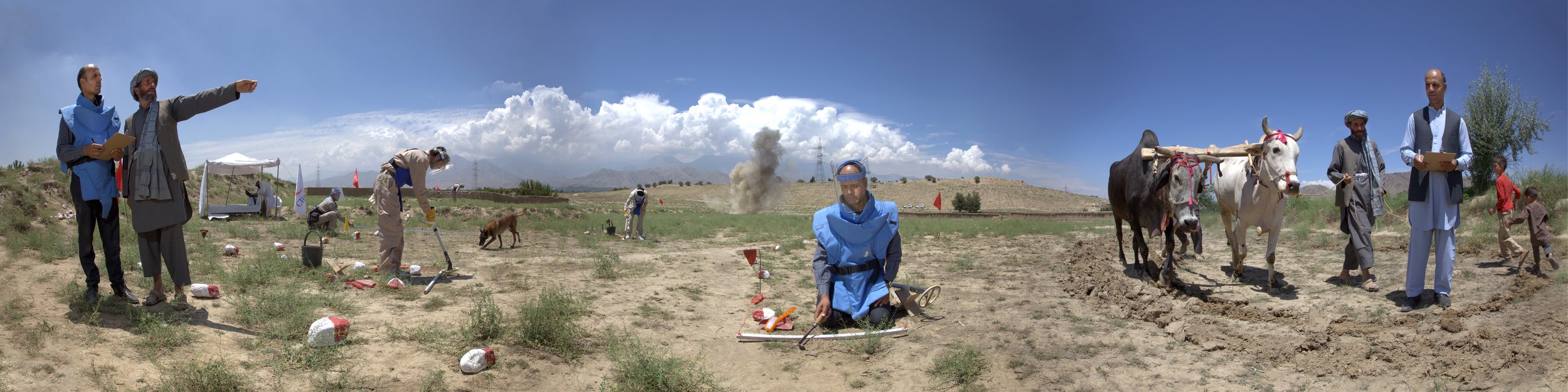
Specialist deminers may use manual clearance, machines, mine detection dogs and technical surveys, depending on the terrain and the suspected device. Each method requires trained personnel, protective procedures and careful quality assurance. The work is slow by nature: a route that appears empty still needs to be checked systematically before families can safely return or land can be released for farming.
The UN also links mine action with humanitarian protection. A contaminated road can prevent medical referrals, delay food deliveries and isolate communities during winter. A dangerous school route can keep children away from education. Clearing land supports recovery, but risk education provides an immediate protective measure while clearance is being planned or when access is impossible.
Afghanistan’s mineral wealth presents a related need for responsible decision-making, though mining and mine action are distinct fields. Any future extraction or infrastructure project must account for explosive hazards, community safety and environmental responsibilities; the UN has also issued guidance on responsible extraction. Safe development cannot proceed simply because land appears economically valuable.
Building Lessons Around Afghan Voices
Local participation makes risk education more credible. Afghan teachers, religious figures, elders, women’s groups, youth representatives and survivors can explain which messages are accepted, which routes children use and which hazards are being discussed in the community. Their involvement helps replace generic warnings with advice that fits real decisions, such as whether a family can safely graze animals near a former frontline.
Survivors have a particularly important role when they choose to share their experiences. Their stories can show the human cost of a single mistake and encourage children to take warnings seriously. Communications must still protect dignity. People injured by mines should never be treated merely as symbols of suffering; they need rehabilitation, psychological support, livelihoods assistance and inclusion in community life.
Parents and teachers also require support. A child may return from a lesson frightened, confused or eager to repeat what they have learned. Adults need clear guidance on how to reinforce safe behaviour without creating panic. Schools can establish simple procedures for reporting suspicious objects, supervising routes and contacting local authorities. These measures work best when they are consistent across home, classroom and community settings.
Campaigns such as “Strong UN. Strong Afghanistan.” helped present international work through Afghan stories rather than distant institutional language. That approach is useful for mine action communications. Children are more likely to remember a message when it comes through a trusted teacher, neighbour or family member and when it recognises their own resilience, intelligence and role in protecting others.
Lessons For Australian Support And Awareness
For Australians, Afghanistan’s mine action needs can feel remote, yet the country has a direct connection through its humanitarian, diplomatic and development engagement. Australians often understand the long shadow of conflict through Anzac Day services, military history and family stories, but remembrance should also include the civilian consequences that remain after a conflict ends. A child walking to class decades later may face danger from weapons that were placed before they were born.
Australia’s geography offers another useful comparison. In regional Queensland, Western Australia or the Northern Territory, people understand that distance affects access to health care, schools and emergency services. Afghan communities face far more severe constraints, but the principle is familiar: a warning delivered in a capital city does not automatically reach a remote settlement. Mine risk education must travel through local networks, just as public safety information in Australia needs to reach communities beyond Sydney, Melbourne or Brisbane.
The Australian aid market also rewards accountable partnerships. Government departments, established charities, philanthropic trusts and specialist contractors generally look for evidence of local participation, safeguarding, measurable outcomes and responsible use of funds. Support for Afghan mine action should therefore prioritise organisations that can demonstrate trained educators, reliable reporting systems, survivor assistance and transparent monitoring rather than relying on dramatic images alone.
Schools, councils and community groups can contribute through informed fundraising and age-appropriate learning. A class in regional Victoria might study how explosive remnants affect access to farms and schools, while a community group in Perth could connect humanitarian education with responsible giving. The point is not to reproduce Afghan experiences as an Australian analogy, but to build informed solidarity and support programmes led by people who know the local setting.
Clearance targets can be counted in hectares, roads reopened or devices destroyed, but child safety also requires deeper measures. Are children changing unsafe behaviour? Can families report hazards? Are girls and displaced children receiving the same information? Can survivors access rehabilitation and a livelihood? These questions help donors and institutions judge whether mine action is reducing risk in daily life rather than merely producing impressive totals.
Supporting reputable humanitarian organisations, sharing accurate information and keeping attention on long-term recovery can strengthen this work. Australian audiences can also follow UN reporting and established mine action partners to understand how funds are used and why clearance often takes years. Public interest matters because explosive remnants are a persistent problem, not a short news cycle.
Protecting Afghan children begins with a message they can remember, a community that can act on it and a mine action system able to remove the danger. Support organisations that combine risk education, clearance, survivor assistance and Afghan-led decision-making. Keep the issue visible in classrooms, community discussions and responsible humanitarian giving so that a safe route to school becomes a realistic promise rather than a distant hope.