
Making a Difference
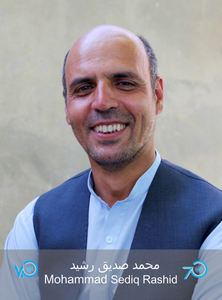

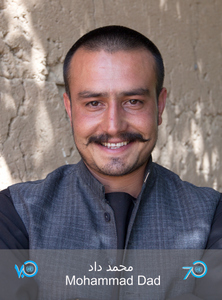
The UN and Afghan Judiciary: Training for Fair Trials
A fair justice system depends on more than written laws. Judges, prosecutors, defence lawyers, police investigators, court administrators and legal aid providers must understand how those laws work in practice. They need the skills to assess evidence, protect due process and treat every person before the court with dignity.
In Afghanistan, the United Nations supported justice-sector development through technical assistance, professional training and cooperation with national institutions. This work formed part of a broader effort to strengthen the rule of law, improve access to justice and help communities address disputes through lawful and accountable processes.
The UN70 “Strong UN. Strong Afghanistan.” campaign presented Afghan people and institutions contributing to the country’s future. Within that wider story, support for the judiciary illustrates a practical principle: strong institutions are built through capable professionals, public trust and safeguards that make justice meaningful for ordinary people.
Why Judicial Training Matters
Courts shape public confidence in the state. When proceedings are delayed, evidence is handled poorly or defendants cannot understand the accusations against them, people may view formal justice as distant or unfair. In areas where families also rely on community elders or customary mechanisms, weaknesses in the official system can encourage people to avoid courts altogether.
Training helps turn legal standards into daily courtroom practice. A judge may know that a defendant has the right to a lawyer, yet still need guidance on how to verify that the right has been explained and respected. A prosecutor may understand the duty to present a case fairly, while requiring practical instruction on disclosure, witness protection and the treatment of exculpatory evidence.
The United Nations’ justice-related work in Afghanistan has involved cooperation with government bodies, legal professionals and civil society. Its purpose has generally been to strengthen national capacity rather than replace Afghan institutions. Sustainable justice depends on Afghan judges, prosecutors, defence counsel and administrators being able to perform their duties within a credible legal framework.
Skills That Support a Fair Hearing
Fair-trial training covers the full life of a case. It can include lawful arrest and detention, access to counsel, impartial adjudication, the presumption of innocence, the right to understand charges, examination of witnesses and the preparation of reasoned judgments. These principles are reflected in international human rights law and provide a common standard for justice systems.
Practical instruction is especially valuable. Court professionals may work through simulated hearings, review sample case files and examine how a decision should be recorded. Such exercises can clarify the difference between suspicion and proof, help identify unreliable testimony and show how procedural mistakes can affect the legitimacy of a judgment.
Professional ethics are another essential area. Judges must avoid conflicts of interest and remain independent from pressure. Prosecutors must assess whether a case is supported by credible evidence rather than pursuing conviction at any cost. Defence lawyers need the freedom and preparation to represent clients effectively, including people who are unpopular or accused of serious offences.
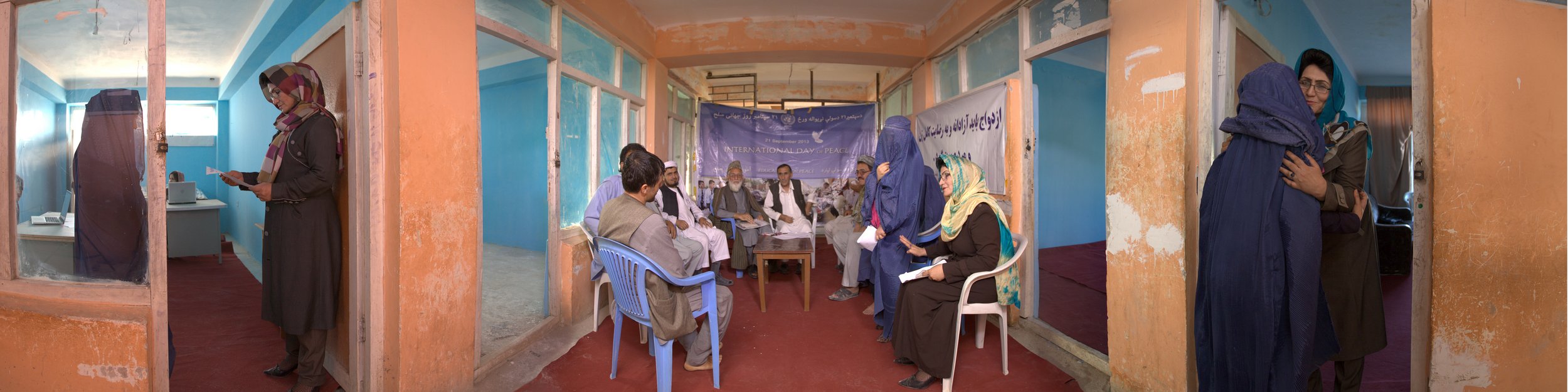
Training can also address alternative dispute resolution and the relationship between formal courts and community-based mechanisms. Local reconciliation may help resolve some civil disputes, but it should not remove protections in criminal cases or excuse violence against vulnerable people. Clear boundaries help ensure that informal processes complement lawful justice instead of weakening it.
A Coordinated Approach Across the Justice Chain
Judicial independence cannot be secured through isolated workshops. The quality of a trial is influenced by decisions made before a case reaches court and by what happens after judgment. Investigation, prosecution, defence, adjudication, detention and enforcement must operate according to compatible standards.
UN-supported programmes have therefore tended to involve several parts of the justice system. The precise design of assistance may vary by institution and period, but the underlying goal is consistent: develop professional capacity while improving coordination and accountability.
| Justice function | Training focus | Fair-trial benefit |
|---|---|---|
| Judges | Impartiality, evidence assessment, legal reasoning and written decisions | More consistent and transparent judgments |
| Prosecutors | Case screening, disclosure, witness handling and ethical duties | Stronger cases based on reliable evidence |
| Defence lawyers | Client representation, investigation and courtroom advocacy | Meaningful participation by defendants |
| Police and investigators | Lawful evidence collection, interviewing and detention safeguards | Fewer abuses and more dependable case files |
| Court administrators | Records, scheduling, files and public information | Reduced delay and improved access to proceedings |
| Legal aid providers | Outreach, eligibility assessment and referral systems | Greater access for people unable to pay |
This approach recognizes that a courtroom cannot correct every weakness in the wider system. If investigators fail to preserve evidence, prosecutors may present an incomplete case. If defence counsel are assigned too late, a defendant may be unable to challenge the evidence properly. If court records are missing, even a sound decision becomes difficult to review or enforce.
Capacity-building is therefore most effective when training is linked to procedures, supervision and institutional support. Codes of conduct, complaint channels, mentoring and reliable case management can reinforce what professionals learn. Without those structures, training may remain a short-term activity with limited effect on everyday justice.
Reaching People Who Face Greater Barriers
Access to justice is uneven. Women and girls, children, people with disabilities, displaced families, people living in remote areas and those accused of security-related offences may face particular obstacles. They may lack information about their rights, fear retaliation or be unable to pay for a lawyer and transportation to court.
Training for judges and prosecutors can address gender-sensitive procedures, child-friendly hearings and protection for victims and witnesses. Legal professionals need to understand how intimidation, family pressure and social exclusion can affect testimony. They also need to avoid treating a person’s identity or social position as evidence of guilt or unreliability.
Juvenile justice requires special care. Children in conflict with the law should be treated according to their age and development, with detention used only when lawful and necessary. Professionals should know how to communicate with children, protect confidentiality and consider rehabilitation. A process designed for adults can cause lasting harm when applied to a child without adaptation.
Legal aid is a practical bridge between rights on paper and rights in reality. A trained lawyer can explain the charge, challenge unlawful detention, request evidence and help a family navigate court procedures. Expanding legal aid networks and improving referral systems can make formal justice more accessible to people who have historically been excluded from it.
Measuring Progress Beyond the Classroom
Counting participants does not show whether judicial training has improved trials. A stronger assessment examines changes in professional conduct, case quality and public access. Relevant indicators may include the time between arrest and first court appearance, the availability of counsel, the quality of written judgments and the number of cases delayed because records or witnesses are unavailable.
Feedback from court users is also important. Defendants, victims, lawyers and community organizations can identify barriers that official statistics miss. For example, a court may be formally open to the public while its location, language practices or security arrangements prevent many people from attending. Listening to users helps institutions connect reform with lived experience.
Monitoring must protect professional independence. Training evaluation should not become a way to pressure judges over particular outcomes. The focus should be on whether proceedings follow lawful procedures, whether reasons are given and whether parties can exercise their rights. Independent review and transparent disciplinary mechanisms can address misconduct without turning judicial decisions into administrative targets.
Institutional memory matters in a justice system affected by political change, conflict and staff turnover. Training materials, mentoring systems and professional associations can preserve knowledge when personnel change. Partnerships with Afghan institutions and universities may help embed legal education in national structures rather than leaving it dependent on individual projects.
Working Within Afghanistan’s Legal and Social Context
Justice reform in Afghanistan has always involved a complex relationship between statutory law, Islamic principles, customary practice and international human rights standards. Effective support must take this context seriously. Imported models are unlikely to work if they ignore local languages, social structures, legal traditions and the realities of provincial courts.
That does not mean accepting practices that violate basic rights. The presumption of innocence, protection from torture, access to counsel and an impartial hearing remain central safeguards. Engagement is most useful when it combines respect for Afghan expertise with clear attention to the obligations that protect every person before the law.
The operating environment has also changed significantly since the period associated with the UN70 campaign. Institutional arrangements, access for international partners and the position of women legal professionals have developed amid major political and social shifts. Any account of United Nations support should therefore distinguish between documented work in earlier periods and later conditions rather than presenting the archived campaign as a current programme page.
The enduring lesson is that justice reform requires patience and continuity. A workshop can introduce a principle, but daily supervision, adequate resources and public accountability determine whether that principle survives in practice. Fair trials become more credible when institutions have the authority, personnel and safeguards needed to apply the law consistently.
Priorities for Durable Justice Support
Future rule-of-law assistance can be grounded in several practical priorities:
- Link judicial training to mentoring, case review and clear professional standards.
- Expand independent legal aid, especially for women, children, displaced people and low-income defendants.
- Strengthen court records, case management and public information in local languages.
- Protect the independence and safety of judges, prosecutors, defence lawyers and court staff.
- Measure reform through fair-trial outcomes, user experience and access to remedies rather than attendance figures alone.
These priorities place people at the centre of institutional reform. They also recognize that a justice system is a chain: a weakness in investigation, legal representation or court administration can affect the fairness of the final judgment. Coordinated planning gives each institution a defined responsibility while preserving the defendant’s rights throughout the process.
The United Nations’ role is most constructive when it supports national ownership, brings international standards into practical discussion and helps professionals build solutions suited to Afghanistan. Training is one part of that work, alongside legal aid, policy advice, monitoring, public awareness and support for institutions that protect human rights.
The archived “Strong UN. Strong Afghanistan.” campaign remains a record of how the UN presented partnership and Afghan contributions. Its message can be carried forward by documenting justice-sector achievements, preserving lessons from professional training and supporting credible pathways to fair hearings. Explore the campaign’s archived stories and United Nations resources to understand how Afghan professionals and international partners worked toward a more accessible, accountable justice system.