
Making a Difference


Building Safer Pathways To Emergency Trauma Care In Afghanistan
When a person is severely injured in Afghanistan, the first few minutes can determine whether they survive long enough to reach a clinic or hospital. A road crash, blast injury, fall, workplace accident or natural disaster may occur far from an operating theatre, with limited equipment and difficult transport routes between the scene and definitive care.
Emergency trauma care therefore begins before a doctor sees the patient. It starts with bystanders, ambulance crews, community health workers, police, firefighters and other first responders who can identify danger, control bleeding, protect the airway and arrange safe evacuation. Training these people creates a practical bridge between injury and treatment.
For Australian readers, the issue is familiar in a different setting. A serious crash outside Alice Springs, a farm injury in regional New South Wales or a bushfire casualty in Victoria may also involve long distances, disrupted communications and limited local resources. Afghanistan’s circumstances are more acute, but the core lesson is shared: a prepared first responder network saves time when every minute matters.
Why Early Trauma Response Matters
Trauma is a time-sensitive medical emergency. Severe blood loss, airway obstruction and breathing failure can kill before a patient reaches hospital, even when later surgical care is available. A first responder does not need to diagnose every injury. The immediate task is to recognise life-threatening problems, provide basic care within their training and summon the right level of assistance.
A strong emergency response system links several stages. Someone must make the scene safe, assess the injured person, give first aid, communicate accurate information and coordinate transport. At the receiving end, a health facility needs staff who can continue resuscitation, perform surgery or stabilise the patient before referral. Weakness at any point can delay the whole chain.
This is particularly important where roads are damaged, specialist services are concentrated in major cities or insecurity makes movement unpredictable. Kabul, Herat, Kandahar and other urban centres may have more medical capacity than remote districts, yet patients can still arrive late after a long journey. Training local responders helps provide care closer to the point of injury while transport is organised.
What First Responders Need To Learn
A trauma course should focus on a small number of actions that can be remembered under pressure. Participants can learn how to check for hazards, use gloves or other protective barriers, assess responsiveness and breathing, place an unconscious breathing person safely, and call for help. They should also practise direct pressure, wound packing where appropriate, tourniquet use when severe limb bleeding cannot be controlled, and basic fracture protection.
Communication deserves equal attention. A responder should be able to report the location, number of casualties, mechanism of injury, visible hazards and care already provided. In Afghanistan, this may require adapting procedures to unreliable mobile coverage, multiple local languages and limited ambulance availability. Training materials need to be clear, visual and usable by people with different levels of literacy.
Courses are strongest when they rely on repeated practice rather than a single lecture. Learners can rotate through realistic scenarios involving a road collision, a collapsed building or a crowded public gathering. Instructors should correct technique, explain why each action matters and schedule refresher sessions. Skills such as bleeding control and safe patient movement fade when they are not rehearsed.
The programme should also define the boundary between first aid and advanced care. Responders must understand when to stop, when to avoid moving a patient and when to seek specialist support. An informal helper who tries to remove an embedded object, administers an unfamiliar medicine or transports a spinal injury incorrectly may unintentionally increase harm. Good training builds confidence without encouraging unsafe improvisation.
Designing Training For Afghan Communities
Local ownership makes emergency preparedness more credible and more durable. Afghan trainers, nurses, doctors, community leaders and disability advocates can help shape examples that reflect daily life. Women responders may be essential for assisting female patients in settings where cultural expectations affect who can provide hands-on care. Training schedules, venues and recruitment should take these realities seriously.
The programme must also work across Afghanistan’s varied geography. Mountain roads, winter weather, drought, floods and displacement can all affect access to health services. A responder in a remote village may have a first-aid kit, a motorbike and a basic phone rather than an ambulance, satellite equipment and a fully stocked clinic. Lessons should show how to make careful decisions with available resources while preserving safety and dignity.
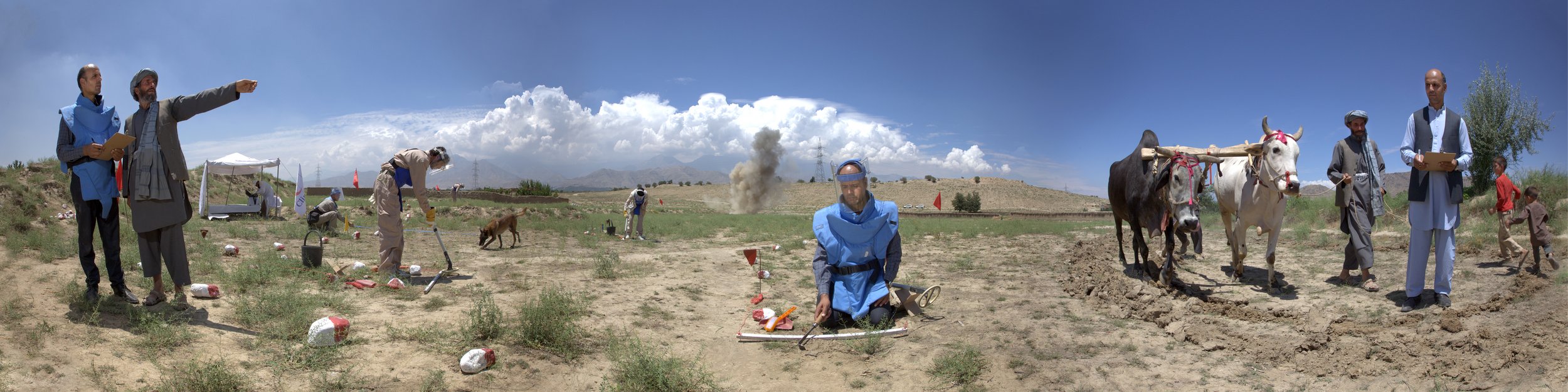
Partnerships with schools, workplaces, transport operators and local health posts can extend the reach of emergency trauma education. Taxi and bus drivers may be among the first people at a road crash. Teachers can help protect children during an emergency. Mine-action teams, humanitarian workers and public health staff may encounter injured people while carrying out unrelated duties.
The wider humanitarian system also has a role. The archived UN Afghanistan website documents the United Nations’ engagement with Afghan communities and provides context for understanding how international partnerships can support local capacity. Current programmes should always be checked against live humanitarian and health-sector sources, since an archived campaign page is a historical record rather than an active emergency service.
Building A Reliable Referral Chain
Training first responders is valuable only when they can reach a functioning referral pathway. A village responder needs a known contact point, a health facility that can receive casualties and a realistic transport plan. Referral maps should identify which clinic offers first stabilisation, which hospital can provide surgery and how patients can be transferred when the nearest facility lacks capacity.
Simple tools can reduce confusion. A laminated referral card, a shared radio protocol or a locally agreed list of emergency contacts may work better than a complex digital platform. Where mobile networks are available, structured messages can help receiving teams prepare. Where they are not, community leaders and health workers may need backup communication methods.
Patient transport must be planned with clinical risk in mind. A person with uncontrolled bleeding, breathing difficulty or suspected spinal injury needs careful handling and rapid escalation. Vehicles may not be designed as ambulances, but basic improvements such as blankets, clean dressings, lighting, safe seating and a trained escort can make transport less dangerous. Drivers should know when speed must be balanced with road safety.
Australia offers useful comparisons without providing a direct template. The Royal Flying Doctor Service demonstrates how retrieval medicine can connect isolated communities with higher-level care, while state ambulance services use dispatch systems, clinical protocols and structured handover. Afghanistan cannot simply reproduce those systems, yet the principles of coordination, clear roles and reliable communication remain relevant.
Measuring Quality And Sustaining Skills
A responsible trauma training programme should measure practical performance rather than attendance alone. Useful indicators include the number of active responders, completion of refresher training, time from injury to first intervention, availability of bleeding-control supplies and the proportion of referrals that reach an appropriate facility. Reporting should protect patient privacy and avoid placing responders or communities at risk.
After-action reviews can reveal what formal assessments miss. Following a road crash or mass-casualty event, trainers can ask what happened, which actions were effective, where communication failed and what equipment was unavailable. The purpose is learning rather than blame. Findings can then inform revised drills, updated contact lists and better distribution of supplies.
Sustainability depends on affordable equipment and local repair or replacement options. A kit filled with imported items that cannot be replenished will eventually become an empty container. Programmes should select durable dressings, gloves, tourniquets, splints and lighting suited to local conditions, while teaching responders how to inspect stock and record expiry dates.
Australian organisations understand this supply question through local first-aid training and community safety programmes. St John Ambulance Australia courses, workplace kits and public automated external defibrillators show how equipment becomes useful when people know where it is and how to use it. In Afghanistan, similar visibility and routine practice can help turn emergency supplies into a dependable community asset.
Practical Priorities For Emergency Preparedness
A focused programme can begin with a few priorities and expand as capacity grows. The following actions support safer first response while respecting local conditions:
- Train small groups of local instructors who can deliver practical, language-appropriate sessions and conduct regular refreshers.
- Standardise core lessons on scene safety, severe bleeding, airway and breathing problems, safe movement, communication and referral.
- Place checked trauma kits in locations where crashes, public gatherings and natural hazards are most likely to occur.
- Establish referral and transport agreements between community responders, health posts, hospitals and humanitarian partners.
- Use drills and after-action reviews to improve performance, replace missing supplies and adapt procedures to changing risks.
These measures should be integrated with broader emergency planning rather than treated as a stand-alone course. Trauma response connects with maternal health, disability inclusion, disaster preparedness, mine awareness, road safety and mental health support. A responder may be called to assist a child, an older person, a pregnant woman or someone with a disability, so training should address respectful communication and reasonable adaptations.
Safety and protection must remain central. Responders should never be expected to enter an active conflict zone, approach unexploded ordnance or work in a scene that cannot be made safe. Clear rules about consent, confidentiality and referral protect patients and the people helping them. Psychological support is also important, because repeated exposure to death and serious injury can affect community volunteers and professional responders alike.
For Australian readers, supporting this field means looking beyond a one-off donation or short course. Universities, emergency services, medical colleges, humanitarian agencies and community groups can share expertise through carefully designed partnerships. Any cooperation should be locally led, conflict-sensitive and accountable to the people who will use the system after external personnel leave.
Emergency trauma care becomes stronger when practical skill, community trust and health-system planning reinforce one another. A trained responder cannot replace a surgeon, ambulance network or well-equipped hospital, but can prevent a treatable injury from becoming fatal during the critical interval before advanced care.
Support credible organisations working with Afghan communities, emergency health providers and humanitarian partners. Share reliable first-aid knowledge, fund locally appropriate training and advocate for referral systems that connect remote communities with skilled care. In Afghanistan and in Australia’s own remote regions, preparedness is built before the emergency begins.