
Making a Difference
UN Support for Afghan Drug Rehabilitation: Residential Treatment
Afghanistan has long been at the centre of global discussions about illicit drug production, with opium poppy cultivation shaping rural livelihoods, public health systems, and international policy for decades. The United Nations has worked alongside Afghan institutions to address the complex consequences of widespread substance dependence, recognising that law enforcement alone cannot resolve a crisis rooted in poverty, displacement, and limited access to care. Within this broader effort, residential treatment centres have emerged as a cornerstone of the rehabilitation framework, offering structured environments where individuals can begin recovery under professional supervision.
Australia shares a direct connection to this work through its substantial Afghan diaspora. Communities in Melbourne's northern suburbs and across western Sydney include families who have arrived as refugees over the past four decades, bringing with them an awareness of how substance misuse affects relatives still living in Afghanistan. Australian health practitioners and policy makers have drawn on these community insights when engaging with international drug control programmes, and several non-government organisations based in Brisbane and Adelaide have partnered with Afghan providers to share clinical expertise.
The residential model differs significantly from outpatient approaches. Rather than asking patients to attend clinics while remaining in their home environments, residential centres require participants to live on-site for weeks or months, receiving medical care, counselling, and vocational preparation in a secure setting. For Afghans struggling with opioid dependence, this immersive structure can mean the difference between relapse and lasting recovery, particularly in regions where community stigma and economic pressure make abstinence exceptionally difficult to maintain.
The United Nations Office on Drugs and Crime has coordinated much of the international support for these facilities, working with the Afghan Ministry of Public Health to establish clinical standards, train staff, and supply essential medications. Programmes have also addressed the needs of women, who often face additional barriers to treatment, and of children affected by parental drug use, recognising that rehabilitation must extend beyond the individual to strengthen entire households.
The Scope of Afghanistan's Drug Challenge
Opium production in Afghanistan has fluctuated with political control, weather patterns, and shifts in global demand, yet the human cost of addiction has remained consistently high. Rural provinces in the south and east have historically produced the bulk of the world's illicit opium, and the proximity of cultivation to vulnerable communities has created a domestic market of dependent users that often goes unrecognised in international reporting. Surveys conducted by UN partners have suggested that hundreds of thousands of Afghans struggle with opioid dependence, with heroin and pharmaceutical opioids presenting distinct clinical challenges.
The figures carry weight beyond statistics because they reflect families fragmented by addiction, breadwinners unable to maintain employment, and a generation of young people growing up in environments where substance use is normalised. Treatment services have struggled to keep pace, particularly after decades of conflict undermined the health infrastructure that once provided community-based care. The UN's intervention has focused on rebuilding this capacity through facilities that combine medical detoxification with psychological support and skills training.
Inside Residential Treatment Centres
A typical residential centre in Afghanistan provides accommodation for between twenty and one hundred patients, depending on location and available resources. Admission usually follows a referral from a health clinic, a community leader, or in some cases a family member seeking help on behalf of a relative. The first phase of treatment addresses physical withdrawal, with medical staff monitoring vital signs and administering medications to ease symptoms. This clinical foundation allows patients to engage meaningfully with the therapeutic components that follow.
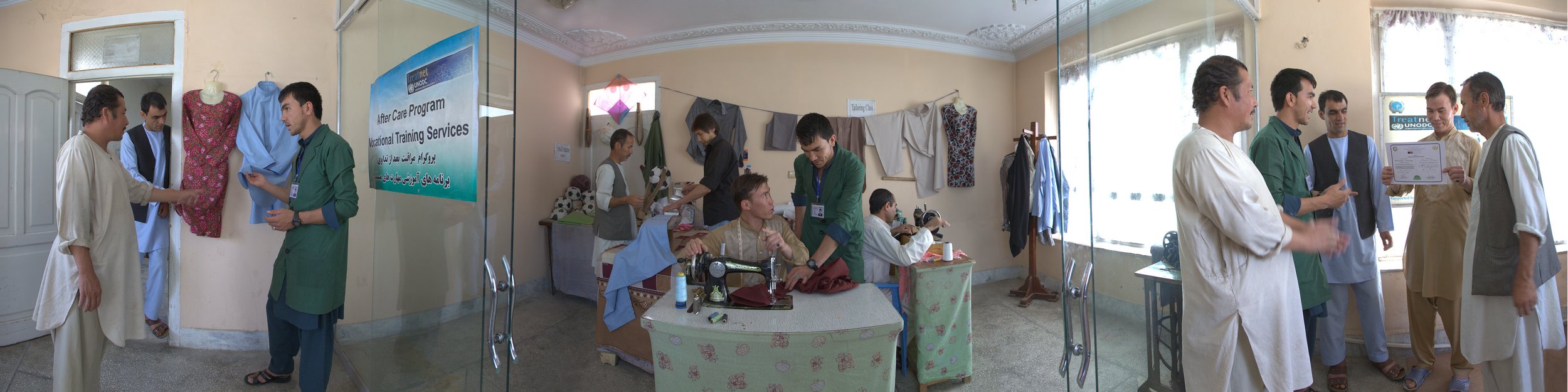
Counselling sessions form the heart of most programmes, drawing on cognitive behavioural approaches adapted to local cultural contexts. Group therapy brings residents together to share experiences and build mutual support networks, while individual sessions allow patients to explore personal histories of trauma, loss, and substance use. Many centres also incorporate vocational training, teaching carpentry, tailoring, or computer skills so that residents leave the programme with practical options for reintegration. Family visits are scheduled where possible, helping to repair relationships that addiction has strained and preparing households for the changes that recovery demands.
The UN's Coordination Role
United Nations agencies have played a coordinating role that extends well beyond funding. Technical advisers work alongside Afghan clinicians to refine treatment protocols, ensuring that interventions reflect current evidence while remaining feasible in resource-constrained settings. The organisation has also helped establish drug treatment courts in several provinces, offering non-custodial pathways for offenders whose crimes stem from addiction. These courts channel participants into residential programmes as an alternative to incarceration, recognising that imprisonment without treatment rarely breaks the cycle of dependence.
The partnership between UN entities and Afghan government departments has faced setbacks over the years, particularly as security conditions have shifted and access to certain regions has become restricted. Even so, the residential treatment network has continued to expand, with new facilities opening in provinces that previously had no specialist services. The UN Afghanistan campaign archive documents some of these efforts, preserving stories of recovery and the institutional partnerships that made them possible.
Parallels with Australia's Recovery Landscape
Australian approaches to drug rehabilitation share several features with the Afghan residential model, though they have evolved within a very different policy environment. The Medically Supervised Injecting Centre in Kings Cross, Sydney, has operated since 2001 as a harm reduction facility, while residential rehabilitation programmes across New South Wales and Victoria offer longer-term support for those ready to pursue abstinence. The Australian National Ice Taskforce, established in 2015, highlighted the need for accessible treatment options in regional and remote areas, recommendations that resonate strongly with the Afghan experience of under-served rural populations.
Community organisations in Melbourne's Afghan enclaves have developed culturally specific resources, employing bilingual counsellors and adapting group therapy models to reflect the experiences of first and second generation migrants. These programmes demonstrate how clinical frameworks can be tailored to particular cultural contexts, an approach that has informed UN-supported training in Afghanistan. Australian practitioners have visited Afghan facilities in advisory roles, and Afghan clinicians have participated in exchanges hosted by Australian institutions, creating a two-way flow of professional knowledge.
Training, Sustainability, and Local Ownership
Capacity building sits at the centre of any lasting intervention, and the UN has prioritised the training of Afghan healthcare workers who will continue delivering services long after international partners withdraw. Scholarships have supported nurses, psychologists, and addiction specialists to complete advanced qualifications, with many returning to take leadership roles within the residential network. Continuing professional development ensures that clinical practice evolves alongside emerging research, and supervision structures help newly qualified staff navigate the complex cases they encounter.
Sustainability also requires financial models that do not depend indefinitely on external donors. The Afghan government has gradually increased its contribution to the health budget, and some residential centres have introduced modest fees for wealthier patients while maintaining free access for those unable to pay. Community fundraising, supported by diaspora networks in countries including Australia, has provided additional resources for facility upgrades and patient welfare. These layered funding arrangements help shield the treatment system from the volatility that has affected other sectors of the Afghan economy.
Challenges and the Path Ahead
Significant obstacles remain. Stigma continues to discourage many families from seeking help, and women in particular face cultural and logistical barriers to entering mixed-gender facilities. Security concerns have periodically forced centres to suspend operations or relocate, interrupting treatment for residents in the middle of their recovery. The supply of essential medications is not always reliable, and the political environment shapes which international partners can operate freely within the country.
Looking forward, the residential treatment model will need to adapt to changing patterns of drug use, including the emergence of methamphetamine and pharmaceutical dependencies that require different clinical responses. Integration with mental health services is becoming increasingly important, given the high prevalence of trauma among patients with long-term substance use disorders. Digital tools, including tele-counselling and electronic patient records, offer opportunities to extend the reach of specialist expertise into areas where on-site staffing is impractical. The UN's ongoing engagement, alongside the dedication of Afghan clinicians and the support of international partners, will determine whether these innovations reach the people who need them most.
Practical Steps for Continued Engagement
- Support the work of organisations that fund residential treatment places for Afghans unable to afford private care, particularly those serving women and children.
- Encourage professional exchange programmes that allow Australian addiction specialists to share expertise with Afghan counterparts and bring back lessons from cross-cultural clinical work.
- Advocate for sustained diplomatic engagement with Afghanistan that keeps health and rehabilitation within the framework of international cooperation.
- Promote research partnerships between Australian universities and Afghan institutions to document outcomes and refine treatment models.
- Amplify the voices of recovering individuals and their families, recognising that personal stories can shift public attitudes and reduce the stigma that keeps many from seeking help.
The work of rehabilitation extends far beyond clinical protocols, reaching into the daily rhythms of households and the long-term prospects of communities rebuilding after years of hardship. By supporting residential treatment centres, the United Nations helps individuals reclaim their health while laying the groundwork for stronger families and more resilient Afghan society. Australians who wish to learn more about this broader effort can read further about the UN's presence in the country, explore the stories of those whose lives have been touched by these programmes, and consider how their own communities might contribute to a shared commitment to recovery and dignity.