
Making a Difference
Disability inclusion and UN support for Afghans
Afghanistan’s persons with disabilities include people affected by conflict, landmines, illness, poverty, natural disasters and barriers that have existed for generations. Disability inclusion therefore reaches far beyond medical treatment. It concerns access to education, work, humanitarian assistance, public information, justice, rehabilitation and the ability to participate in decisions that shape daily life.
The United Nations works with Afghan institutions, civil society organizations and international partners to address these connected needs. Its support has included humanitarian coordination, mine action, inclusive services, human rights advocacy, community-based rehabilitation and assistance for households facing severe economic pressure. The exact mix of activities changes with funding, access and humanitarian conditions, but the guiding principle remains consistent: people with disabilities should receive assistance on an equal basis and help shape the programs intended for them.
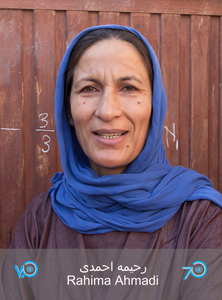
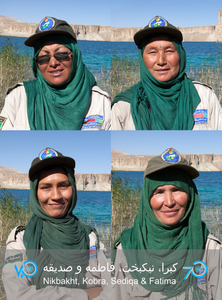
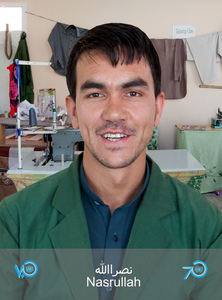
The UN Afghanistan website described here is an archived snapshot of the UN70 “Strong UN. Strong Afghanistan.” campaign. Although that campaign is no longer active, its emphasis on Afghan people and their contributions offers a useful lens for understanding disability inclusion. Afghan persons with disabilities are rights holders, community members, workers, students, caregivers and leaders—not simply recipients of aid.
A rights-based approach to disability
The UN’s work is grounded in the idea that disability results from the interaction between an individual impairment and barriers in society. A wheelchair user may be excluded by stairs, a person with a hearing impairment by inaccessible announcements, or a person with a psychosocial disability by stigma and a lack of appropriate support. Removing those barriers is as important as providing health services.
The Convention on the Rights of Persons with Disabilities provides an international framework for equality, participation, accessibility and non-discrimination. In Afghanistan, applying these principles requires attention to both formal rights and practical realities. A service may be available in theory but still unreachable if transportation is unaffordable, information is not provided in accessible formats, staff are not trained, or a person’s family fears social stigma.
UN agencies and partners commonly use a twin-track approach. Disability-specific measures, such as assistive devices or rehabilitation, respond to particular needs. At the same time, mainstream programs in food security, shelter, education, protection and livelihoods should be designed so that persons with disabilities can use them. Neither track is sufficient by itself.
Humanitarian assistance that reaches everyone
Humanitarian crises often intensify existing disadvantages. A person with limited mobility may be unable to reach a distribution point, while a blind person may not receive a written notice about registration or a cash program. Families caring for a person with high support needs may face additional expenses and may be less able to leave home to collect assistance.
UN-led humanitarian coordination helps agencies identify these risks and incorporate disability into needs assessments, response plans and monitoring. Partners can improve access by selecting distribution sites with ramps and usable toilets, offering home delivery where necessary, scheduling separate support arrangements, providing sign language interpretation and sharing information through audio, visual and community-based channels.
Cash and voucher assistance can also be made more inclusive. A household may need a transfer that reflects disability-related costs, such as transport, personal assistance, medication or repairs to mobility equipment. Safe payment systems, accessible registration and confidential complaint mechanisms are essential. Staff should ask about barriers without requiring people to repeatedly prove their disability or disclose sensitive medical information.
Protection is closely connected to aid delivery. Women and girls with disabilities may face heightened risks of violence, neglect, forced dependency and exclusion from reproductive health services. Children with disabilities can be separated from caregivers or overlooked during displacement. A disability-inclusive response therefore links material assistance with referral pathways, safeguarding, case management and community awareness.
Rehabilitation, health and assistive technology
Physical rehabilitation and assistive technology can transform a person’s independence. Services may include physiotherapy, occupational therapy, prosthetic and orthotic support, wheelchairs, crutches, hearing aids and communication tools. For people injured by explosive ordnance, timely care can reduce long-term complications and support recovery. Such services are most effective when they are connected to follow-up care rather than treated as a single distribution.
The World Health Organization and health partners promote approaches that bring rehabilitation closer to communities and integrate it into primary health care. Afghanistan’s difficult geography, damaged infrastructure and shortages of specialized personnel make this particularly important. Community health workers, families and local organizations can help identify people who need referrals, encourage continued exercises and monitor whether equipment remains suitable.
Assistive products must be selected with the user’s environment in mind. A wheelchair designed for smooth indoor floors may be ineffective on rough village roads. A prosthesis may require maintenance that is unavailable locally. Hearing support depends on batteries, fitting and communication training. Inclusive programming budgets for repair, replacement and user instruction instead of treating equipment as a one-time item.
Mental health and psychosocial support belong within this wider picture. Conflict, displacement, bereavement and poverty can affect emotional wellbeing, while people with psychosocial or intellectual disabilities may experience exclusion from services. Confidential, community-based support and referral to specialized care can reduce isolation and help people participate in family and public life.
Mine action and protection from explosive hazards
Landmines and unexploded ordnance remain a major threat in Afghanistan. Children, farmers, returning families and people moving through unfamiliar areas may encounter explosive remnants of war. Survivors can face amputation, burns, psychological trauma, lost income and lifelong barriers to education or employment.
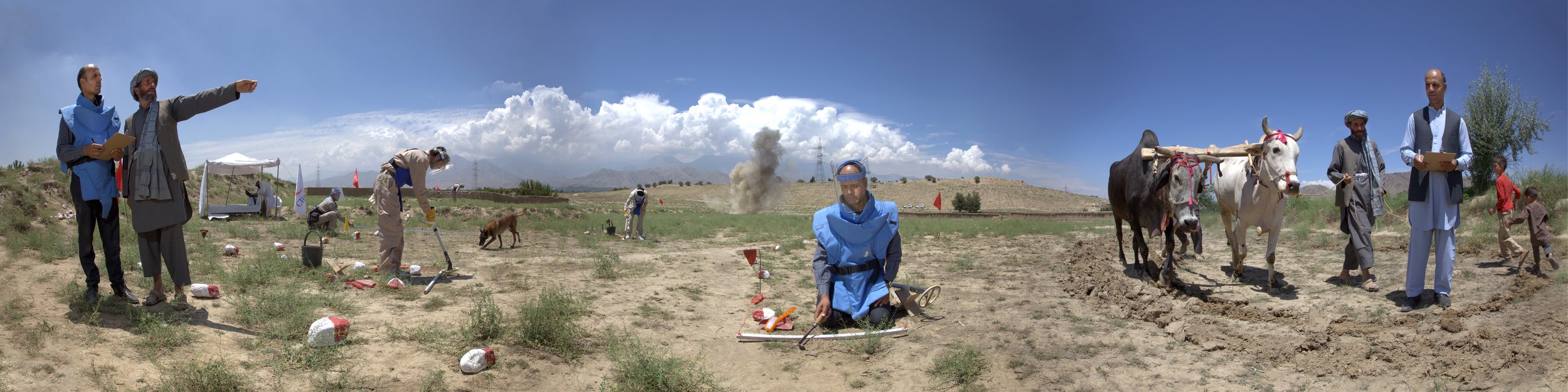
UN-supported mine action has traditionally combined several strands: surveying and clearing contaminated land, educating communities about risks, assisting survivors and advocating for safer behavior. Risk education is most useful when it is adapted to local languages, age groups and real travel patterns. Children need clear, memorable guidance, while adults may require information linked to farming, grazing, construction or collecting firewood.
Victim assistance should continue after emergency treatment. Survivors may need rehabilitation, prosthetic services, psychosocial support, income assistance, legal documentation and help returning to school or work. A disability-inclusive mine action program recognizes that survivor support is part of broader social protection and community recovery, not a separate concern limited to the incident itself.
The participation of survivors strengthens this work. People who understand local hazards and the practical consequences of injury can help shape safety messages, referral systems and accessibility standards. Their experience also challenges stereotypes by showing that survivors are contributors to prevention and recovery.
Education, livelihoods and participation
Inclusive education requires more than admitting a child with a disability to a classroom. Schools need accessible routes, suitable toilets, trained teachers, flexible learning materials and mechanisms to prevent bullying. Some students may need individualized support, sign language, Braille, large-print resources or additional time. Families also need reassurance that education is safe, worthwhile and compatible with the child’s needs.
UNICEF and education partners have supported efforts to reduce barriers for children affected by poverty, displacement and exclusion. In practice, disability inclusion may involve community outreach to identify children outside school, teacher training, accessible learning materials and links to rehabilitation or child protection services. When formal schooling is disrupted, inclusive home-based, community-based or alternative learning arrangements can help maintain continuity, provided they connect learners to longer-term education opportunities.
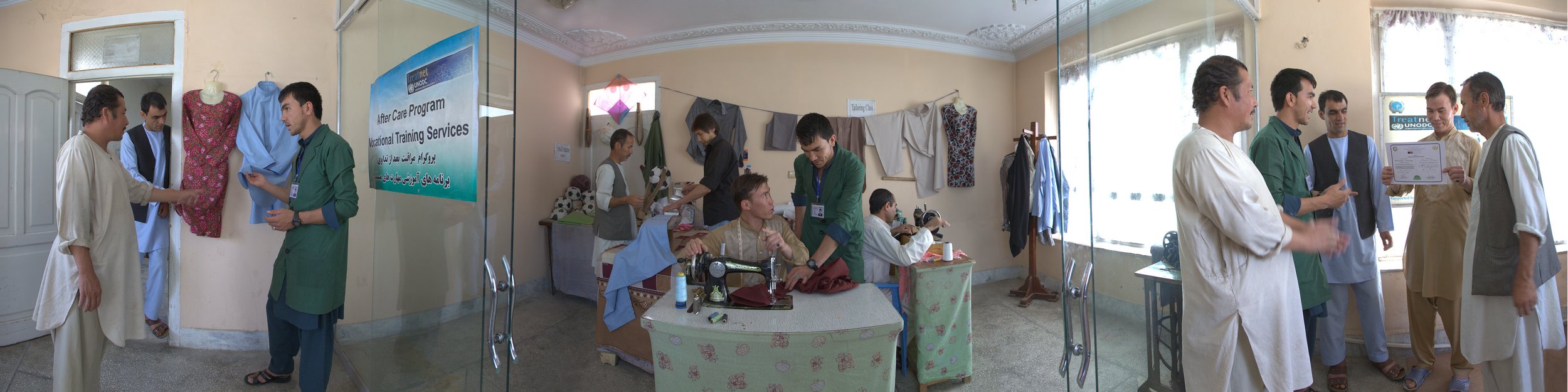
Adults with disabilities need pathways to decent work and livelihoods. Programs supported by UN agencies and partners may include vocational training, apprenticeships, business grants, agricultural assistance, job placement or adaptation of workplaces. Training is more valuable when it reflects local markets and is paired with accessible transport, mentoring, financial services and protection from exploitation.
The International Labour Organization’s principles on decent work are relevant to Afghanistan’s disability agenda: equal opportunity, fair conditions and participation in economic life. Employers, public institutions and humanitarian programs can contribute by setting accessible recruitment procedures, making reasonable adjustments and measuring whether persons with disabilities actually retain employment.
Women with disabilities require focused attention because gender discrimination and disability discrimination can reinforce each other. Their access to education, work, health care, identity documents, protection services and leadership opportunities should be measured separately rather than hidden within broad household statistics.
| Area of support | Main barriers for Afghan persons with disabilities | Inclusive UN and partner response |
|---|---|---|
| Humanitarian aid | Inaccessible sites, transport costs, communication gaps and exclusion from registration | Accessible distribution points, adapted information, home-based options, disability-sensitive cash and complaints systems |
| Health and rehabilitation | Few specialists, distance, equipment shortages and high maintenance costs | Community-based rehabilitation, referrals, assistive products, follow-up care and trained health workers |
| Mine action | Explosive hazards, injury, displacement and limited survivor services | Clearance, risk education, emergency referral, rehabilitation, psychosocial support and livelihood assistance |
| Education | Physical barriers, stigma, limited materials and teacher training | Inclusive classrooms, accessible content, outreach, flexible learning and family engagement |
| Employment and livelihoods | Discrimination, inaccessible workplaces and lack of capital | Skills training, job placement, reasonable adjustments, grants and market-linked support |
| Protection and participation | Violence, neglect, inaccessible information and underrepresentation | Safeguarding, confidential referrals, consultation with organizations of persons with disabilities and inclusive monitoring |
Data, accountability and local leadership
Programs cannot be inclusive if they do not know who is being left out. Disability-disaggregated data helps humanitarian teams compare access, identify gaps and track whether assistance reaches people with different impairments. The Washington Group questions and other internationally recognized tools can support consistent identification without reducing a person’s experience to a medical label.
Data collection must be handled carefully. People should understand why information is requested, how it will be protected and whether sharing it could create risks. Enumerators need training to communicate respectfully and to avoid assuming that a caregiver can speak for an adult with a disability. Results should be used to improve services rather than to exclude people whose needs are difficult to document.
Organizations of persons with disabilities are central partners in this process. They can review facility accessibility, test public information, advise on assistive products, train staff and monitor complaints. Their involvement should be meaningful, properly funded and representative of women, children, rural communities, people with sensory disabilities and people with psychosocial or intellectual disabilities.
UN coordination also benefits from common accessibility standards. Agencies can assess offices, websites, registration systems, meetings and emergency communications. An accessible complaint mechanism gives people a way to report discrimination, missed assistance or abuse without depending entirely on family members or local authorities.
Practical priorities for stronger inclusion
Effective disability inclusion depends on decisions made before a crisis becomes urgent. Agencies, donors, local authorities and community groups can strengthen programs by:
- Consulting organizations of persons with disabilities during assessment, design, implementation and evaluation.
- Budgeting for accessibility, reasonable accommodation, transport, personal assistance, repairs and communication support.
- Using disability-disaggregated data alongside gender, age, location and displacement information.
- Training humanitarian, health, education and protection staff to recognize barriers and respond without stigma.
- Linking rehabilitation and assistive technology with education, livelihoods, social protection and community participation.
These measures should be treated as core program requirements rather than optional additions. Accessibility is often cheaper and more effective when built into a project from the beginning. A ramp, accessible registration process or clear audio message can benefit older people, injured people, caregivers and anyone temporarily affected by illness or displacement.
Accountability also means reporting outcomes in human terms. It is important to count how many devices were distributed or how many staff were trained, but it is equally important to establish whether children returned to learning, survivors reached stable livelihoods, women could safely access services and families experienced less dependence and isolation.
The spirit of “Strong UN. Strong Afghanistan.” is most meaningful when strength is measured by participation. Afghan persons with disabilities have knowledge, skills and leadership to contribute to recovery. Their involvement improves the quality of assistance for entire communities and helps ensure that humanitarian action supports dignity rather than dependence.
UN Afghanistan’s archived campaign materials can be read alongside current UN agency information, humanitarian response plans and updates from organizations of persons with disabilities. Use these resources to learn how disability inclusion is being addressed, share accessible information through community networks and support programs that place Afghan voices at the center of decisions.