
Making a Difference
Afghan youth debates as engines of civic renewal
The dusty courtyards of Herat and the high schools of Balkh have, for more than a decade, served as laboratories of democratic talk under a programme that has quietly reshaped how young Afghans encounter their own citizenship. Funded through United Nations channels and administered in partnership with local civil society groups, these civic forums gather students, apprentices, and community volunteers around a structured microphone for structured disagreement. The format borrows heavily from parliamentary procedure, but the spirit is older than any parliament: the conviction that difficult conversations, held in good faith, can soften the sharp edges of public life.
For readers following the UN70 "Strong UN. Strong Afghanistan." campaign from Sydney, Melbourne, or Perth, the debates offer a familiar touchstone. Australians who grew up watching the ABC's Q&A or who queued outside Melbourne Town Hall for a school debating exchange recognise the civic muscle that comes from articulate argument. The Afghan forums adapt that muscle to settings where constitutional frameworks, ethnic plurality, and the legacy of conflict make every exchange a small political act. They are not theatre. They are the slow carpentry of public reason in a country that has long been short on both materials and quiet rooms.
Origins and architecture of the forums
The initiative traces its roots to a 2012 partnership between the United Nations Assistance Mission in Afghanistan and a cluster of Afghan universities seeking to widen the space for student political expression outside the often-strained formal channels. Seed funding came from the UN Democracy Fund, with additional resources routed through UNFPA and the United Nations Educational, Scientific and Cultural Organization. Within three years the model had been adopted by nineteen provinces, each operating a rotating calendar of district-level meets that culminates in a national gathering in Kabul.
Administratively, the forums operate on a tiered architecture. Provincial coordinators hire and train moderators, who typically come from law faculties or journalism programmes rather than from party political backgrounds. Moderators receive a fortnightly stipend equivalent to a junior civil servant's wage, which helps keep the work insulated from the patronage networks that absorb so much Afghan public life. Local schools and madrasas contribute venues at no cost in exchange for the prestige of hosting, and radio partners such as BBC Media Action and local stations like Radio Mashaal carry recorded segments into rural areas where live attendance is impossible.
The comparison below sets the Afghan Youth Debates alongside three other UN-supported youth programmes operating in the region, and clarifies what differentiates the model.
| Feature | Afghan Youth Debates | UNFPA Youth Peace Councils (Pakistan) | UNESCO Model United Nations Schools (Iraq) | UNDP Youth Civic Tech Labs (Lebanon) |
|---|---|---|---|---|
| Primary method | Live moderated debate and resolution drafting | Elected youth councils with policy remit | Simulated multilateral diplomacy | Coding-for-policy civic technology projects |
| Geographic reach | 19 of 34 Afghan provinces | Federally administered tribal areas and KP | Five governorates | Greater Beirut and Tripoli |
| Funding stream | UN Democracy Fund and UNAMA trust account | UNFPA country office | UNESCO participation programme | UNDP Lebanon portfolio |
| Audience engagement | In-person and radio simulcast | In-person with online submissions | School-based, teacher-mediated | Online platforms with public demos |
| Conflict sensitivity | High; trained neutrality of moderators required | Moderate; electoral processes reduced | Moderate; curriculum-driven | Low; technical neutral ground |
What separates the Afghan model from its regional cousins is its dependence on the human voice. Where Iraqi Model UN sessions reward written position papers and Lebanese tech labs reward usable code, the Afghan forum rewards the cut and thrust of real-time argument, the willingness to be corrected on the record, the ability to find a workable motion when the room is exhausted. It is an old-fashioned skill set, deliberately chosen.
Themes that reach the microphone
Theatricality and substance walk a careful line in the debates. Topic calendars are set six months in advance by a national committee that includes women educators, mullahs from progressive mosques, and representation from the Afghanistan Independent Human Rights Commission. Recent themes have ranged from the ethical dimensions of water rationing in Bamyan to the responsibilities of social media influencers during election cycles. A recurrent strand has been the place of women in the public sphere, a subject on which moderators are instructed to guarantee a minimum of forty percent female participation in the speaker list.
Climate stress has risen rapidly up the agenda. In late 2023, a regional round in Mazar-i-Sharif centred on the agricultural collapse threatening the wheat belt of the north, with participants drawing on reports from the Food and Agriculture Organization and the Afghanistan Research and Evaluation Organization. The eventual resolution urged a national seed bank and a community-managed drip-irrigation credit scheme, and was forwarded by the United Nations to technical ministries for consideration. Although the political environment limited formal adoption, the debates themselves kept the technical conversation alive among young agronomists who might otherwise have emigrated.
Cultural questions also surface in unexpected registers. A Farah district session on heritage preservation paired a young folk musician from Herat with a heritage architect from Bamiyan to argue the relative merits of restoring the Buddha niches versus repatriating looted museum pieces. The format allowed for nuance that campaigning politics rarely permits, and the resulting audio was used in subsequent civic education broadcasts. The debates, in short, have been nimble enough to absorb climate, gender, culture, and economics without losing the original mission of democratic practice.
Outcomes for young participants
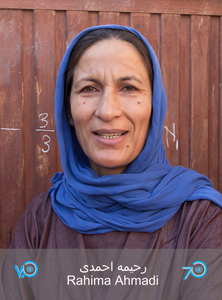
For many participants the forum functions as a finishing school for adult civic life, even when formal political pathways feel closed. Surveys distributed by the implementing partners consistently report that alumni feel better equipped to mediate household disagreements, run local mosque meetings, and stand in school councils. The skills transfer well beyond the debating chamber. A young woman from Kandahar who took part in 2022 now runs a women's tailoring cooperative in her home district and credits the forum's rapid rebuttal drills for her ability to negotiate fair rates with traders who had previously exploited her.
The forums also generate a thin but durable bench of civic professionals. Several former moderators have moved into journalism, working with outlets such as TOLOnews and Hasht-e-Subh daily. Others have entered the bar and the magistracy, bringing with them a habit of listening before ruling. In a system where courts are often perceived as extensions of patronage, the procedural habits acquired in a debating hall can be quietly transformative, especially when former moderators sit as judges in commercial disputes or family matters.
Habits that travel beyond the debating chamber
- Sustained cross-ethnic friendships that outlast any single resolution
- Confidence to enter journalism, the law, and local politics after graduation
- A practical command of negotiation, rebuttal, and amendment drafting
- Public profiles that protect at-risk speakers during politically tense cycles
Habits from the debating chamber appear, time and again, in settings that have nothing to do with microphones. A debater from Takhar who now teaches at a community school in Jalalabad has adapted the format for his own students, using weekly school assemblies as miniature civic forums. The transfer is informal but unmistakable, and it suggests that the programme is building infrastructure whose returns arrive over decades rather than over the news cycle.
Funding realities and persistent constraints
The programme operates under persistent constraints that shape every choice. Security remains the most visible. Debates in southern provinces often take place behind blast walls, with participants vetted and chaperoned. The cost of that security, both financial and psychological, eats into a budget that has never been generous. When the United Nations announces a 1.4 million dollar cycle, much of that sum is consumed by logistics before a single microphone is tested.
Funding uncertainty has become a defining feature. The UN Democracy Fund, the original anchor, has gradually shifted its priorities toward crisis response and away from long-duration civic education in fragile states. Implementers have learned to write hybrid proposals that draw on UNFPA youth programming, the Swiss Peacebuilding Fund, and the Australian aid programme run through the Department of Foreign Affairs and Trade, among others. Even so, every annual cycle involves a scramble, and staff turnover reflects that.
Operational pressures shaping each cycle
- Routine postponements caused by checkpoint closures and seasonal weather
- High turnover among trained moderators, who leave for journalism or migration
- Escalating venue insurance and security costs in urban districts
- Difficulty retaining female staff in provinces with restricted mobility
Gendered access remains contested. Although the forty-percent speaker quota is enforced, the social conditions that allow women to travel, lodge, and speak in mixed forums have worsened in several provinces. Implementers now run single-sex rounds alongside the mixed ones, and have invested heavily in telepresence links so that women debaters from remote districts can argue by video without taking overnight transport. The technology is a partial fix; the deeper question of who gets to occupy a public stage remains unresolved.
Australian resonance and shared habits
For Australians watching the story from Wollongong or Geelong, the parallels are immediate. Compulsory voting means Australian citizens already practise the civic habit of turning up, and the country's school debating circuit, anchored by the Australian Debate Association and the state-based competitions, turns a similar skill set into a rite of passage. Cafés in Carlton and Newtown reliably overflow on election nights, and community radio stations from 3CR in Melbourne to Radio Adelaide often carry recorded segments that echo the Mashaal broadcasts emerging from the Afghan debates. The cultural soil is recognisably similar even when the political weather is very different.
Australian development policy has, in modest but real ways, supported the broader ecosystem from which the debates emerged. AusAID, and later the Department of Foreign Affairs and Trade, channelled support through the United Nations Development Programme for civic education in Afghanistan through the early 2010s, including funding that strengthened teacher training colleges and the independent election commission. AidWatch and the Australian Council for International Development have also amplified the case for sustained investment in youth civic space in fragile states, a position that maps neatly onto the Afghan experience.
Viewers of Australian Story and listeners of ABC Radio National's Background Briefing will recognise the narrative shape of the debates: outsiders trying to build institutional trust in places where institutions are wounded. The Afghan forums show that this work is plausible, expensive, often thankless, and occasionally transformative. They argue, in short, that the slow accumulation of articulate disagreement can lay down civic infrastructure even where formal politics fails.
Supporting these efforts, whether through diaspora organisations in Parramatta and Auburn, through universities in Brisbane and Adelaide, or through advocacy to the Department of Foreign Affairs and Trade, is a concrete way of valuing the kind of patience that strong democracy requires. Subscribe to the United Nations Afghanistan updates, share the archived campaign photography with your networks, and tell a local councillor in your electorate that civic infrastructure abroad deserves the same quiet support as the playground down the road.