
Making a Difference
Afghan women’s free legal aid and the role of the United Nations
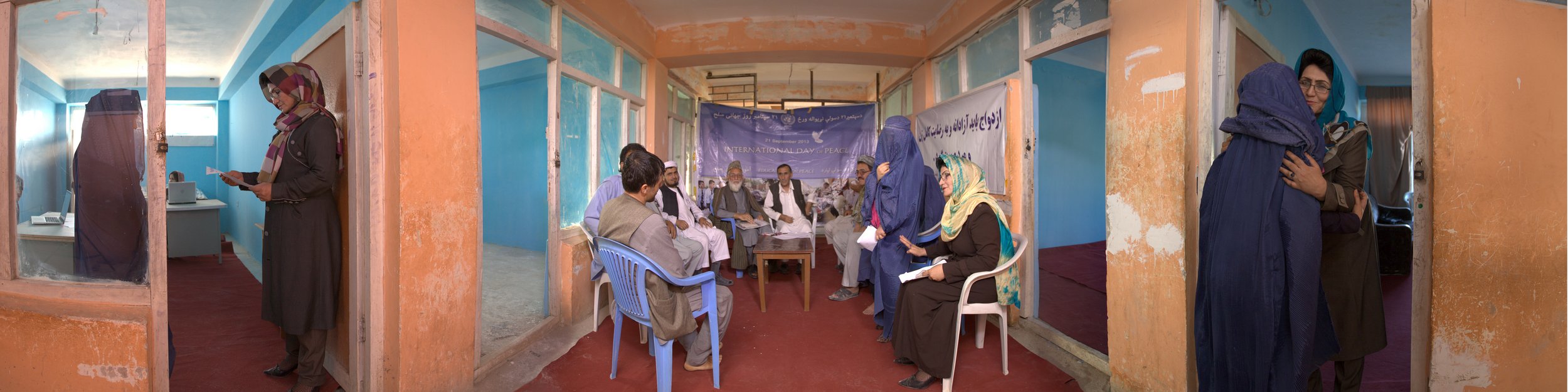
Access to a lawyer can determine whether a woman leaves an abusive relationship, keeps contact with her children, retains her home, or receives a fair hearing after a family dispute. Afghan women’s legal aid clinics have offered a route to free advice, representation and referrals when navigating the country’s legal system appeared too costly or dangerous to manage alone. United Nations support has helped local services provide that assistance while strengthening Afghan women’s knowledge of their rights.
The UN70 “Strong UN. Strong Afghanistan.” campaign highlighted Afghan contributions to peace, development and resilience. Its stories, photographs and messages from the Special Representative of the Secretary-General reflected the UN’s partnership with communities rather than a purely institutional account. The campaign archive is now a record of a completed effort, not a live legal-referral service, so its pages should not be treated as a current directory of Afghan clinics.
What free legal counsel can change
Afghanistan’s formal legal framework has included the 2004 Domestic Violence Law and the 2007 Civil Code, alongside criminal and family-law rules. These provisions have provided a basis for advice about domestic abuse, divorce, custody, inheritance and property. Afghanistan’s commitments to the Convention on the Elimination of All Forms of Discrimination against Women also support the principle that women should have practical access to legal assistance, not merely rights written on paper.
Free legal counsel can help a woman understand what the law says, assess the evidence, prepare documents and navigate court procedures. A clinic may also explain whether mediation is appropriate, connect a client with a female lawyer, refer her to specialist support or assist with follow-up. Removing fees matters because legal representation is usually most needed when household income has already been reduced by conflict, displacement, disability or abuse.
Advice must nevertheless distinguish legal information from legal representation. A consultation does not guarantee a particular outcome, and formal laws may be difficult to enforce. Safe legal aid also avoids presenting mediation as a universal solution: a survivor should never be pressured to reconcile with an abusive partner, and family mediation cannot replace representation in serious violence or criminal matters.
Access to justice in a restrictive environment
Since August 2021, the de facto authorities in Afghanistan have imposed extensive restrictions on women’s employment, education, movement and participation in public life. The number of women able to practise law or serve as judges has fallen sharply, and many female legal professionals have left the country. These conditions affect both clients seeking assistance and the lawyers, paralegals and caseworkers trying to help them.
Family disputes can become especially complicated where a woman has little money of her own, limited access to transport or fear that contacting authorities will bring retaliation. Questions involving forced marriage, children left behind, identity documents, inheritance and workplace discrimination often involve several legal and social pressures at once. A lawyer who understands those circumstances can make the options clearer without asking a woman to choose between safety and legal entitlement.
Confidentiality and physical security are therefore part of legal service, not administrative extras. Clinics need secure consultation arrangements, careful limits on information sharing and communication practices that do not expose clients or their families. International organisations can provide funding, technical support and referral networks, but they cannot substitute for functioning Afghan institutions or remove the barriers faced by women seeking justice.
How United Nations support reaches local communities
UN Women has supported legal aid and women’s rights programming in Afghanistan, while United Nations Development Programme initiatives have addressed justice institutions, governance and the rule of law. UNAMA and the Office of the United Nations High Commissioner for Human Rights have documented human rights concerns and supported engagement with Afghan counterparts. The exact delivery arrangements have changed with programme cycles, security conditions and the operating environment.
United Nations-supported legal aid has depended on Afghan female lawyers, legal advisers and civil-society organisations. These professionals understand which courts are functioning, how local officials handle documents and when a formal route is safer than an informal one. International assistance works best when it strengthens local capacity, funds safe outreach and allows practitioners to respond to changing needs rather than imposing a fixed service model.
The UN70 campaign presented this partnership through Afghan experiences and contributions. Its news, photography, social links and messages from senior UN officials helped explain why stable institutions and community-led services matter. The campaign’s legacy also offers an important lesson for supporters today: international action is most meaningful when Afghan people help shape decisions about safety, access and accountability.
What Australian supporters can recognise
Australia’s legal aid system is organised by state and territory, so the entry point depends on where a person lives. In Sydney, Legal Aid NSW provides advice, representation and referrals across New South Wales, including interpreter support where needed. Melbourne has Victorian Legal Aid and specialist women’s legal services, while Brisbane is served by Queensland Legal Aid and local community legal centres. Perth’s Legal Aid WA and multicultural legal services provide another point of access. In Canberra, the ACT Women’s Legal Service assists women experiencing family violence and related legal problems.
Afghan communities are long established in Sydney, Melbourne and other Australian cities, but familiar institutions do not always make legal help easy to find. An Afghan woman may need an interpreter, help arranging childcare or reassurance that her documents will remain confidential. Australian services are expected to work within privacy and professional-conduct rules, yet cultural and language barriers can still affect whether help is accepted. A respectful service asks directly about safety and individual preferences without assuming that relatives must approve a woman’s decision to seek legal advice.
Australian lawyers and legal aid organisations generally cannot advise on personal disputes governed by Afghan law. They can assist with Australian matters involving immigration, family violence protection orders or criminal issues in Australia, but Afghan disputes require advice from someone familiar with the relevant Afghan jurisdiction. Australians seeking assistance for an Australian legal problem can contact the National Legal Aid Agency on 1300 653 113, their state or territory legal aid service, or a specialist women’s legal service.
Support Afghan women’s legal aid now
Support should reach services with local knowledge, safe working conditions and accountable financial management. Australians can help by donating to a registered charity with a demonstrable programme for Afghan women, by contributing specialist time through an established legal-aid organisation, or by funding assistance that clients may need beyond court fees, such as transport, childcare and secure communications. Any organisation should be checked for governance, financial transparency and a credible understanding of the environment in which it works.
The UN70 archive can be used to raise informed awareness, but sharing historic campaign material is not a substitute for current action. UN Afghanistan and UN Women’s Afghanistan programme pages provide context on the UN’s approach to rights and partnership. Direct humanitarian support through reputable UN channels and locally led organisations can complement each other, provided that contributions are flexible enough to meet women’s practical needs and that programmes remain accountable to the communities they serve.
Choose one practical action today: support a verified Afghan-led women’s rights organisation, donate to a reputable legal aid programme, or share reliable information about how free legal advice protects safety, family rights and fair treatment. Give directly, ask how funds are used and make a contribution that can help Afghan women obtain counsel and exercise their rights with dignity.