
Making a Difference


Afghan Women’s Legal Aid Clinics for Domestic Violence Survivors
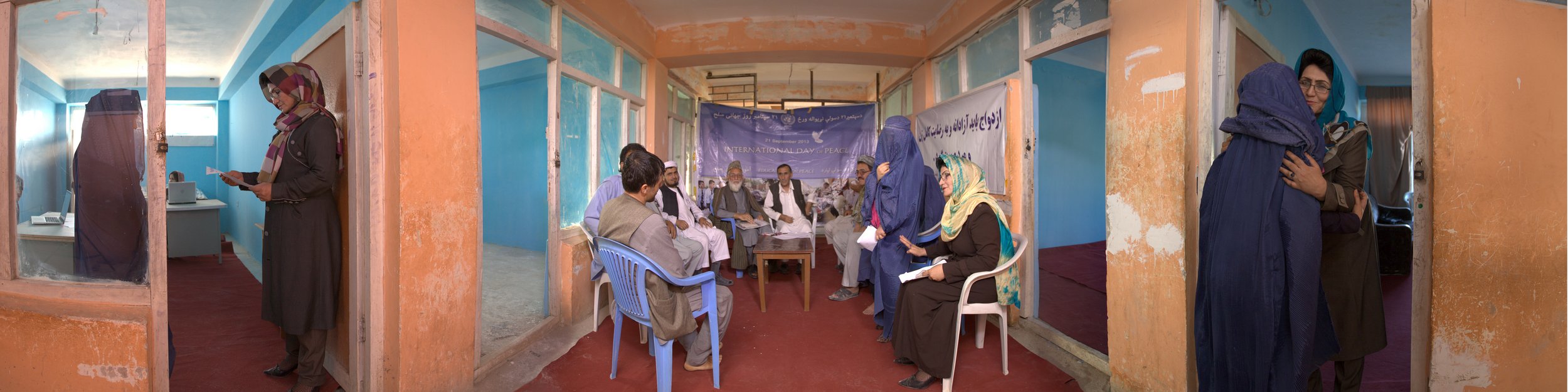
Afghan Women's Legal Aid Clinics provide UN-funded free counsel for domestic violence survivors, especially women who cannot afford a private family-law lawyer or travel far to reach a provincial court. The model documented by UN Afghanistan brought legal professionals, case workers and referral partners into accessible locations. A survivor could learn options for a criminal complaint, maintenance, custody or divorce, identify required documents and begin the next step without navigating the justice system alone.
Free did not mean casual or risk-free. Confidential consultations allowed a woman to describe coercion, threats or physical abuse outside the presence of relatives or community elders. Female lawyers and trained interpreters could explain Afghan family and criminal law in familiar terms, while health, shelter and psychosocial services addressed needs that a court file alone could not meet. Where a woman's safety was in doubt, legal information did not override the advice to move somewhere safer and seek emergency help.
The clinic approach emerged from a difficult legal environment. Afghanistan's 2004 Civil Code governs matters such as marriage, divorce, property, maintenance and children's custody, while domestic and gender-based violence may also raise criminal issues. In the period covered by the UN campaign, poverty, displacement, insecure housing, restrictions on women's mobility and long distances to formal justice limited access. Mediation and local decision-making could provide speed, but they could expose a survivor to further pressure unless the woman had genuine freedom to refuse and the process was safe.
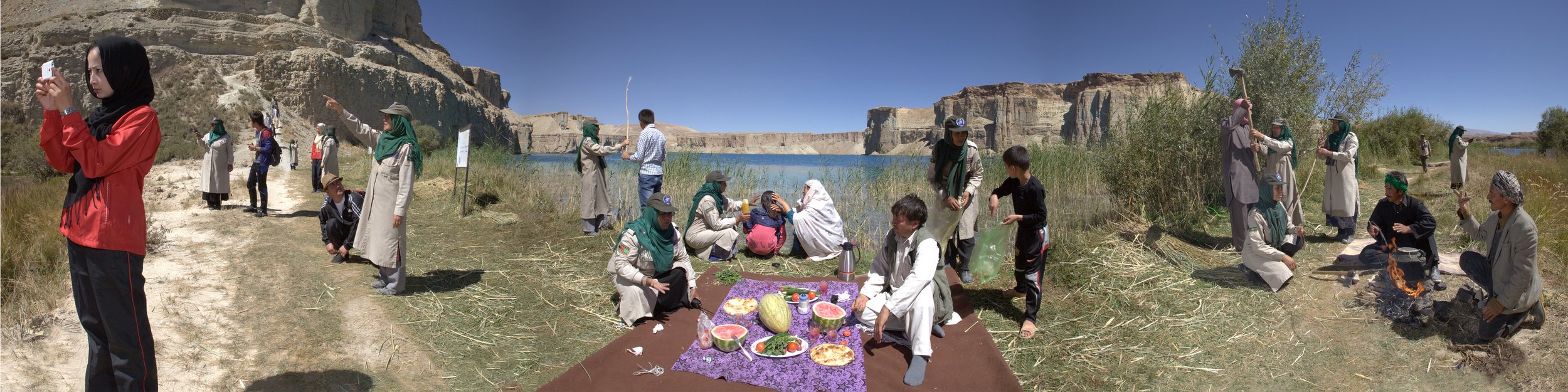
The archived UN Afghanistan site records this work as part of the completed UN70 Strong UN. Strong Afghanistan campaign; its photographs, news and personal stories are a historical resource, not a live clinic directory. For an Australian audience, the story matters because Afghan communities in Sydney and Melbourne, as well as supporters of human rights overseas, can see what stable public funding can achieve. Australian community legal centres and women's legal services offer a parallel model of free advice, referral and advocacy, with important differences in law and eligibility.
What the clinics changed
A clinic converted abstract rights into choices a woman could act on. Instead of being told that the law existed, she could ask what evidence supported a complaint, whether a maintenance claim was realistic, how custody might be decided or which documents were needed for registration. This legal counselling made access to justice more than the distance between a village and a courthouse: it began at the point where fear, cost and unfamiliar procedure might otherwise have stopped the process.
Case management was as important as courtroom advocacy. Legal aid staff could connect a survivor with medical care, safe accommodation, transport, psychosocial support and other services, then check whether the referral had been received. Coordination reduced repeated disclosure and prevented a domestic dispute from being treated only as a private family matter. It also recognised that a woman might need help protecting her income, remaining with her children or leaving an unsafe home even before a final legal decision.
Community ownership and careful outreach shaped trust. Clinics worked with local authorities, civil society and Afghan legal professionals, while mobile teams or transport assistance could reach districts where formal institutions were sparse. Their lesson is not that one delivery model fits every province; it is that legal help should meet people within the realities they face. A fixed office in the capital cannot serve a woman who cannot travel safely or speak to an unfamiliar official without support.
Inside a confidential consultation
A sound first appointment begins with consent and immediate safety. The practitioner can establish whether someone is in danger, whether a child needs protection and whether it is safe to speak or record details. The lawyer then identifies the woman's priorities, separates legal rights from urgent practical needs and explains any limits to confidentiality. This sequence matters in a small community, where relatives, landlords, police, health workers or opposing parties may share social ties.
Safety must come before procedure. Mediation can be appropriate in some family disputes, but only when violence, intimidation and unequal bargaining power are not being concealed. A woman should never be pressured to reconcile, withdraw a complaint or accept a settlement merely because it is presented as faster or more economical. Legal staff should also explain the difference between giving information and agreeing to mediate, and should document what the survivor chose without promising a particular result.
Interpreters, female practitioners and clear recordkeeping made advice more reliable. Complex questions about property, maintenance, criminal liability and custody needed accurate translation, while careful files allowed a lawyer to continue the case without forcing the client to begin again. Secure storage and restricted access are essential because information about violence can create further risk. Training for staff on trauma, confidentiality and referral boundaries is therefore part of legal quality, not an optional extra.
Lessons for Australian communities
The strongest transferable feature is the combination of free legal help and practical support. Australia's network of community legal centres, Women's Legal Services and Aboriginal and Torres Strait Islander Legal Services already provides advice through a mixed market of public, charitable and private providers. In Sydney and Melbourne, paid family-law practices charge substantial hourly fees, so low-cost and free services are a necessary alternative, particularly for women facing job insecurity, disability, language barriers or fear of retaliation.
The legal framework differs, so the clinics cannot be copied as a simple template. In New South Wales, the Family Violence Protection Act 2008 governs protection orders and related responses; in Victoria, the Family Violence Protection Act 2008 does similar work, and coercive control offences are now part of the Crimes Act 1958. A survivor crossing state or national borders may also have questions about jurisdiction and evidence. Advice from a provider familiar with the relevant jurisdiction is essential, while general information should never be mistaken for a case assessment.
Everyday referral channels matter as much as formal legal institutions. People in Sydney may learn about services through a library, council office, hospital social worker or pharmacy, while Melbourne's tram and train networks, neighbourhood councils and community organisations offer familiar places to find help. Clear outreach should state who can attend, whether an appointment is needed, what documents are useful and what happens to personal information. A small civic example from Susanville shows how that works: its public-works notice on contaminated puddle safety names the hazard and tells residents what action to take. The subject differs, but the value of direct, specific safety communication carries over.
Services and preparation for an appointment
A reputable legal aid clinic should explain its mandate before discussing a case, offer a private way to make contact and arrange an interpreter or female practitioner where requested. Because archived campaign material cannot provide current appointments in Afghanistan, readers seeking help now should approach an organisation in the relevant country directly and confirm its legal coverage, eligibility rules and confidentiality practices before sharing sensitive details.
The first visit can be treated as a structured information session rather than a test of the survivor's memory or courage. Clients can prioritise safety, housing, income and children before deciding whether to pursue a wider case. Clinic staff should distinguish legal advice from advocacy, referral and general information, and should record any limits on how they can assist.
Typical clinic services
- Confidential intake, risk screening and prioritisation of immediate safety concerns.
- Advice on criminal complaints, maintenance, custody, divorce, property or inheritance.
- Referrals to shelter, health care, psychosocial support and document assistance.
- Help preparing for local justice offices, mediation or court when safe and voluntary.
Helpful preparation
- Choose a safe device, private location and a realistic time to talk.
- Keep identity documents, case papers and relevant contact details together.
- Write down dates, locations, names and a brief account if it is safe to do so.
- Ask how information is stored, who can see it and how an interpreter is assigned.
Keep free counsel within reach
The legacy of the UN-funded clinics is a simple proposition: justice is not available when the person most at risk cannot afford advice, travel safely or be believed when institutions do not listen. Afghan women's legal aid offered free counsel because poverty cannot be treated as proof that abuse should be tolerated. The archive preserves evidence of women, lawyers and local partners building a more reachable system, and it gives today's campaigns a model that can be studied without pretending the former service is still operating.
Australians can turn that lesson into practical support for free legal aid. Donations to community legal centres and specialist women's services can fund intake, interpreters, transport and secure case systems. Pro bono lawyers can assist with family-law and violence-related matters, while multilingual volunteers can support outreach and accurate information. Sharing verified historical material, including the UN Afghanistan campaign, can also help community organisations explain why stable funding and survivor-centred safeguards matter.
Support Afghan women and every survivor facing violence by funding free, confidential legal help and publicising accurate local services. In Australia, immediate danger warrants calling 000; 1800 RESPECT provides national information and referral support, while legal advice must come from a service familiar with the relevant Australian law. Back community legal centres, women's legal services and Afghan-led advocacy so that reaching safety is not the first thing a survivor has to prove.