
Making a Difference


Water Safety And Community Testing In Afghanistan
Afghan water quality monitoring is a practical expression of public health, local knowledge and community resilience. In many Afghan communities, people rely on wells, springs, streams, hand pumps and small water systems whose condition can change quickly after drought, flooding, damaged infrastructure or the movement of households. A testing kit placed in the hands of trained local people can help turn uncertainty into evidence and evidence into action.
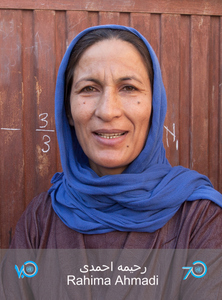
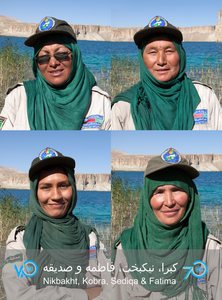
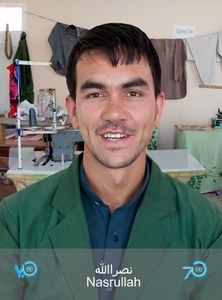
The United Nations’ “Strong UN. Strong Afghanistan.” campaign, preserved through an archived UN Afghanistan website, highlighted Afghan people and the partnerships supporting their work. The campaign is complete and the site is no longer an active programme portal, but its emphasis on community contribution remains useful when considering how UN-supported water testing can strengthen local decisions. The focus is less on a device alone than on the relationships, training and follow-up that make a water safety programme meaningful.
Why Local Water Testing Matters
Water can look clear and still carry bacteria, excess salts, nitrates or other contaminants. A community may know that a source tastes unusual or that children are becoming unwell, yet visual observations cannot establish the cause. Simple field testing offers an early indication of changing conditions and can help health workers, water committees and local authorities decide whether a source should be treated, repaired, monitored more closely or temporarily avoided.
Afghanistan’s geography makes local observation especially important. Mountain communities, dry plains and densely settled urban areas experience different pressures on water supplies. A shallow well near a latrine may face contamination risks that differ from those affecting a spring used by several villages. Seasonal snowmelt, flash floods and prolonged dry periods can also alter water quality. A centrally managed laboratory may provide authoritative results, but it cannot collect samples from every remote source at the moment conditions change.
This principle is familiar in Australia, where the Australian Drinking Water Guidelines support a “catchment to consumer” approach rather than relying solely on a final test at the tap. A household in regional New South Wales, a remote Aboriginal community in the Northern Territory and a customer connected to Sydney’s metropolitan network face different water-system realities. In each setting, dependable monitoring depends on understanding the source, the infrastructure and the people using it.
What A Community Testing Kit Can Reveal
A field kit may include strips, reagents, sample containers, a colour chart, a portable meter or a basic incubator. The exact contents depend on the programme and the water source. Common measurements include pH, turbidity, electrical conductivity, temperature, free chlorine and indicators of faecal contamination. Some kits are designed for screening rather than definitive diagnosis, so their results need to be interpreted within a documented testing protocol.
Turbidity is a useful warning sign because muddy or cloudy water can interfere with disinfection and may signal runoff or damaged infrastructure. Electrical conductivity can indicate a rise in dissolved salts, an issue that matters in arid environments and areas affected by irrigation or groundwater changes. Chlorine testing can show whether treated water retains enough disinfectant as it moves through a distribution system. Microbiological tests, when correctly collected and incubated, can identify a possible contamination problem requiring urgent attention.
A kit does not make water safe by itself. Nor should a single reading be treated as a complete risk assessment. Training needs to cover sample location, clean handling, timing, storage, expiry dates, control samples and the safe disposal of used materials. Local testers also need clear thresholds and escalation pathways. If a result falls outside the agreed range, they must know whether to repeat the test, contact a health authority, disinfect a source, issue a boiling-water message or arrange laboratory confirmation.
That distinction is relevant to Australian households accustomed to packaged water, filtered jugs and products sold through supermarkets such as Woolworths and Coles. A low-cost home test can be informative, but it does not replace advice from a water utility or public health agency. The same discipline is essential in Afghanistan, where an incorrect result can affect an entire settlement.
From Measurements To Practical Decisions
The value of community water testing appears when readings are connected to decisions people can understand. A water committee might record the source, date, weather conditions, test results and any visible damage to a pump or storage tank. Over time, this creates a local record. Patterns may show that contamination follows heavy rain, that a well becomes salty during the dry season or that a chlorination problem recurs at a particular point in the network.
Good records also support communication with humanitarian agencies and public institutions. A clear log can help technical teams prioritise repairs, distribute treatment supplies or compare several water points. It gives residents a stronger basis for reporting a problem than a general statement that “the water seems bad”. Where connectivity is limited, paper registers, laminated forms and verbal reporting through trained representatives can be as important as digital dashboards.
Results must be communicated without creating unnecessary fear. A health worker can explain the difference between a screening result and a confirmed laboratory finding, while also giving practical advice about boiling, chlorination, safe storage and hand hygiene. Messages should be delivered in the languages people use locally and through channels they trust, including mosques, schools, clinics, women’s groups, radio and community meetings.
Australian emergency planning offers a useful comparison. After floods in Queensland or New South Wales, residents may be told to avoid tap water, boil it or wait for an official clearance. During bushfire or cyclone disruptions, water tank owners and remote communities may need specific guidance about damaged pipes, debris and contamination. In Afghanistan, similarly direct messages can reduce risk when they are backed by credible measurements and delivered by people known to the community.
Building Trust Around Shared Evidence
Technical equipment is only one part of a successful water safety activity. Local people need to see who is responsible for collecting samples, where results go and how decisions are made. A water committee that includes elders, health workers, teachers, women and people from marginalised households is more likely to notice problems affecting different users. Women often have detailed knowledge of household water collection, storage and use, yet they may be excluded from formal infrastructure discussions unless participation is deliberately supported.
Training should therefore be practical and repeated. A short demonstration followed by supervised sampling can build confidence, while refresher sessions help prevent small errors from becoming routine. Testers should learn how to recognise damaged reagents, contaminated sample bottles and readings that need a second check. They also require protection from blame when a result reveals a problem. Reporting bad news early is a public service, not a failure by the person holding the test kit.
Trust grows when communities see a response to their information. If residents repeatedly report contamination but receive no treatment, repair or explanation, participation will decline. Conversely, a modest response—such as replacing a broken cover, moving a latrine, cleaning a storage tank or correcting a dosing problem—can demonstrate that monitoring has a purpose. The UN’s partnership model is most effective when international support reinforces local responsibility rather than creating a parallel system that disappears with a project budget.
This is also a familiar issue for Australian councils and utilities. People are more willing to follow a water restriction or public health notice when authorities explain the evidence and provide a realistic alternative. In remote Australia, consultation must account for distance, cultural authority, language and the practical cost of travelling to a service. The same respect for local decision-making is essential in Afghan villages and urban neighbourhoods.
Making Water Information Last
For community monitoring to continue, programmes need more than an initial distribution of kits. Supplies must be replenished, equipment must be checked, and someone must maintain the records. A plan should identify who pays for replacement reagents, who confirms unusual results, how samples reach a laboratory and what happens when a trained tester moves away. These operational details determine whether an intervention lasts beyond a workshop or emergency response.
Partnerships can connect community-level observation with national standards and humanitarian coordination. Local testers may detect a problem first, while public health laboratories provide confirmation and authorities organise a broader response. The system works best when each level has a defined role. Communities should not be expected to solve major contamination events with household treatment alone, and central agencies should not ignore evidence gathered outside formal facilities.
Long-term water security also involves protecting the source. Testing may reveal that a bore is becoming saline, a spring is exposed to livestock or a distribution line is leaking. Those findings can guide source protection, drainage improvements, sanitation planning and repairs. In the Murray–Darling Basin, Australian water managers likewise use monitoring data to understand changing conditions across a large and contested system. The scale differs, but the principle is shared: reliable information supports better stewardship.
Readers seeking complementary background on community-centred information and practical resources can explore community water resources alongside guidance from recognised public health and water authorities. For Australian practitioners, any comparison should be made with local requirements, including state and territory health advice and the Australian Drinking Water Guidelines. For Afghan partners, the relevant framework must reflect local sources, risks, languages, customs and available services.
Community testing kits are most valuable when they create a dependable chain from observation to response. A person collects a careful sample, records the result, shares it through an agreed channel and receives support when action is required. That chain can protect health, strengthen accountability and give communities a greater role in decisions affecting daily life.
Use water testing as a bridge between Afghan knowledge and technical support. Share clear safety information, support trained local monitors, respect community leadership and connect field results with qualified public health services. The archived UN Afghanistan campaign may have ended, but the principle behind its stories remains active: strong partnerships are built when people are trusted to contribute to solutions that affect their own homes and communities.