
Making a Difference
UN-Funded Incineration Reshapes Afghan Hospital Waste Disposal
Across Afghanistan, clinics from Kandahar to Mazar-i-Sharif struggle with the everyday reality of contaminated syringes, blood-soaked dressings and discarded vaccine vials piling up in courtyards and corridors. When this kind of biomedical refuse is dumped in open pits or burned in oil drums, the result is more than an eyesore: it fuels outbreaks of hepatitis B, hepatitis C and HIV among patients, cleaners and curious children. Donor-backed medical incinerators, financed through United Nations agencies, are now changing how Afghan hospitals handle their hazardous load, replacing makeshift burning with engineered high-temperature destruction. Learn more about Unafghanistan.org.
The model borrows from the same waste-treatment principles used in major Australian hospitals in Sydney, Melbourne and Brisbane, where clinical garbage is autoclaved, shredded or sent to licensed high-temperature incinerators. Yet the operating environment in Afghanistan is dramatically different, which is why the units in place are smaller, diesel-tolerant and fitted with dual-chamber filtration. The campaign archive documents the people behind these deployments and shows how a single piece of well-chosen equipment can protect entire communities from pathogens that travel on a discarded needle.
The Biomedical Waste Crisis in Afghan Hospitals
A hospital ward can generate up to fifteen percent of its total waste stream in the form of contaminated sharps, human tissue and expired pharmaceuticals. In Afghan facilities, that figure is often higher because casualty admissions from road traffic crashes and conflict injuries drive up the volume of bloodied cotton, used sutures and amputated tissue. Rural clinics outside Herat and Jalalabad rarely have running water, let alone an autoclave, so staff default to burning waste in open courtyards or digging shallow burial pits near staff quarters.
The consequences of those improvised methods are well documented in public health literature. Smouldering piles release dioxins and furans into the air breathed by kitchen staff and waiting families. Open pits attract dogs and rats, which then track contaminants into food storage and birthing rooms. Needles dropped on dirt floors are later picked up by children who use them as playthings or, in some cases, as tools for sorting livestock fodder.
Hospitals in urban centres face a different set of pressures. In Kabul, the city's main paediatric hospital handles more than six hundred outpatients a day, and waste accumulates faster than it can be removed by municipal services that themselves are stretched. When incinerators break down or fuel runs out, the hospital is forced to stockpile hazardous material in a back room, increasing the fire risk and the psychological burden on staff who must walk past it on every shift.
How UN-Funded Incineration Units Reach the Provinces
The donor-funded units now in service are dual-chamber medical incinerators, typically running on a combination of diesel and natural gas, with secondary combustion chambers designed to hold flue gases above 850°C for at least two seconds. That threshold is widely regarded as the minimum needed to neutralise pathogens and break down most pharmaceutical compounds, and it aligns with standards referenced by Australian state health authorities for clinical waste in Perth and Adelaide.
Distribution is coordinated through United Nations procurement offices, which tender for the equipment and arrange shipping through Karachi and the Hairatan border crossing. Each unit arrives as a flat-pack kit weighing around two and a half tonnes, accompanied by a technician who supervises installation, training and the first fifteen operational burns. Power supply is stabilised with a small backup generator, so even when the national grid fails, a backlog of sharps can be cleared before it becomes a vector for infection.
The campaign, archived at UN Afghanistan, highlights the logistical choreography behind these deliveries. Incinerators destined for remote districts travel part of the way by truck, part by helicopter, and part on the back of mules when the road finally runs out. Civilian and military air assets are sometimes booked together, because no single operator carries enough spare capacity to handle a two-tonne load alongside the usual supply runs that keep provincial clinics stocked with essential medicines.
Training Local Operators in Safe Handling Protocols
Equipment alone does not solve the problem. A chamber that reaches 1100°C is only as safe as the person loading it, which is why the program pairs each unit with a structured training cycle covering segregation, storage, loading, ash handling and emission checks. Operators learn to colour-code bins according to the same logic used in hospitals across Brisbane and Hobart: yellow for clinical waste, red for anatomical waste, blue for pharmaceutical waste, and a separate puncture-resistant container for sharps.
Maintenance is taught in parallel, because the units are only useful when they are running. Trainees are shown how to clean burners, replace refractory linings when they crack, and interpret smoke colour, since dense black plumes indicate incomplete combustion and a need to adjust fuel ratios. Refresher courses are scheduled every six months, often piggybacking on visits by donor monitoring teams who fly in from Kabul for one-to-two day stints in each provincial capital.
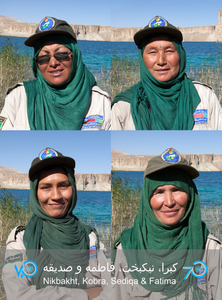
Two small but telling features of the training deserve mention. The first is the inclusion of female operators, who in some districts are the only staff allowed into certain wards, making them essential for the safe handling of obstetric waste. The second is the use of local Pashto and Dari training manuals rather than translated English sheets, an approach that has measurably improved operator confidence during the first weeks of unfamiliar equipment.
Measurable Improvements in Infection Control
Independent evaluations commissioned by United Nations agencies have tracked a steady decline in reported needle-stick injuries inside hospitals equipped with the new incinerators. In one district in Nangarhar, the rate of accidental sharps injuries among nursing staff fell from roughly seven per hundred staff per year before installation to just under two per hundred afterwards. Comparable patterns have been reported in Kandahar and Balkh provinces.
Beyond the staff figures, broader community indicators are shifting. Public health clinics have recorded fewer cases of hepatitis B among children living within two kilometres of treated incinerators compared with similar neighbourhoods relying on open burning. Vaccination uptake has also climbed modestly, in part because mothers are more willing to bring children to clinics where the grounds look and smell cleaner, removing a persistent barrier to immunisation coverage in districts where families travel by donkey for hours to reach care.
The environmental gains are equally important. Ash from a properly operated high-temperature chamber weighs less than a tenth of the volume of the input waste and is classed as inert, allowing it to be buried in standard municipal landfill. Measurements taken near the stack of one unit in Kunduz showed dioxin emissions well within the limits that New South Wales Health applies to similar facilities around Sydney's western suburbs, a useful comparator for boards arguing for the technology at home.
Comparing Afghan Units With Hospital Waste Practices in Australia
| Feature | UN-Funded Afghan Units | Typical Australian Hospital Practice |
|---|---|---|
| Treatment method | Dual-chamber high-temperature incineration | Autoclave plus licensed incineration or shredding |
| Capacity per cycle | 50 to 80 kilograms of clinical waste | 200 to 500 kilograms per autoclave load |
| Fuel source | Diesel with natural gas backup | Mains electricity, gas or steam from hospital boilers |
| Operator training | On-site, six-monthly refreshers | Tertiary qualification plus annual compliance training |
| Regulatory benchmark | World Health Organisation and donor guidelines | NEPM guidelines enforced by state health departments |
| Effluent handling | Dry ash sent to secured landfill | Liquid effluent treated on site before trade waste discharge |
Practical Steps for New Donors and Partner Agencies
Specialist equipment partners looking to expand or replicate the program can move forward on several practical fronts:
- Fund at least one operator training cycle per facility for every new unit installed, and treat that cost as a separate budget line rather than a hidden overhead absorbed by the hardware quote.
- Pair each incinerator with a basic air-monitoring kit so local teams can verify stack temperatures and spot emission drift before it triggers complaints from neighbours or environmental officers.
- Build local-language refresher materials from the outset, using Pashto and Dari, and update them when equipment suppliers change a part number that operators see on a daily basis.
- Coordinate with provincial health directors to integrate waste-handling modules into the nursing curriculum at regional training colleges, so future staff arrive already familiar with segregation colour codes and sharps protocols.
- Maintain a small spare-parts reserve in regional hubs such as Mazar-i-Sharif and Herat to cut downtime when a refractory lining or thermocouple fails in a remote installation.
Healthcare professionals in Adelaide, Brisbane and other Australian centres have begun visiting the program to study how it performs under constraint, and several state health departments are now applying lessons back at home, particularly around rapid equipment deployment in disaster scenarios such as bushfire-affected communities in Victoria and New South Wales. Procurement officers at the federal level in Canberra have flagged the units as a useful reference point for humanitarian stockpiles maintained by the Department of Foreign Affairs and Trade.
Veteran Australian clinicians say the most striking takeaway is how clearly the Afghan program separates the act of buying equipment from the long tail of operating it. A clean handover, a patient mentor and a written escalation path to a regional engineer matter far more than the brand name on the combustion chamber. That perspective, reinforced by joint reviews with Afghan counterparts, is shaping how future donations are scoped, particularly in districts where only one or two hospitals serve hundreds of thousands of people across terrain that ranges from desert to high-altitude valley.
Explore the campaign archive to see the people, provinces and patient stories behind every unit deployed, and to understand how a sustained donor pipeline can keep this quiet, life-saving work running long after the headlines move on.