
Making a Difference



Afghan Farmers’ Water Rights And Legal Aid For Irrigation Disputes
For a farming household in Afghanistan, access to irrigation water can determine whether a harvest succeeds, livestock survive and children remain in school. A dispute may involve a canal, a diversion gate, a spring, a damaged embankment or an upstream user taking more than an agreed share. These conflicts are often local, yet they can carry serious consequences for food security, household income and community relations.
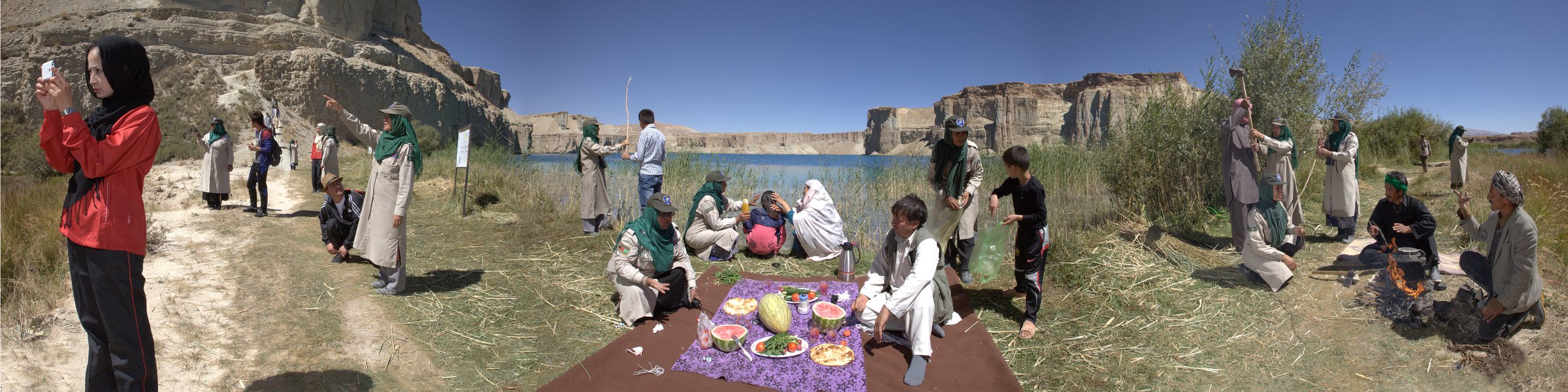
Legal aid can help farmers understand their rights, document a complaint and pursue a fair settlement. In Afghanistan, that support sits alongside customary decision-making, government water institutions and community-based management. The wider work of the United Nations has included support for access to justice, human rights and local governance, while the UN70 campaign recorded stories of Afghans contributing to their communities. The campaign website is an archived snapshot, but the issues it highlighted remain important.
Why Irrigation Disputes Matter To Rural Families
Afghanistan’s agricultural economy depends heavily on irrigation. Rainfall is irregular, snowmelt varies from year to year, and prolonged drought can reduce flows in rivers and underground sources. Farmers may rely on traditional canals, karez systems, reservoirs, wells or shared diversion structures. When water levels fall, an arrangement that previously worked can become a source of disagreement.
A dispute may begin with a practical complaint: a farmer has been excluded from a rotation, a canal has been blocked, or a neighbouring landholder has altered a channel. It can then develop into a disagreement over land boundaries, customary entitlements or the authority of a local water committee. Poor households, women-headed households, tenant farmers and people displaced by conflict may have less influence when decisions are made.
For Australian readers, the principle is familiar even though the settings differ. Irrigators in the Murray–Darling Basin also work within allocation rules, delivery systems and seasonal shortages. A water entitlement is meaningful only when records, infrastructure and enforcement allow it to be used. In Afghanistan, those foundations may be less consistent, making accessible legal advice especially valuable.
The Legal Framework Around Water Access
Afghanistan’s Water Law provides a formal basis for managing water resources and recognising different forms of water use. It sits within a broader legal environment that includes land administration rules, local governance arrangements and rules concerning public resources. In practice, farmers may encounter several authorities at once, including provincial officials, district administrations, water user groups and customary leaders.
The difference between a legal entitlement and an everyday water arrangement can be significant. A farmer may rely on an inherited custom that is not written down. Another user may present a document whose accuracy or meaning is disputed. A canal may serve several villages, while no single household controls the whole system. Legal aid helps clarify which facts matter, which body has jurisdiction and what evidence may support a claim.
Australia has its own complex interaction between legislation, licences and customary interests. The Water Act 2007 shapes national management in the Murray–Darling Basin, while state and territory laws govern many practical water allocations. The Native Title Act 1993 also forms part of the legal landscape where traditional rights and interests are relevant. These systems are different from Afghanistan’s, yet both show why water disputes cannot be reduced to a simple argument between neighbours.
What Legal Aid Can Provide
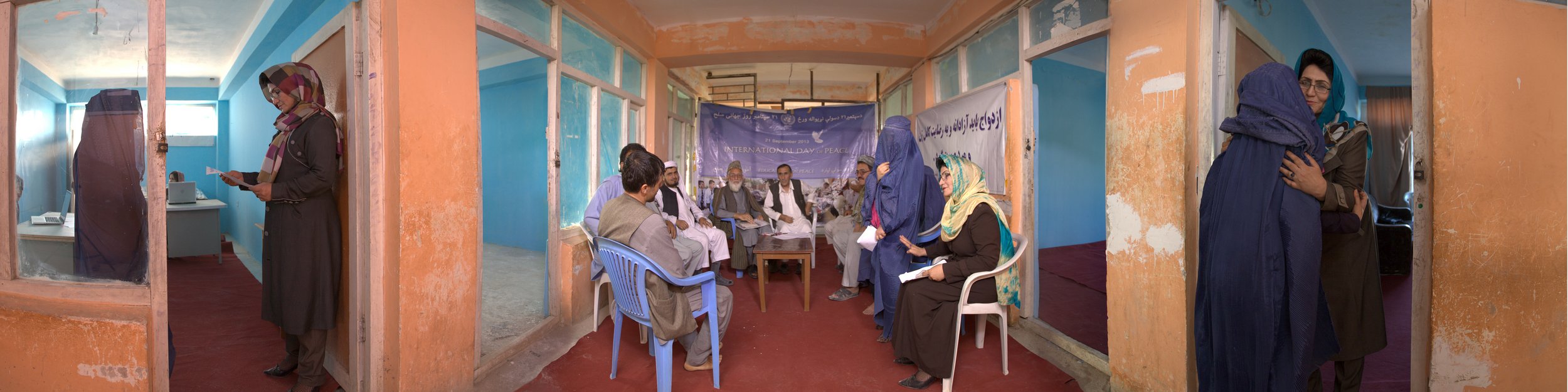
Legal aid does not necessarily mean taking every dispute to court. For a small farmer, the first useful service may be a clear explanation in a local language. A legal adviser can help identify the relevant water rule, review a land or irrigation document, record the history of an agreement and explain the possible consequences of signing a settlement.
Where appropriate, an adviser may help a farmer submit a complaint to the responsible authority or prepare for mediation. Assistance can include gathering witness statements, mapping the disputed channel, checking allocation records and presenting evidence about customary use. It may also involve referring a matter to a specialised institution when the disagreement concerns land registration, violence, discrimination or criminal damage to infrastructure.
This early support can prevent escalation. If a farmer understands the process and believes that the complaint has been heard fairly, a negotiated agreement has a stronger chance of being accepted. Legal aid should still be independent and confidential, with safeguards against pressure from powerful landholders, officials or armed actors. It should also be designed for people who cannot afford transport, paperwork or professional representation.
Mediation, Shuras And Formal Institutions
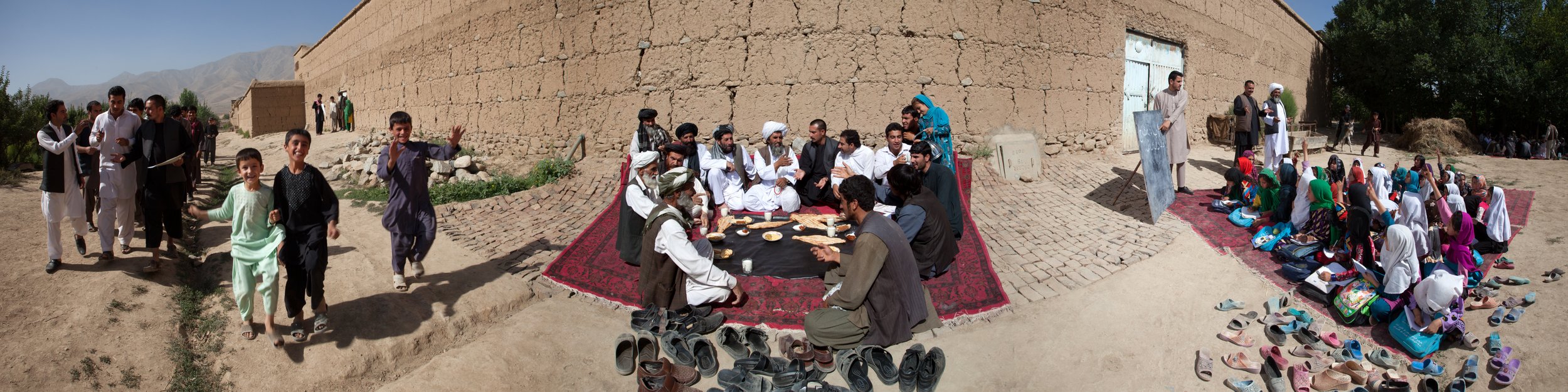
Community mediation is a central feature of dispute resolution in many Afghan rural areas. Elders, religious scholars, water masters and shuras may know the history of a canal and the customary rotation of water. Their involvement can make an agreement practical because the parties must continue living and farming alongside one another.
Customary forums, however, do not always protect every participant equally. Women may have limited access to meetings, minority groups may be overlooked, and poorer farmers may feel unable to challenge influential families. A fair process should make room for affected people to speak, explain the decision, and refer the matter to a formal authority where rights or safety are at stake.
The most effective approach may combine local knowledge with legal safeguards. A mediator can help parties agree on a temporary water schedule while a legal adviser checks whether the arrangement conflicts with statutory rules. Written records, signatures or witnessed terms can reduce later confusion. Where literacy is limited, the agreement should be explained aloud and recorded in a form the participants understand.
The United Nations And Access To Justice
UN-supported rule-of-law and human rights work in Afghanistan has often focused on strengthening institutions, expanding access to justice and supporting communities affected by conflict. The precise programmes and partners have changed over time, and support is not the same as a universal UN-run legal service for every irrigation complaint. A careful description matters: legal assistance may be delivered through Afghan institutions or civil society organisations, with international partners helping build capacity, awareness and referral systems.
That work can include training legal professionals, supporting community dispute resolution, improving documentation and encouraging protection for vulnerable groups. In an irrigation conflict, the practical benefit may be indirect but important. A better functioning local justice pathway can help a farmer learn where to file a claim, obtain advice before a hearing and challenge an arbitrary decision.
The UN Afghanistan archive offers background on the organisation’s country work and the UN70 “Strong UN. Strong Afghanistan.” campaign. Its stories placed Afghan people and their contributions at the centre of the campaign. Although the site is no longer active, it provides useful context for understanding the UN’s public partnership message and the importance of community-level resilience.
Barriers Faced By Farmers Seeking Help
Distance is a major barrier. A farmer may need to travel from a remote valley to a district centre, pay for transport and lose a day’s work to make a complaint. Insecurity can make travel dangerous. Seasonal conditions can cut roads and delay access to officials. A legal service that exists in a provincial capital may still be effectively unavailable to someone living far from it.
Cost and information create further obstacles. People may not know which documents are relevant or may fear that seeking help will worsen a conflict. Language and literacy barriers can make official forms difficult to understand. Women may face restrictions on movement or require confidential services that are not available through a mixed public meeting.
Legal aid providers therefore need practical methods: mobile clinics, local paralegals, clear information sessions and referral arrangements with trusted community organisations. They should record cases securely and monitor whether agreements are implemented. A settlement that looks successful on paper has little value if an upstream user continues to close the gate or a vulnerable household is excluded from the next allocation.
Water Governance, Climate Pressure And Fairness
Climate pressure makes irrigation governance more urgent. Drought, declining groundwater and unpredictable snowfall can intensify competition between villages and between farming, household and livestock needs. Repairing a canal may help immediately, but it does not resolve the question of how scarce water should be shared during the next dry season.
Good dispute prevention begins before conflict. Water user groups can maintain transparent rosters, publish rotation times and keep simple records of repairs and contributions. Local authorities can clarify responsibilities for canals and diversion structures. Legal awareness sessions can explain the difference between a temporary emergency arrangement and a permanent change to a farmer’s rights.
Australia’s experience with water markets offers a useful comparison, while highlighting important differences. Farmers around Adelaide, Melbourne and regional irrigation towns may encounter metering, trading rules, environmental limits and formal compliance systems. Those mechanisms can improve transparency, yet they also require accurate data and support for people who find regulation difficult to navigate. Afghanistan needs approaches suited to its own geography, institutions and social practices rather than a direct copy of an Australian model.
The central test is fairness. A workable water agreement should recognise legitimate use, protect basic household needs, consider downstream communities and provide a safe way to challenge abuse. It should give farmers enough certainty to plant, invest and maintain their land without turning every shortage into a personal confrontation.
Australian readers can support informed attention to this issue by following reputable humanitarian, development and human rights reporting, learning how water governance affects food security, and recognising the value of locally led solutions. Students, agricultural groups, legal professionals and community organisations can share reliable information about access to justice and responsible water management. Sustained public interest helps keep rural rights visible after a campaign has ended.