
Making a Difference

Afghan Farmers’ Credit Access Through Matched Savings Groups
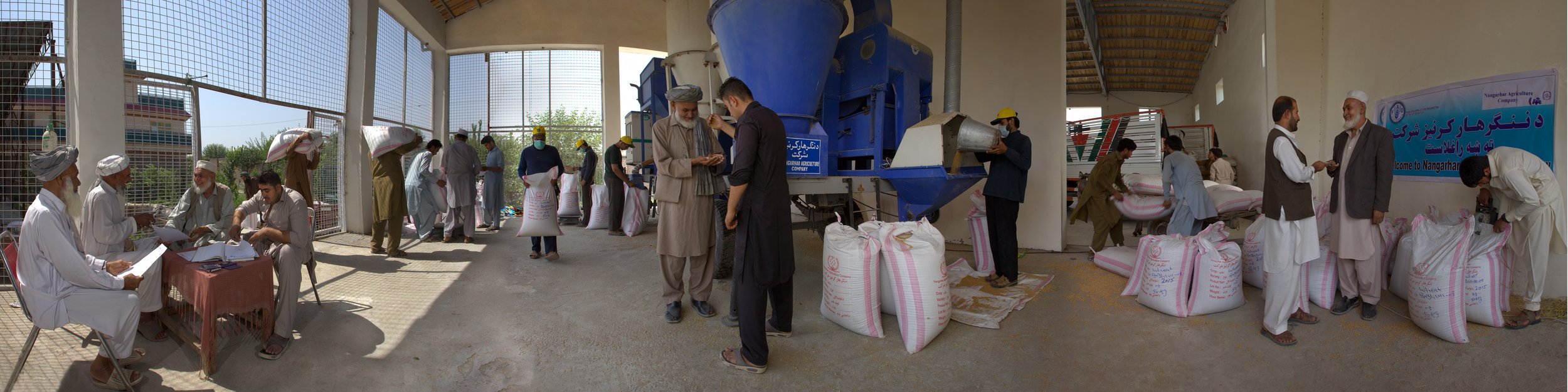
For a smallholder farmer in Afghanistan, access to finance can determine whether a season produces food, income or debt. Seeds, fertiliser, animal feed, tools and irrigation repairs all require cash before harvest, while formal lenders may be far away, difficult to reach or unwilling to lend without collateral. A poor harvest can then make the next season even harder to finance.
Matched savings groups offer a practical response. Farmers contribute small amounts to a shared fund, support one another through trusted local arrangements and receive an additional contribution linked to their savings. The result is a stronger financial base and a pathway to responsible borrowing, with community knowledge helping members decide how money should be used.
How Matched Savings Works
A savings group usually brings together people who know the local farming economy. Members agree how often to save, how records will be kept and how loans will be approved. Contributions may be modest, but regular deposits create a habit of planning rather than waiting for an emergency or turning immediately to an informal lender.
The matching element increases the value of those deposits. When a farmer saves a set amount, a programme partner adds funds according to agreed rules. This does not turn the group into a bank, and it is not a grant with no obligations. It is a way to reward consistent saving, expand the pool available for internal loans and help rural households demonstrate that they can manage credit.
A member might use a loan to purchase improved seed before planting, repair a water pump or buy a goat that can provide milk and future income. Repayment is generally organised around the agricultural calendar, so the timing reflects when a household expects earnings rather than imposing a schedule designed for a salaried worker.
Why Rural Credit Matters In Afghanistan
Afghanistan’s farmers operate in an economy shaped by distance, limited infrastructure, changing weather and uncertain markets. A village may be separated from a district centre by roads that become difficult during winter or after flooding. Transport costs can reduce the return from selling wheat, fruit, vegetables or livestock, especially when a farmer has little bargaining power at the farm gate.
Collateral is another barrier. Conventional lenders commonly want land documents, formal income records or other guarantees. Many rural families hold assets informally or share responsibility for land within an extended household. Women may contribute substantially to farming and livestock care while having less control over property or financial accounts, making individual borrowing still harder.
Informal credit can fill the gap, yet it may come with high costs or repayment pressure at an inconvenient time. A farmer who borrows before harvest may be forced to sell produce immediately, when prices are low. A savings group creates an alternative by allowing members to build their own liquidity before they need it.
The model also supports resilience. Drought, crop disease, livestock losses and sudden medical expenses can all divert money away from productive investment. A local fund cannot remove those risks, but it can reduce the need to sell productive assets or accept a loan with terms the household cannot realistically meet.
Trust, Records And Local Decision-Making
The strength of a savings group depends on clear rules. Members need to know who can borrow, how much can be borrowed, when repayment is due and what happens if a crop fails. Regular meetings, transparent records and more than one person checking the cash or ledger can limit misunderstandings and protect relationships.
Local participation matters because outside organisations cannot know every village’s planting cycle, customary expectations or market conditions. A group may decide that loans for seed and irrigation take priority before harvest, while other finance is reserved for livestock or small processing activities. These decisions are more credible when farmers themselves help establish them.
Financial literacy is part of the process. Members need to distinguish revenue from profit, calculate the cost of transport and inputs, and estimate whether a proposed investment will produce enough income to cover repayment. Simple records can make a substantial difference, particularly for households that have previously managed money through memory or verbal agreements.
The wider purpose is social as well as financial. Meetings can give women and men a structured place to discuss household priorities, prices and production problems. Where women participate safely and meaningfully, savings groups may strengthen their influence over income earned from poultry, dairy products, kitchen gardens or handicrafts connected with farming.
From Savings To Productive Investment
Credit is most useful when it expands a farmer’s capacity to earn. A loan for a handcart, storage container or small solar-powered pump may reduce recurring costs. Finance for poultry, beekeeping or food processing can diversify income so the household is less dependent on a single harvest. These investments may be small, yet they can improve cash flow across the year.
Groups also encourage collective thinking. Several farmers may purchase inputs together, arrange transport as a group or negotiate with traders from a stronger position. Shared buying can lower the price of seed or fertiliser, while coordinated selling may reduce the risk of accepting the first offer from a local intermediary.
This approach has parallels for Australian readers, although the circumstances are very different. A grower in regional Victoria or New South Wales may already use a bank, cooperative or agricultural supplier account, yet still understand the pressure created by input bills arriving months before income. Australian producers also plan around drought, flood, labour shortages, freight costs and fluctuating commodity prices.
The difference is that Afghan farmers may have fewer formal options when a bank branch is distant or documentation is unavailable. The matched savings approach starts with existing community relationships and gradually connects them to finance. It treats creditworthiness as something that can be built through consistent behaviour, rather than something only proved by property ownership.
Practical Features Worth Noticing
A well-designed group combines financial discipline with flexibility. The following features can make the arrangement easier to manage in rural communities:
- Small, regular deposits linked to local income patterns
- A transparent record of savings, loans and repayments
- Loan decisions made through agreed community rules
- Matching funds released against verified saving
The group also needs safeguards. Members should understand the source and conditions of matched funding, and external partners should avoid creating dependence that disappears as soon as a project ends. Useful protections include:
- Separate tracking of member savings and programme funds
- Clear procedures for missed or late repayments
- Training in budgeting, pricing and basic bookkeeping
- Referral pathways for disputes, protection concerns or financial abuse
Australian community organisations may recognise elements of this structure in sports-club fundraising, rotating social savings arrangements, local cooperatives and mutual-aid traditions. The important distinction is that a matched group connects collective saving to productive rural finance, with a deliberate focus on farmers who are often excluded from commercial lending.
Local markets remain central. A loan is only sensible if there is a realistic buyer for the crop, milk, eggs or processed product. Training should therefore cover prices, storage, quality standards and transport, rather than treating finance as a stand-alone solution. A farmer in Afghanistan, like a producer supplying a weekend market in Adelaide or a wholesale buyer in Sydney, needs to know how an investment will translate into a sale.
The Role Of The United Nations
The United Nations can help connect community priorities with technical support, funding partners and broader development goals. Its role may include strengthening local institutions, supporting financial education, improving livelihoods programming and ensuring that women and vulnerable households are not left outside the group.
The UN Afghanistan campaign site preserves the wider context of the UN70 “Strong UN. Strong Afghanistan.” campaign, including stories about Afghan people and the organisation’s partnership with communities. As an archived site, it is best understood as a record of completed public outreach rather than a current application portal or live financial service.
That context is important. A savings group is not an isolated banking product. It sits within a network of agricultural extension, water management, market access, community protection and local governance. If farmers can save but cannot obtain reliable seed, reach buyers or protect crops from water shortages, finance alone will have limited effect.
Partnerships also need accountability. Matching funds should be monitored, local leaders should not control every decision and participants should have a safe way to report misuse. Data collection must be proportionate and respectful, especially where financial information could expose households to social or economic harm.
Building Financial Confidence Over Time
The most valuable outcome may be the confidence created by repeated, successful transactions. A farmer who saves through several cycles, borrows for a defined purpose and repays after harvest develops a record that can support future finance. The group gains evidence that its rules work, while external partners can better understand what kind of support is genuinely useful.
This process is gradual. It may begin with a few households saving for seed and end with members investing in storage, livestock vaccination, irrigation or small-scale processing. Growth should be measured by the quality and durability of those investments, not simply by the amount of money circulating.
For Australian audiences, the lesson is relevant to discussions about regional banking and agricultural resilience. Farmers in Queensland, Western Australia or Tasmania may have more formal finance available, yet they still rely on trust, local knowledge and producer networks when conditions change. A community lender that understands seasonal cash flow can be more useful than a standard product designed for monthly wages.
The Afghan experience also shows why access to credit should be considered alongside dignity and agency. A household is better positioned when it can choose when to buy inputs, when to sell and which enterprise to expand. Matched savings does not guarantee success, but it can shift some decisions away from crisis borrowing and towards preparation.
Communities, development organisations and agricultural partners can study this approach as a practical example of locally anchored finance. Explore the archived UN Afghanistan material, share credible stories of rural enterprise and support programmes that combine saving, fair credit, market access and community accountability. When financial tools reflect the realities of farmers’ lives, small deposits can become a foundation for stronger households and more secure local economies.