
Making a Difference
Afghan Workshops on Community-Led Disaster Risk Reduction
For several years, UN country teams have organised planning workshops in Afghan districts where the impacts of floods, droughts, earthquakes, and landslides continue to reshape lives. The format is deliberately simple: gather residents in a room, lay out a map of the surrounding valleys, and ask them to mark where water gathers, where the ground has cracked, and where families shelter when storms arrive. Facilitators translate those conversations into written risk profiles that local councils can carry forward.
The workshops differ from conventional training sessions in that they do not begin with imported solutions. Instead, participants spend the first day identifying the hazards they themselves have observed over decades. Only then do facilitators introduce concepts such as vulnerability assessment, mitigation hierarchies, and contingency planning. This sequencing matters because trust builds when outside professionals listen before they advise.
Community-led approaches draw strength from the everyday routines of rural Afghanistan, where farmers, herders, and traders already share information about weather, river levels, and grazing conditions through informal networks. Workshops formalise what already exists, attaching names to roles, dates to drills, and responsibilities to households. The result is a layered safety net woven from familiar habits rather than a foreign template.
For observers in Hobart, Darwin, or Perth, the model resonates with challenges that Australian emergency managers continue to wrestle with, from the catastrophic Black Summer fires to repeated flooding along the Murray-Darling basin and tropical cyclones in Far North Queensland. The exchange of ideas between such distant contexts has become one of the quieter but durable side effects of the Afghan UN programme.
The Workshop Framework and Its Aims
Each session follows a sequence developed jointly by Afghan authorities and UN partners, beginning with a shared understanding of risk rather than a presentation of generic modules. Participants arrive with stories about past emergencies, and facilitators transcribe those accounts into a community hazard register that becomes the reference point for every later exercise. The register names specific sites, particular crops, and named individuals, anchoring the work in lived geography rather than abstract statistics.
Following the mapping phase, the workshop moves into a prioritisation exercise where small groups weigh the frequency of each hazard against its potential impact. A community that experiences light spring flooding every year may rate that hazard differently from a single severe earthquake that struck a generation ago, and the conversation surfaces both truths. The prioritisation stage ends with a short list of agreed concerns that the group commits to address within available resources.
The closing sessions focus on drafting a local action plan. Facilitators guide participants through the structure of an achievable plan, with sections on monitoring, communication, evacuation routes, and resource stocks such as grain reserves, fuel, and first-aid supplies. Each plan remains in the custody of the village council, and UN staff provide technical review without owning the document.
Building Local Capacity Through Participatory Planning
Capacity building in this context means more than handing out manuals. Workshop modules train selected residents as community focal points, giving them practice in leading meetings, recording minutes, and updating the hazard register as the seasons change. Training-of-trainers sessions extend that skill to neighbouring villages, so that each cohort becomes a resource for the next.
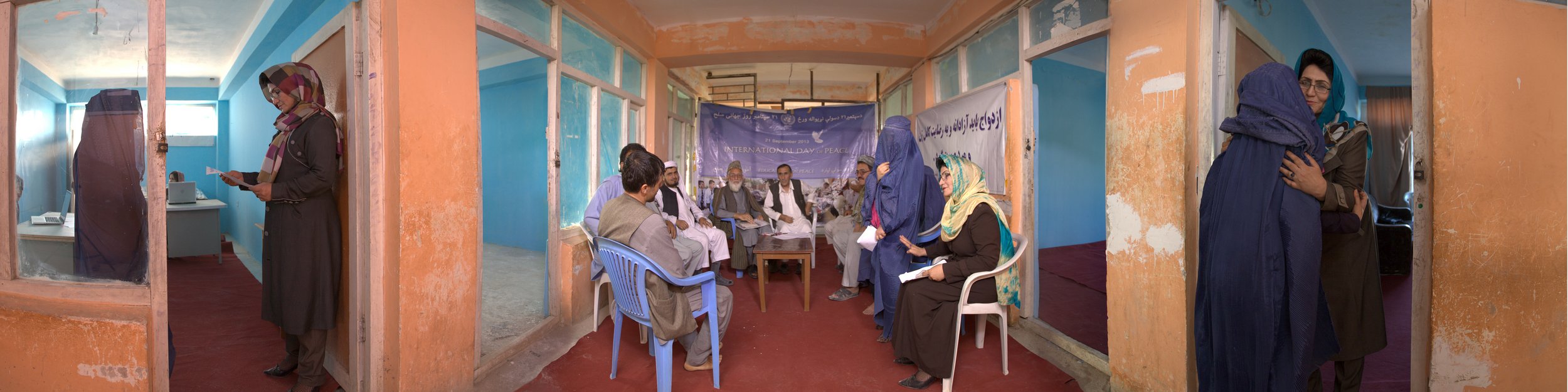
Women's participation is treated as a structural requirement rather than a checkbox. Separate consultation spaces are arranged when cultural norms call for them, and female facilitators guide parallel discussions that surface priorities men may overlook, such as the safety of children during floods or the location of kitchen fires during dry spells. Where women have taken on formal roles in evacuation drills, response times in subsequent emergencies have shortened markedly, according to monitoring data collected in Kandahar and Nangarhar.
Youth volunteers make up a third stream of the capacity building effort. Young people, many of them educated through community schools, are introduced to risk mapping apps, basic first aid, and the principles of search coordination. Their involvement keeps the planning cycle active long after the original workshop ends, since they often remain in the village when older leaders migrate for work.
Integrating Indigenous Knowledge and Modern Tools
Traditional Afghan knowledge of qariz water channels, snowpack patterns, and soil behaviour has long informed how rural communities prepare for drought. Workshops treat such knowledge as a primary source rather than folklore, pairing elders' observations with newer instruments such as satellite-based rainfall estimates and river gauge readings. Where the two sources agree, confidence in early warning grows; where they diverge, that becomes a topic for further study rather than a dismissal of either perspective.
Mapping has been particularly fruitful as a meeting point between old and new approaches. Village elders sketch their landscape onto large sheets while trained volunteers plot the same terrain using open-source software on tablets. Comparing the two images often reveals overlooked flood corridors and ancient dry streambeds that are now built over, giving communities an accurate picture of where risk concentrates.
The broader UN commitment to cultural continuity in Afghanistan supports this work by documenting intangible heritage in ways that complement the technical output of disaster planning. Resources such as those compiled through Afghan heritage preservation initiatives remind practitioners that a hazard register is also a record of what a community values and wishes to defend.
Lessons From Australia's Own Disaster Experience
Australia has spent two decades refining its own approach to community-led resilience, and the parallels with Afghanistan are often surprising. The National Disaster Risk Reduction Framework, established under federal legislation, encourages local councils to lead preparedness work with state agencies in a support role. Tasmania and South Australia have tested models of neighbourhood safety teams whose structure mirrors what UN workshops build in Afghan districts.
The Australian Bureau of Meteorology's network of warning systems reflects a similar trust in locally embedded observers. Storm spotters along the Top End coast, flood watchers across the Murray-Darling catchment, and bushfire-ready brigades in the Adelaide Hills all share a common ethic: those who live with the hazard are the first to understand it. UN planners have openly studied these arrangements, and Australian emergency management literature now cites Afghan workshops as a comparable case.
Local habits also play a role. Saturday morning markets in Brisbane, beach patrols in Perth, and weekly faith gatherings in suburban Melbourne all function as informal communication networks that double as warning channels. The UN Afghan programme has begun exploring how such everyday gatherings can be incorporated into preparedness planning, recognising that the most reliable warning is often the one carried by people who already meet.
Coordination Between UN Agencies and Afghan Authorities
Behind every workshop sits a coordination arrangement that links UN agencies, line ministries, and provincial authorities. The United Nations Development Programme typically anchors the planning process, while the UN Office for Disaster Risk Reduction provides technical standards and the Office for the Coordination of Humanitarian Affairs ensures the plans align with broader response systems. Afghan ministries such as Rural Rehabilitation and Disaster Management retain formal ownership of the resulting documents.
This shared structure has allowed the programme to scale without losing local accountability. Where a single agency worked alone, plans often stalled between drafting and implementation; with three or four organisations keeping watch, follow-through improved. Quarterly review meetings bring the same facilitators back to communities to track progress on the action plan items, whether installing simple rain gauges or clearing drainage channels before the spring melt.
Funding for the workshops flows through pooled mechanisms that combine contributions from UN trust funds and bilateral partners. Cost per session remains modest because venues are local, materials are printed in country, and facilitators travel with the teams rather than flying in for each visit. That affordability is part of why the model has survived successive budget pressures inside the UN system.
Strengthening Early Warning Systems at the Village Level
Once a plan exists, the next task is to ensure that warnings actually reach households in time. Workshop coordinators work with communities to identify who hears news first, who passes it along, and who delivers the final message to families furthest from the road. The chain is written down, rehearsed in practice drills, and adjusted after each season.
Simple technology supports the chain without replacing it. Solar-powered sirens, two-way radios for remote mountain villages, and weather alert apps loaded onto shared phones extend the reach of human messengers. In districts affected by glacial lake outburst floods, communities have installed water-level sensors on lakes visible from high ground, and volunteer monitors check the readings daily during summer months.
The most durable results, however, come from people who take ownership of the system. In villages where drills happen twice a year, response times have shortened dramatically, and post-event reviews suggest that mortality and displacement have both declined. The workshops treat these volunteer networks as living infrastructure, worth the same effort as concrete flood barriers.
The Afghan UN experience offers a quiet but stubborn lesson for anyone working on disaster preparedness: that risk reduction is strongest when it grows from the routines, relationships, and rituals that communities already trust. Australians reading from Sydney, Melbourne, Adelaide, Perth, Brisbane, and regional centres can find in these workshops a familiar insistence on local knowledge, alongside reminders that geography, climate, and culture shape how each neighbourhood prepares. The campaign's archive remains open for those who wish to study the materials, share them with educators and emergency planners, and continue a conversation that began in Afghan valleys and reaches well beyond them.