
Making a Difference

Learning Without Delay in Afghanistan’s Emergencies
For children in Afghanistan, a crisis can interrupt education in a matter of hours. Conflict, displacement, earthquakes, floods, winter weather and economic hardship may force families from their homes or make an existing school unsafe. When classrooms are damaged or communities move, a temporary learning space can provide a vital bridge between disruption and a child’s return to regular education.
UN agencies and humanitarian partners have supported emergency education in Afghanistan through temporary classrooms, community-based learning, accelerated education and supplies for teachers and students. These efforts are designed to restore routine, protect children from exploitation and help communities preserve learning during unstable periods.
A temporary school is rarely just a tent with desks. It requires site planning, trained educators, teaching materials, water and sanitation, safeguarding systems and coordination with local authorities and communities. The strongest programmes treat emergency learning as part of a wider education pathway rather than as a short-term substitute with no connection to the future.
Why Emergency Learning Matters
Education gives children structure when familiar routines have been disrupted. A safe learning environment can reduce distress, help children rebuild relationships and provide access to trusted adults who can identify protection concerns. Teachers may notice signs of trauma, hunger, illness or separation and refer children to appropriate services.
For displaced families, schooling can also support integration into a new community. Children from different backgrounds meet in a supervised setting, learn together and develop social connections. This matters in temporary settlements, rural districts and host communities where public services may already be under pressure.
The consequences of prolonged interruption can be severe. Children who miss months or years of school face falling behind, losing confidence and becoming less likely to return. Girls, children with disabilities, nomadic children and those from very poor households can face additional barriers. Emergency education therefore needs to begin quickly while planning for sustained access.
How Temporary Learning Spaces Are Established
Humanitarian teams first assess where children are living, how many are out of school and what facilities remain usable. A temporary classroom may be installed in a tent, prefabricated structure, community building, mosque compound or other agreed location. The choice depends on safety, weather, land availability, cultural acceptance and the distance children must travel.
The learning environment should include basic furniture, age-appropriate materials, blackboards or other teaching aids and adequate lighting where possible. In cold areas, insulation and heating are essential. In hot regions, shade and ventilation can determine whether children are able to concentrate. Water points, handwashing facilities and separate toilets help protect health and encourage attendance, particularly among adolescent girls.
Temporary schools may offer the national curriculum, condensed lessons or a bridging programme. Accelerated education helps older children cover essential content in a shorter period, while non-formal education can reach children who have never enrolled. The curriculum should be adapted to local language needs and should include literacy, numeracy, life skills and psychosocial support.
Safety, Inclusion And Child Protection
A learning space must be safe before it can be effective. Site selection should consider unexploded ordnance, flooding, landslides, traffic, harassment and other local risks. Community members can help identify hazards, agree on safe routes and establish arrangements for opening and closing the facility.
Child protection is woven into daily practice. Teachers and volunteers need training on positive discipline, prevention of abuse, confidential reporting and referral pathways. Children should know where to seek help, and caregivers should understand how concerns will be handled. Attendance records must be protected so that personal information is not exposed unnecessarily.
Inclusion requires more than inviting every child to enrol. Classrooms may need ramps, accessible latrines, adapted materials or additional support for children with physical, sensory or learning disabilities. Flexible schedules can help children who work, care for siblings or travel with seasonal families. Girls’ participation may depend on female teachers, safe sanitation, community dialogue and instruction arrangements that families consider acceptable.
Teachers Are The Foundation
A temporary structure cannot compensate for a shortage of prepared teachers. Local educators often understand the language, customs and needs of the community better than outside staff. Recruiting from nearby areas can strengthen trust and make it easier to continue classes when roads are blocked or security conditions change.
Teachers working in emergencies need practical support. Short training sessions can cover classroom management, multi-grade instruction, psychosocial first aid, inclusive education and identifying protection risks. Regular coaching is more useful than a single workshop because teachers face changing enrolment, mixed learning levels and intense emotional demands.
Payment and wellbeing also matter. Educators who receive irregular compensation may leave for other work, while unpaid volunteers can experience burnout. Supportive supervision, peer groups, teaching kits and reliable stipends help maintain continuity. Female teachers are especially important for girls’ access, yet they may face mobility, security or household constraints that programmes must address carefully.
Choosing A Delivery Model
Different emergency contexts require different education arrangements. A displaced population concentrated in one settlement may benefit from a dedicated temporary school, while scattered rural families may need community-based classes closer to homes. The appropriate model depends on the length of displacement, available buildings, teacher supply, security and the likelihood that children can transition into formal schools.
| Education model | Best suited to | Main strengths | Key limitations |
|---|---|---|---|
| Temporary learning space | Newly displaced or disaster-affected communities | Fast to establish and visible to families | Vulnerable to weather, relocation and funding gaps |
| Community-based class | Remote villages and scattered households | Reduces travel and uses local knowledge | Limited space, materials and teacher availability |
| Accelerated education | Older children who have missed substantial schooling | Helps learners recover foundational skills quickly | Requires careful assessment and trained instructors |
| School rehabilitation | Communities with damaged but recoverable facilities | Creates a more durable return to formal education | Construction and repairs can take time |
| Mobile or outreach teaching | Nomadic, mobile or highly dispersed groups | Reaches children conventional schools miss | Difficult to monitor consistently and sustain |
These options can work together. A temporary classroom may start lessons immediately, then move into a repaired school building. Children in an accelerated programme may later enter a formal grade after assessment. Coordination prevents parallel systems from leaving learners with certificates or records that other schools do not recognise.
Education clusters and local authorities have an important role in mapping services, avoiding duplication and identifying gaps. UN agencies may provide technical support, supplies, funding or coordination, while national and local education structures remain essential for curriculum alignment and long-term ownership.
Continuity Beyond The Emergency
The measure of an emergency school is not simply how quickly it opens. Programmes should track attendance, learning progress, teacher retention, safety incidents and transitions to other education options. Data should be separated by age, gender, disability and location where safe and appropriate, allowing partners to see who is still excluded.
Family engagement supports continuity. Caregivers can help determine suitable schedules, identify risks on the journey to class and encourage regular attendance. Community education committees may support maintenance, communicate with teachers and raise concerns. Their participation should be meaningful rather than a way to shift responsibility for underfunded services onto volunteers.
Supplies and funding must be planned beyond the first distribution. Children need exercise books, pens, textbooks and seasonal clothing. Schools need replacement materials, sanitation maintenance and repairs after storms or population movements. A handover plan can connect temporary learning spaces to government schools, community education programmes or other durable services.
Emergency education also needs to acknowledge Afghanistan’s wider pressures. Food insecurity, limited healthcare, displacement and restrictions affecting girls’ education all influence whether children can learn. Linking schools with nutrition support, child protection, water and sanitation and mental health services can reduce barriers that classroom assistance alone cannot solve.
Priorities For Effective Support
Organisations supporting temporary schools in Afghanistan should focus on practical measures that protect learning quality and dignity:
- Open safe, accessible learning spaces close to displaced and underserved families, with separate functioning sanitation facilities.
- Recruit and retain qualified local teachers, including women, and provide coaching, teaching materials and dependable compensation.
- Use accelerated and flexible programmes for children who have missed school, while creating clear routes into formal education.
- Include disability access, child safeguarding, psychosocial support and referral services from the beginning rather than adding them later.
- Fund monitoring, maintenance and transition planning so temporary classrooms do not disappear when initial emergency attention declines.
These priorities require coordination with communities, Afghan education authorities and humanitarian partners. Consultation should include girls, children with disabilities, displaced families and teachers, because a service designed without their experience may look complete on paper while remaining inaccessible in practice.
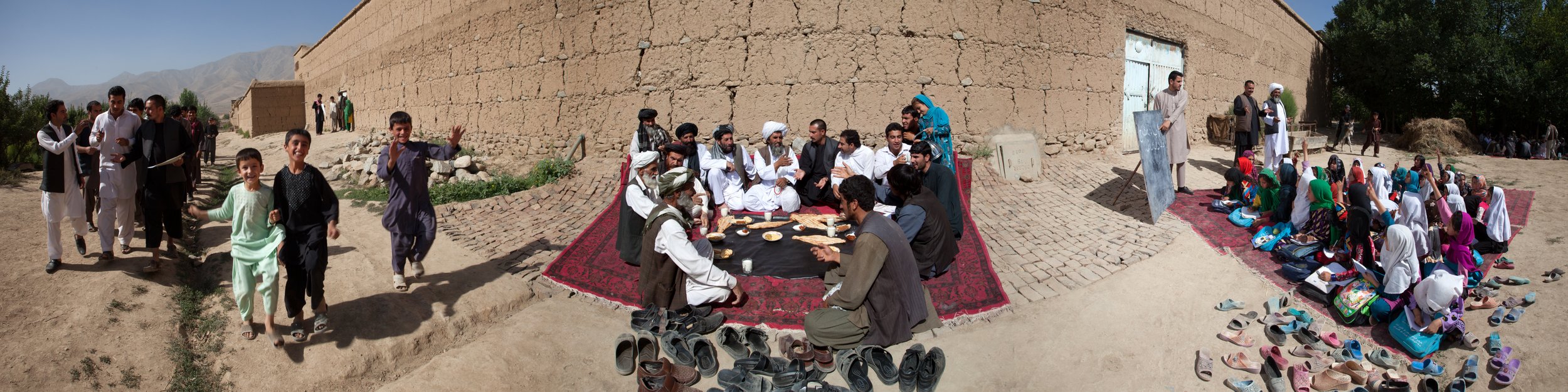
The UN’s public storytelling, including campaigns that highlight Afghan people and community contributions, can help draw attention to this work when it reflects local voices accurately. Photographs and personal stories are most useful when they preserve children’s dignity, protect identities where necessary and show communities as partners rather than passive recipients of aid.
Children should not have to wait for a crisis to end before they can learn. Support for emergency education can help keep classrooms open, teachers prepared and families connected to a pathway back to stable schooling. Organisations, donors and communities can strengthen this effort by funding safe temporary learning spaces and linking every short-term response to a lasting opportunity for Afghan children.